Showing posts with label OPST Commando Heads. Show all posts

Dec 14, 2024

BUYER'S GUIDE to MODERN SKAGIT HEADS:

Introduced in 2024, RIO'S Multi-Density Skagit Pickpocket. (photo by Callum Brock)
"Skagit lines were born out of necessity. In the late 90's, a few elite Northwest anglers realized the effectiveness or presenting very large flies on heavy sink tips for steelhead." - Tom Larimer, Hatch Magazines "Skagit Heads Explained" Jan 12th, 2015.
Reflecting on how far Skagit casting and the designs of Skagit lines has come, I immediately think of those who helped start it all.  Skagit guru's such as: Ed Ward, Mike McCune, Scott O'Donnell, Scott Howell, Jerry French, George Cook, Tom Larimer, to name a few.

Through their innovative thinking, they've literally changed the way folks approach steelhead and salmon fly fishing today with a two handed rod.  How popular has it become? So much so, that it dominates shop conversations with customers and it's the go to technique on the banks of favorite steelhead and salmon rivers everywhere.  I can honestly say that I rarely have a conversation with a customer who is seeking single hand fly rod advice for steelhead or salmon anymore.

I also rarely ever see someone fishing a single handed fly rod for steelhead or salmon anymore with the exception of nymph fishing, particularly when wade fishing.  Most folks fishing indicators and nymphs, especially from a boat, will fish the pocket water in-between the swing runs.  Even in the trout fly fishing world we are seeing more and more folks fishing with two handed "Trout Spey" rods and for good reason.  With this popularity, the demand for shorter compact Skagit heads has grown.  

I also reflect to the first time I saw a fly fisherman fishing a two handed spey rod on my home river.  He was waist deep in the run using a 15' 9 or10wt rod, beautifully and smoothly casting it across the entire run with little to no effort.  He knew what he was doing.  As I approached him in my drift boat, curiously, I asked what rod he was using.  He was gracious enough to spend a short time giving me the low down, the rod and the technique even though I was interrupting his groove.  It's been long enough that I don't remember the details of his rod and all, but I do remember the length of the rod and the line he was using.  He even let me hold the rod for reference.  It was long, heavy, and to me, awkward to say the least.  I'd never held a two handed spey rod before.

Being honest, I thought he was out of his mind crazy for using such a massive, heavy rod for a mere 6 to 12 pound steelhead.  To me it was way overkill and I thought to myself ..."you'll never catch me fishing with one of these for the average steelhead we catch around here."  In addition to that, the length of rod and the line he was using, a long belly line, severely restricted the water he could fish.  The amount of space he needed to create the "D" loop and cast that long rod with the long belly line was significant.

On the other hand, he was literally fishing the entire run and reaching water that a single hand fly rod fisherman simply couldn't reach.  You would never use that rod in a tight quarters situation.  Well, how the times have changed and here we are. Today, I can nearly fish anywhere with a two handed rod. Shorter lighter rods paired with shorter heads allow us to fish even the tightest of spots.  Basically, it's the way I fish 99.9% of the time now for steelhead and more and more for trout with today's "Trout Spey" rods.

MODERN SKAGIT HEADS:

Modern Skagit heads of today are more specialized and versatile than ever.  Like an assortment of golf clubs in your bag, so is the assortment of Skagit heads that I carry in my gear bag.  Every Spey or Switch rod that I own, has it's own labeled gallon sized Ziploc bag or head wallet that will hold all the different heads for that particular rod.  I will carry this Ziploc bag or wallet in the chest of my waders and this allows me to change heads in a few of minutes and be back to fishing. It's awesome!  What's more awesome is that an assortment of Skagit heads for any given rod allows me to fish runs more effectively than ever before.
Full Length Floating Skagit Heads:  SA Skagit, Airflo Driver,
RIO Elite Skagit Max Launch.

FULL LENGTH FULL FLOATERS:

Back when Skagit heads were being introduced , traditionally they were about 22' to 26' depending on their grain weight.  Today they have become a bit shorter and now average 23' to 25' in length.  

Links to the most popular full length Skagit Floating heads (not necessarily in order):


Short Floating Skagit Heads:  Airflo Skagit Scout, RIO Elite Skagit Max Power,
SA Skagit Short, OPST Commando

SHORT FULL FLOATERS:

With the development of "Switch" rods (basically anything 12' or less) came the need for shorter Skagit heads In addition to the traditional Skagit Heads, when the first "Switch" or "Short Skagit" heads were developed, they had an average length of 19'6" to 20'6" in length. Today these "Short" Skagit heads are as short as 12' like the ever popular OPST Commando 150 grain, head and typically are no longer than 20'.

These Shorter Skagit heads are ideal for shorter single hand or two handed switch rods.  That doesn't mean you can use them on a longer 13' or 13'6" rod because you can.  You just have to be careful when fishing a shorter head on a longer rod because the opportunity to blow your anchor increases if you don't slow your stroke down and chill a bit.

Links to the most popular SHORT Skagit Floating heads (not necessarily in order):


INTERMEDIATE SKAGIT:

The first Intermediate Skagit Heads, that I know of, were created by Tom Larimer and Steve Rajeff out of the idea of having a Skagit head that could get below surface currents and slow the swing way down.  To this day, I still use the Skagit Compact Intermediate heads that I got when they first came out. They have since been discontinued, paving the way for the newer Airflo Skagit F.I.S.T. heads.
"A few years ago, I came up with the idea of building an intermediate sinking Skagit head after fishing with my old guide friends in the Great Lakes. Because of the complex surface currents in some of the larger "Third Coast" rivers, a traditional floating Skagit would get surfed around, not allowing for a smooth swing. In addition to tricky currents, Great Lakes rivers can be extremely cold from late October through February -- prime time for swinging flies. A slow, deep swing is often necessary to coax a steelhead to the fly. Airflo distributor Tim Rajeff and I developed a number of prototypes that my Midwest friends helped us test and which eventually became the Airflo Skagit Compact Intermediate." - Tom Larimer, from Hatch Magazines "Skagit Heads Explained" Jan 12th, 2015
That first Skagit Compact Int. head I used, was and still is, a staple for me when it comes to those runs where I just can't get the swing right.  It truly does get you below the conflicting surface currents and slows your swing down considerably.  You can really feel the connection to the fly.  These original Skagit Compact Int. heads are no longer available since they have been discontinued.

Today, most Skagit sinking heads have graduated from just an intermediate to now what is called 
Multi-Density which basically means there is a seamless blend of three different densities ensuring a smooth transition of energy while turning over level or tapered sinking tips all the while giving you great control for depth during your swing.  It's a beautiful thing!

MULTI DENSITY:

There has been a generous amount of time dedicated to taking that idea and making it even better with now the Multi-Density heads.  Because of that, I would say this area of Skagit heads has had the most development in recent years.  Now with all thee different Skagit heads, it seems like things are getting more confusing and difficult to choose from, BUT, how sweet is the versatility to pretty much fish any run you come across with confidence in knowing that you fished it well.  

Airflo Skagit Compact F.I.S.T. 450-720gr:
20.5' to 23.5' depending on grain weight.
  • F/I/S.T - Floating, Intermediate, Sink 3ips Tip

RIO Elite Gamechanger Body, 400-725gr  - 23' to 25' depending on grain weight:
  • F/H/I - Floating, Hover, Intermediate
  • F/I/S3 - Floating, Intermediate, Sink 3ips
  • F/S3/S5 - Floating, Sink 3ips, Sink 5ips
  • I/S2/S3 - Intermediate, Sink 2ips, Sink 3ips
  • S3/S5/S7 - Sink 3ips, Sink 5ips, Sink 7ips

RIO Elite Skagit Pickpocket, 475-600gr - Short Skagit head 20' no matter the grain weight:
  • F/I/S3 - Floating, Intermediate, Sink 3ips
  • S3/S5/S7 - Sink 3ips, Sink 5ips, Sink 7ips

FINAL THOUGHTS:

Generally speaking, the Skagit head that I choose to use can be determined by the length of the rod I'm using, but absolutely not limited to it.  In other words for example, if I were to fish a 13'6" 8wt rod, I normally would go for a full length Skagit head. The length of the rod accommodates the length of the skagit head very well.  Conversely, if I were to fish an 11' 7wt, I would most often choose a shorter Skagit head, which accommodates the shorter lengths of these rods.  If I were to fish with a 9' 7wt single handed rod, I would most likely go for a really short skagit such as the OPST Commando heads.

That being said, this doesn't mean I can't use a Commando head on a 13' rod, I know folks that do it and it works very well for them.  They are accomplished casters and understand that the shorter your head is the more compact your casting stroke should be.  So, visualize a 13' or even a 13'6" with a very short skagit head of 400gr which is only 16.5' long, you could see how your casting stroke would need to be very tight and pretty slow to prevent blowing the anchor.

To be less confusing when matching a Skagit Head to your rod (generally speaking):
  • On rods greater than 12'6"- I typically would fish the full length Skagit heads. (i.e...Skagit Driver, Skagit Max Launch)
  • On rods 12'6" to 11' - I will use the shorter Skagit heads. (i.e...Skagit Scout, Skagit Max Power)
  • On rods 11'6" or less - Short Skagit heads like listed above or the even shorter Skagit heads like the OPST Commando heads work really well.
Technique Tip: While fishing with sinking Skagit Heads when you come to the end of your swing and are in the "hang down" phase, you will want to perform a roll cast directly down stream to free the tension of your sinking Skagit head and the sinktip from the water.  Once the roll cast is complete you can then go into your next cast.  This roll cast brings your sinking Skagit and sink tip to the surface and releases the tension so your next cast can effortlessly be made.  If you don't perform the roll cast first before going into the next cast, the tension of the sinking Skagit head and the sink tip will cause you to use way more effort to complete your next cast.  At the end of the day you will be tired.  I have had numerous conversations with customers who have experienced this and state that they hate the line.  They love how it fishes but hate how it casts.  Once they realize the roll cast is needed, all is good again.

Thanks for reading.

GFS Team
John G.


https://www.gorgeflyshop.com/store/pc/Sale-Closeouts-c38.htm

"The Gorge"

Gorge Fly Shop Team - 541.386.6977


"Fly Fish the World with Us"

Nov 17, 2020

OPST Head and Sink Tip Wallets - Back in stock

Finally! OPST Head and Sink Tip Wallets are back in stock and ready to purchase. Get em' now before it's too late!


https://www.gorgeflyshop.com/store/pc/Sale-Closeouts-c38.htm

"The Gorge"

Gorge Fly Shop Team - 541.386.6977


"Fly Fish the World with Us"

Jun 22, 2020

OPST Micro Skagit Rod Update


The OPST Micro Skagit Rods consist of three models including 399-4, 4100-4, and a 5104-4. The first run of 5104's had the longer full wells spey grip while the two smaller micro speys carried the reverse half wells design.

Just in...We got notice that the 5104-4 will now share the same reverse half wells as the two smaller microspeys.

At time of this writing we had one 1st Gen model in stock.

Shop OPST Micro Skagit Rods

https://www.gorgeflyshop.com/store/pc/Sale-Closeouts-c38.htm

"The Gorge"

Gorge Fly Shop Team - 541.386.6977


"Fly Fish the World with Us"

Apr 29, 2020

OPST Single Hand Skagit Kits


So many anglers are getting into single handed skagit casting but there are is lot of confusion about what one needs to get started. That's why we put together custom kits that get you what you need to kick off your own personal skagit adventure.

OPST Single Hand Micro Skagit Trout Kits

#3 Kit $119.90
  • #30 Lazer Line Green
  • 150 Gr. Commando Head
  • 7.5’ 35 Gr. Floating Tip
  • 5’ 40 Gr. S4 Micro Sink Tip
#4 Kit $119.90
  • #30 Lazer Line Green
  • 175 Gr. Commando Head
  • 7.5’ 35 Gr. Floating Tip
  • 5’ 40 Gr. S4 Micro Sink Tip
#5 Kit $123.40
  • #30 Lazer Line Green
  • 200 Gr. Commando Head
  • 7.5’ 35 Gr. Floating Tip
  • 7.5’ 60 Gr. S4 Micro Sink Tip


OPST Single Hand Pure Skagit Steelhead Kits

#6 Kit $128.90
  • #35 Lazer Line Green
  • 225 Gr. Commando Head
  • 10’ 50 Gr. Floating Tip
  • 10’ 80 Gr. S6 Sink Tip
#7 Kit $134.90
  • #35 Lazer Line Green
  • 275 Gr. Commando Head
  • 10’ SHS. Floating Tip
  • 12’ 132 Gr. S8/9 Sink Tip
#8 Kit $134.90
  • #35 Lazer Line Green
  • 300 Gr. Commando Head
  • 10’ SHS. Floating Tip
  • 12’ 132 Gr. S8/9 Sink Tip
#9 Kit $134.90
  • #35 Lazer Line Green
  • 350 Gr. Commando Head
  • 10’ SHS. Floating Tip
  • 12’ 168 Gr. S8/9 Sink Tip
Shop OPST

Read: Single Hand Skagit - How to Get Started


https://www.gorgeflyshop.com/store/pc/Sale-Closeouts-c38.htm

"The Gorge"

Gorge Fly Shop Team - 541.386.6977


"Fly Fish the World with Us"

Mar 14, 2020

OPST Sale


For a limited time save some dollars on OPST. 

Commando Head / Commando Groove Promo

Buy any Commando Head at regular price and add any Commando Groove Head for 25% Off


Sink Tip Promo - SAVE 25% on 3 Packs of 5', 7.5', 10' or 12' Commando Sink Tips


Floating Tip Promo - SAVE 25% on 3 Pack Micro Tips or 4 Pack Steelhead Tips


https://www.gorgeflyshop.com/store/pc/Sale-Closeouts-c38.htm

"The Gorge"

Gorge Fly Shop Team - 541.386.6977


"Fly Fish the World with Us"

Jan 29, 2020

Product Alert: Free Commando and Lazar with OPST Rod Purchase


You may have noticed we offer the New OPST Micro Skagit and OPST Pure Skagit line of rods.

You might have seen the latest review of the OPST Pure Skagit 8115-4

But did you know for a limited time you can receive a FREE OPST Commando Head and OPST Lazar Shooting Line with your OPST Micro Skagit Trout or OPST Pure Skagit Steelhead Rod.

Free OPST Commando Head and OPST Lazar Shooting Line - Limited Offer
No tricks or special hoops to jump through! Just Choose your rod along with your choice of Commando Head and your choice of Lazar Shooting line and hit Add to Cart.

Not sure what head and running line to choose?...No Problem! Recommendation Charts are on the rod page.

Buy OPST Skagit Rods

https://www.gorgeflyshop.com/store/pc/Sale-Closeouts-c38.htm

"The Gorge"

Gorge Fly Shop Team - 541.386.6977


"Fly Fish the World with Us"

Jan 28, 2019

Echo Trout Spey, Compact Spey, Full Spey - New for 2019


Tim Rajeff and his company of Echo Fly Rods are leaders in the industry in design, concept and value. Every year I look forward to seeing what forward thinking ideas are coming from this group of hard core, dedicated anglers.

New for 2019, is a group of spey rods, so focused, that I believe we are looking at the future of how we will categorize two hand fishing rods.


Trout Spey

In this trout spey game it's hard to argue the ruling sizes being 2, 3, and 4 weights and let's just cut through the length decision and make them all 11 foot. It only makes sense. To be an effective trout spey two hand it needs to modest action and power. You want to be able to comfortably cast emergers on scandi's and still be able to chuck some meat on a skagit? Echo Trout Spey is your rod!
  • Four piece travel design
  • Graphite: Lightweight, high-modulus
  • Action: Med Fast
  • Tube: Fabric-covered square rod case & sock
  • Guides: Heavy duty chrome snake guides
  • Reel Seat: Anodized black aluminum reel seat 
  • Warranty: Echo Lifetime Warranty

Compact Spey

Two hand steelhead rods are no longer confined to board runs of big western rivers like the famous Deschutes. Anglers have evolved and likewise their equipment needs to follow. The 12 foot game is right at home for many who pursue the smaller coastal winter runs or the tribs of the great lakes.
Echo Compact Spey is designed to take full advantage of today's short head systems like Airflo Scout or OPST Commando's, Compact Spey is "all in" for the modern steelhead angler.
  • Four piece travel design
  • Blank: Lightweight high-modulus
  • Action: Med Fast
  • Tube: Fabric-covered rod case & sock
  • Guides: SIC stripping guides and hard chrome snake guides
  • Reel Seat: Anodized aluminum
  • Warranty: Echo Lifetime Warranty

Full Spey

For big river and big fish the 13 foot two hand rod rules this game. Light in hand and power to launch cast, the new Echo Full Spey fills the dream of chasing unicorns with a swung fly. With a well balanced, manageable length Echo Full Spey rods allow you to comfortably launch cast after cast all day long and when that unicorn is hooked Full spey will be there bring it to hand.
  • Four piece travel design
  • Blank: Lightweight high-modulus
  • Action: Med Fast
  • Tube: Fabric-covered rod case & sock
  • Guides: SIC stripping guides and hard chrome snake guides
  • Reel Seat: Anodized aluminum
  • Warranty: Echo Lifetime Warranty


Now in stock at "The Gorge"

https://www.gorgeflyshop.com/store/pc/Sale-Closeouts-c38.htm

"The Gorge"

Gorge Fly Shop Team - 541.386.6977


"Fly Fish the World with Us"

Jan 10, 2018

X Marks the Spot, Sage's 7wt Smallmouth Slayer

Bass fishing... I know what you're thinking, "they're just stupid bass", but it is one of my favorite past times and a ton of fun.  Hooking and fighting a bass on a fly rod is a totally unique experience, and something I recommend for everyone to try.  Don't get me wrong, trout, steelhead, and bonefish are all fun to fish for, but to many, bass are readily available and generally pretty happy to bite a fly.


Now, you don't need anything really fancy to catch bass, but that's not my style.  I'm a go big or go home kind of guy when it comes to fishing gear.  I like to know that my equipment is not going to hamper my success and that the only one to blame for not catching is me!  When looking at rods to kick up my bass game for the Columbia River, I knew that I had to go big!

SAGE X BIG!

Spring Cow fishing fast and shallow with Sage X 790

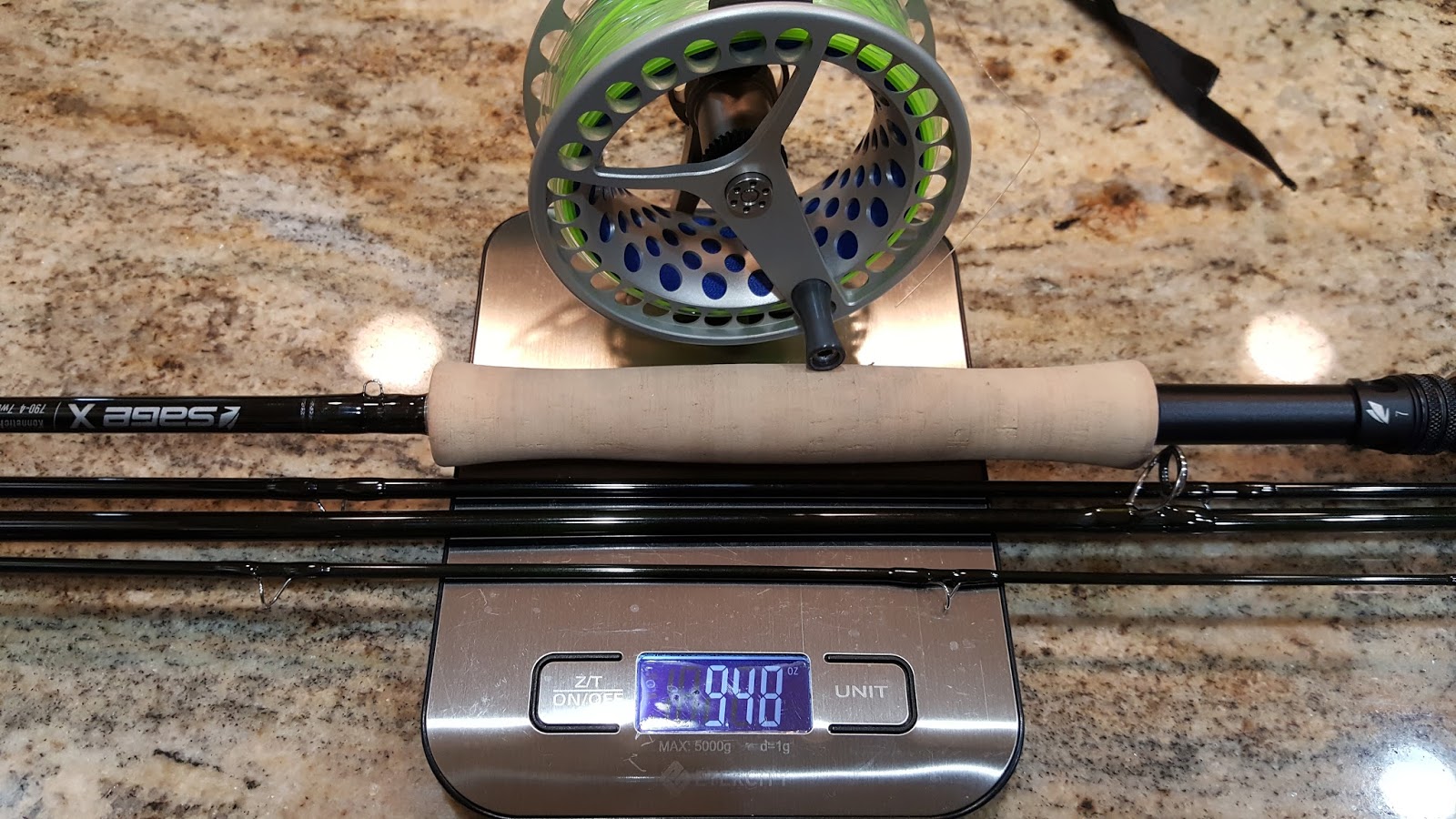
I will say, that after fishing the Sage X 790-4 for over a year, you would be hard pressed to find a better smallmouth bass stick.  This rod is crazy light and mega powerful.  I have never cast a 7wt with so much oomph.  I am able to cast flies I would normally fish on a 9wt with this rod!  And did mention how light this rod is?  It weighs as little as my older 4 and 5 wt!  It is insane how Sage was able to pack so much power in such a light stick.  The power to weight ratio is off the charts with this boom stick.  Paired up with one of the lightest reels ever, the Lamson Force SL II #3 at a mere 4.41 oz, and I could cast all day with no fatigue.

Featherweight Combo for Hucking Bugs

I have fished a myriad of lines on this rod, from floating to fast sinking and it handled them all with ease.  The line speed this rod puts out makes casting in the wind or with heavy flies so much easier and less exhausting.  And, as you might know, it rarely stops blowing in the Gorge.

This is a performance rod, no doubt about that.  The swing weight and sharpness make this rod sing, especially with the right lines.  It does feel slightly more forgiving and deeper loading than the Sage One, which is likely due to the new graphite Konnetic HD tech.  You can cast pretty darn easy with this stick, but give it a good punch and double haul and the line speed smokes!

After a year of testing, here are my favorite lines on this Sage X 790 canon:

Floating- bass bugs, poppers, float n' fly or fishing the top foot of the water column: Scientific Anglers Wavelength Titan


Poppers as the sun drops

I also cast the Rio Directcore Flats Pro when it got hot late last summer.  This is THE line for this rod in tropical locales.  Bonefish, reds, sea trout, whatever!  Load it up and watch it fly!


Intermediate- streamer- Rio Coastal Quickshooter or SA Titan Full Intermediate.  Both lines rocked on this stick, but I might give a slight edge to the Titan as it shoots better with the textured coating.


Fast Sink- streamers, crayfish- SA Titan Int/S3/S5.  You probably see a theme by now, but the Titan lines are made for a rod like this.  I even threw the super fast sink Titan S3/S5/S7 WF8 and this rod got it done!  That line weighs as much as a WF10 standard FYI...


Skagit- OPST Commando with 10' T-8 sink tips.  I have had a blast chucking this stick on little creeks for steelhead and coho.  The power and speed of this rod is perfect for the quick Commando heads.  The 790 X loved the 275gr head.

Sage X + OPST Commando= HO Slayer

A couple quick notes on line selection for this rod:
1.  Do not get a light line for this rod
2.  If you throw big or heavy stuff, go mega heavy, like the Titan, Outbound Short or Quickshooter  3.  For highest linespeed and tightest loops try a Rio Bonefish/Bonefish Quickshooter or SA Bonefish line or as mentioned above, Rio Flats Pro

As you can probably tell by these notes, there are some caveats with this stick.  This is no finesse rod, and my thoughts on making this a trout streamer stick are out the window.  This is a no holds barred, bad to the bone 7wt, not some lily-livered trout rod.  Line choice does matter too, and unless you are a great caster, overweighted lines are the way to go.
Bronzeback Love
For those of you curious about aesthetics and specs, here are a couple photos...

Sub 10oz rod/reel/line 7wt!!!

A simple, elegant rod finish, a la the Sage One

Hard to capture, but the rod is a dark black spruce green, not jet black like the One

My biggest gripe is this reel seat.  I know it is light, but it just does not fit a $900 rod
My thoughts on aesthetics are just that, thoughts, and I know Sage is pursuing performance rather than looks, but given the price tag, I personally wish they would incorporate some beauty into a rod of this caliber.   They make Ferraris beautiful, why not Sage rods?

Aesthetics aside, I have to say that after a year getting to know this rod, that there probably isn't another 7wt this light with this much power on the market.  The Loomis 790 Asquith is the only one in this ballpark.  So, if you are looking for the ultimate bass rod or bonefish rod look no further than the Sage X 790!

Tight Lines!


Ryan Van Duzor
Gorge Fly Shop | Product Specialist
541.386.6977


Read More from the "Bearded Pescador"


"Fly Fish the World with Us"


Mar 9, 2017

Sage ONE Trout Spey 2109-4 Review

Winter Bow
The highly anticipated player in my multi year trout spey obsession is now in hand! The acclaimed Sage ONE Trout Spey 2109-4. I've been dreaming of the tug on a tight line swing with this pint size trout spey for longer than this rod has even existed. The anticipation is maddening!


Sage One 2109-4

Light, balanced, smooth, without hesitation the power exhibited from the 2109 would go unnoticed if it weren't for your fly landing on the other side of the river. Effortless is an understatement!

It's closing in on 4 years since I've landed my first two hand trout. In that time I have fished some amazing water with some great rods. Those rods have helped me learn and refine my casts and tactics in the pursuit of trout on the swing, especially winter trout.

I've always felt a yearning to downsize my gear. The fives, fours and three weights in progression have always led me to seeking smaller, lighter sticks. I have even spent a considerable amount of time throwing one hand spey on single hand rods and that experience has further increased my desire for less.
A peek at my one hand spey game
I've noticed in many two hand trout conversations that it's generally assumed the smaller trout speys cannot do as much as their big brethren. Proceed with caution in these conversations. Many factors play a part in this discussion including fly size, river size, line weights and wind. In thinking about a trout spey rod consider them to be just longer than average fly rods but with a ton of serious power hiding down deep in the butt section. To be a spey rod and trouty at the same time the rod must have reasonably limber deep loading tip sections for light tippet fish-ability but still harness power to move skagit, sink tip and fly. Trout spey rods, just like fly rods, as conditions increase in difficulty be it such as wind or fly size so does the nature of casting difficulty increase.

My point to all this chatter is to express the idea not to assume the little 2109 is incapable of skagit head, sink tip and weighted flies. This stick possesses a serious amount of trout soul while still having a strong backbone. While not the rod I reach for in the most demanding conditions it has become the rod I grab in all but the toughest conditions.

My experience with trout spey is we are just now realizing the full potential of abilities with the smaller rod offerings. New lines today from RIO, OPST and Airflo have been key in helping us to extract the deeper potential in these small rods. I have witnessed a combined effort of trout speys and short skagits that has taken us to where we have arrived today. Without these ultra short skagits I believe we'd still be unclear in the validity of such small spey rod offerings.

2109 - Not a wimpy noodle!

I gave 2109 a RIO Skagit Trout Max in 225gr and looped on 10' of T-8 and one of my cone head tube flies and went to work! Snap T, swing into the D-loop and gave a pull on the lower hand and away it went as if it was in autopilot. It felt right from the first cast!

Shown with the New RIO Powerflex Max .024"
What's that hiding in the background!

For this rig I chose a Sage 4650 fly reel. I loaded it with 100yds of gel spun backing, spooled on a RIO Gripshooter line in 25# and looped that to the Skagit Max Trout 225gr head. The 4650 five weight reel had plenty of room for the trout size spey lines and with it's lightweight feel, precision sealed disc drag and a audible clicker is a great compliment to the overall trout spey outfit.

RIO Skagit Max Trout Head measuring at eleven foot is the shortest of any skagits I know. When I first tested these heads I had some trouble holding anchor points. I found them more useful on single hand rods for one handed spey cast. Figuring the short length of 2109 I felt that I should give the little skagit a try. I am a bit surprised at how well a 225gr matched up. I really like the shortness of these heads because they allow you to strip in closer. Yes, I swing flies but I also do a lot of swing/strip and many days that's the method the fish want.

Line It Up

I tested OPST Commando Heads in 225gr and the new Airflo Skagit Scout in 210gr. Both heads performed very well. I feel the 2109 just has a great progressive load that allows it to work well over a wide range of skagits. I see on the internet some guys really like this rod all the way down to OPST Commando 175gr. I haven't tried that yet but no reason why I won't in the future. Point is this rod is not picky so choose your preference but a great starting point would be the OPST 225gr.

Soon I will be testing some scandi's on 2109 as well as 3110. As of writing this I am in winter mode and that means staying active, swinging streamers and hunting for aggressive trout. The anticipation is what keeps me warm on cold winter days.

Some will question my sanity claiming I have found the ultimate Trout Spey and it happens to be this little guy 2109. Truth is the entire Sage ONE Trout Series is incredible and if your water calls for bigger, more powerful and longer sticks then by all means step up. The 3110 sibling is super sweet a very capable player of all things trout. The 4116 feels a tad faster and while it handles a skagit with authority it is also "and" still my personal favorite scandi stick for bug sipping season.

If trout are in your perimeter reach and you haven't pick up a two hand trout spey yet then all I got to ask is "Why Not?" The gear is so good, we have all the lines we need, and the TUG CAN"T BE BEAT!


BassProGreg
Leave a Message


Gorge Fly Shop Internet Sales Manager | Product Specialist


"Fly Fish the World with Us"


Sep 27, 2016

Trout Spey - Why Do It


Curious, being a Northwest fly shop in the heart of Steelhead country we can get clouded into thinking that all fly anglers are involved in two hand spey. Having spent time away in other locales I've come to realize that spey is still a very small part of the overall fly fishing scene. Outside of steelhead water even when you remove the obvious non-spey circumstances such as flats angling or boat angling, I rarely find another two hand angler.

When I'm out wading in the trout stream I still feel very alone swinging a two hand rod. It's funny to watch reactions for other anglers I encounter. Some disregard what you're doing as no big deal. A few will watch for a minute with curiosity. Most will flat out not look at you and pretend you do not even exist. I try my hardest to put on my best show. Slow down, let the line rip from the water and remember to pull with the underhand to launch a sweet tight loop. I always hope I will hook up in front of one of these anglers for no other reason than throwing affirmation their way that fish can be caught without a bobber. Rarely does the hookup happen in front of others and even on the few occasions when it does usually it's in front of the ones that won't glance your way.

Why Do It?


To be honest normal trout tactics really don't much appeal to me. Of course dry fly fishing is one exception to that statement but even then I don't much care for it if a fly gets smaller than say a sixteen. As long as the flies are patterns that I can see on the water then I'm good but midge and baetis, you can have that stuff.

Indicator fishing is not really my thing either. I'll do it if from a guided drift boat but even then I'd rather we throw a hopper dropper setup and maybe get a fish to show himself to a chubby once in a while or let's rip some streamers. Really I wish more guides would anchor the boat and get out with anglers to wade more often. For me wading really does add to the experience.

Wade nymphing just does not interest me at all. I like to cast so lobbing a cumbersome nymph indi rig over and over again just takes away from part of the reason I'm fly fishing in the first place. If I'm just going to lob a rig than I might as well have a spinning rod in my hand and even as I make that claim it isn't true either. On the occasions that I have fished a spin rod in a stream I still want to tight line fish so I won't even lob a spin rod. I guess I just prefer to tight line fish, period!

What Was The Question? Why Do It? Why Trout Spey? Why Not!

The Cast is the first reason that comes to mind. I like to cast. Not that I will ever win any competitions at it but I cast well enough. I notice a lot of non two hand anglers have the idea that learning is really tough. My opinion is learning to spey cast is rather easy but getting good at it takes time, patience and practice. Most anglers that start spey casting with an instructor are usually fishing within minutes of picking up a two hand rod. I don't buy into the argument that it is too hard to learn.

The tight line is the second reason that comes to mind. I want to feel what's going on on the other end of the line. I'm seeking the tug. The connection to my quarry. It's real to me. The feeling of the grab indicates there is life in this stream and it wants to eat my fly!

Sink Tips

I never enjoyed casting sink tip fly lines with single hand fly rods. Let's accept some fishing facts, fish live near structure and structure is usually found in the depths and bottoms of rivers. Seams, current breaks and eddies are all created by some kind of structure. Getting your fly to these areas is not always easy. Weighted flies and sink tips on trout size fly rods can get a bit dangerous. Spey casting can remove the danger and help present a fly into these difficult areas. It removes the danger by anchoring the fly in front of you so the fly never comes flying past your body. Using two hands instead of one provides push pull mechanics to a cast that greatly increases available power to move the fly and lines (especially skagit lines) Skagit heads have greater mass to carry sink tips and weighted flies. Another benefit is you never repeatedly false cast line therefore no energy is wasted with time spent getting distance in your cast. I want to finish this paragraph with one fact for anglers that have not yet experienced spey casting, casting a sinking tip is effortless with two hand rods and you won't need shoulder surgery by the end the day.


Fishing Untapped Water

Another benefit I enjoy especially on heavily fished water is I often find myself fishing water that no one else wants to fish. Fast tail outs, long fast runs and seams on the opposite sides of the river that single hand casters cannot reach.

No Backcast Space...No Problem
And there's the backcast space. I need very little backcast space to make a two hand cast. I seek these areas on rivers were single hand anglers cannot backcast. It's like fishing untapped water. I find that even water like this that the boats drift indi's through all day can still be very productive to the swing angler. I believe fish respond because it is a different presentation than what they are use to seeing.


Not Just For Sink Tips

I know I talk a lot about sink tip fishing and all the benefits of two hand delivery but you don't have to fish sink tips with two hand rods. Some examples of fishing dry line techniques includes skating dries, tandem soft hackles and combinations of nymph and emergers can be deadly productive especially on heavily fished water. 
Swinging Soft Hackles
Somewhere along the way anglers have been convinced to fish a nymph you have to use a bobber. I'm here to tell you it's not true. I'm not writing this to dog the indicator and yes there are some pieces of water that simply won't effectively get fished without "bob" but much of the time bobs are like training wheels. They just support you while you learn. It might be time to remove the training wheels and learn to achieve connection. Just saying!

Two Hand Spey Is Not For Everyone

While I make it obvious I endorse two hand tactics let me just clarify that two hand rods are not going to replace single hand rods and many anglers won't have a need for them at all. Two hand rods really lend themselves to river environments. Generally swinging flies is a tactic to cover water and not really ideal for target casting fisheries and stillwater fisheries. Some anglers are using switch rods for overhead shoreline and beach casting because the extra length can provide a lot of leverage for distance casting. Boat angling, flats angling and sight angling is generally better suited to single hand overhead casting for both accuracy and presentation.

A Different Presentation

In this article I've often talked of showing a different presentation. I'm convinced resident fish on highly pressured water become accustomed to standard presentations. Sure these tried and true presentations still work or anglers would quit doing them but I'm not necessarily after just numbers of fish. My most memorable days are not the days I caught 50 fish. Instead my memorable days are often associated with that one brown trout that I was lucky to get a hook in and even luckier to land it. The fished that attacked my fly so hard he nearly yanked the rod from my hands. I want to catch the fish with attitude! The one that fights till the end and splashes water in my face when I release him. I'm not suggesting that you should go to the river with a one fish expectation but ask yourself this, what do you want your experience to be?
Swung on single hand Winston 9' 5wt equipped with RIO Skagit Trout Max
200gr and 8' of T-8 swinging a conehead tube fly.

What's In The Future

Actually I believe the future is unfolding now. Many like myself are figuring out that a good moderate-fast stick in the 9-10 foot range can be a great trout spey stick with the advent of the latest extreme short skagits now available from RIO, OPST, Airflo and Scientific Anglers. I'm not going to stop swinging my Sage Trout Spey HD or Winston Microspey and replace them with single hand sticks but I have experimented with and regularly employ single hand rods in the 8'6" to 9'6" range with amazing results. I think a door is wide open for a trout angler to line a reel with trout skagits and get a taste of trout spey with a rod already in ones arsenal. The cool aspect of this idea is carry an extra reel spooled with a dry line and just switch out if a hatch comes off. There's no reason to not experiment now and if trout spey hooks you then reach for a dedicated two hand stick. More about...Single Hand Skagit - How to get Started


But Why Do I Trout Spey

I trout spey to bring me closer to the stream and its inhabitants. I trout spey to give me freedom to fish weighted flies and sink tips with ease. I trout spey to swing my own flies and know that the fish in that river are seeing something they have never seen before. I trout spey to utilize water others disregard. I trout spey because it helps me find peace and serenity. I trout spey in search of something real in life that will be remembered to my dying day. I trout spey for the challenge and I live for the tug. I trout spey because I choose to do things a different way.
Greg

  © 'and' Steelhead.com Mike Prine 2009-2014

Back to TOP