Showing posts with label Predator Hunt. Show all posts

Mar 16, 2021

Predator Hunt - Pre Spring Bass

What time of year do you start thinking warmwater? May or June! 


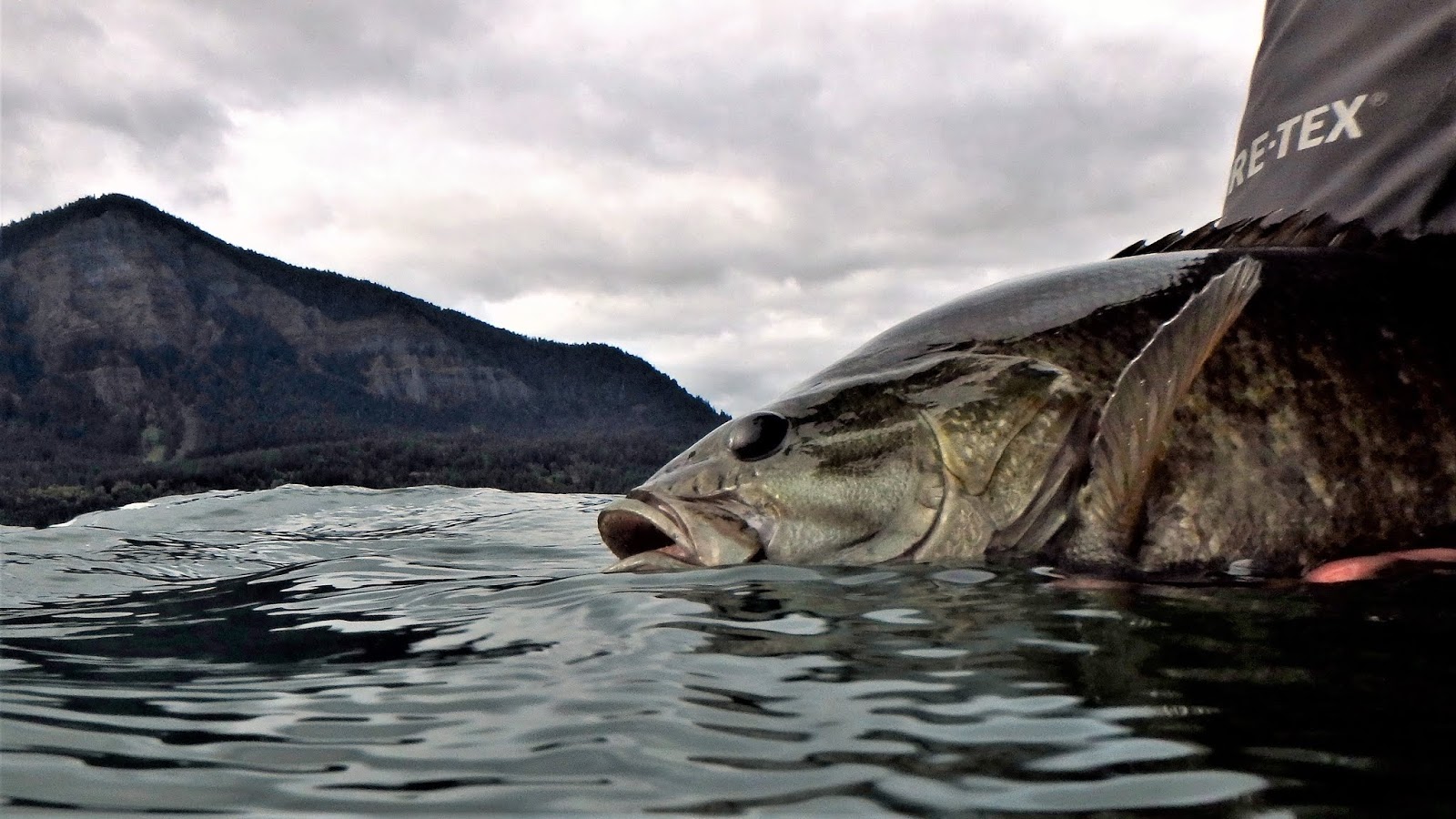
I readily admit in my younger years I had a hard time fishing bass before May and June was even better. Over several years of pushing earlier and earlier into the spring season I can safely say March is not too early. I'm not just speaking to those in southern regions, I've personally have caught and released trophy class smallmouths in March on the Columbia River as well as many other locations. 

The idea for this article comes from the fact that here we are in middle March and I'm already feeling behind on preparing my gear for some warmwater fly angling. Winter trout fishing has been so good that I'm running into species overlap. I'm not ready to give up winter trout'n but pre spring bass'n is ready to take off. Better get my rear in gear!

Key points to this Pre-Spring Bass Fishing

Early Bird
We've all heard the old idiom of "early bird catches the worm." Throw that bird crap out the window. Early season bass requires you to fish in the warmth of the day. It's fine to start early or finish late but In my experience this time of year mid day is where it's at. 

Slow Down! No need to armpit strip those streamers right now. Let the fly sit in their face for as long as possible. With that said focus your flies on ones that sink slowly or better yet suspend. 

Recognize the Strike
Cold water bass strikes are usually much more tame this time of year. Keep full attention on fly and fly line. Watch for the slightest of ticks. Try to keep your line taunt without moving your fly. That doesn't mean drag your fly slowly. Instead, jerk your fly multiple times then allow it to suspend for as long as you can stand it. The erratic jerking movements will attract the fish and pause suspension will give him time to commit. 

Location, Location, Location
This one could be a whole article or a book. Fish south facing shorelines and areas that get a lot of sun. Look for obvious structures such as boulders, culverts, and tree stumps. Rocky reefs and current breaks can produce some early bass. Bottom line is fish where you would usually find fish with an emphasis on areas that will likely warm earlier in the year. 

Be Stealthy
Spring time before major rain and runoff, rivers and lakes are usually pretty clear. You should take extra precaution with a stealthy approach. Stay away from wearing bright colors, watch your shadow, cast long when possible and avoid moving fast and making noise. 

Boat or Foot
Boats can be super helpful but I found that if you can access good water on foot you may have an advantage in early spring. Boats make noise and easily get blown off target. On foot you are quiet and land will keep you on spot. Access is key and you may only have access with a boat but do keep in mind trolling motors, kickers and anchors all make a lot of noise, noise that most fish have not heard all winter long. If using a boat you might consider setting up drifts using the wind instead of motors and anchors. 

And my last tip is...
Get acquainted with fishing a Float and Fly Rig. There is no better time of year than to soak a fly under a indicator for early season bass. What's funny is I won't spend one minute fishing an indicator for trout but when it comes to bass and the dozens, maybe in the hundreds of trophy size smallmouth that F&F has shown me over the past 15 years is more than proof that early season smallmouth want their presentation to be suspended with time to ponder and commit. 


If you are one that refuses to fish an indicator I totally understand and respect your position but do please take away the F&F idea that the longer a fly will suspend in the face of a early season bass the more likely curiosity will prevail and attack is imminent. 
Greg Darling


https://www.gorgeflyshop.com/store/pc/Sale-Closeouts-c38.htm

"The Gorge"

Gorge Fly Shop Team - 541.386.6977


"Fly Fish the World with Us"

Sep 11, 2020

Misfits on the fly

Non-target species, do you appreciate them or despise them? 

Fish are opportunist! They rarely pass up an enticing meal. Any well presented fly could be devoured by any fish that reside in that watershed. 

Are all fish inhabiting your water a target species? Probably not. But what does catching a non-target species do to your experience? Is it welcome? Or is it just a nuisance? 

I could tell you a six pack worth of stories of actual anglers losing their shit over a non-target by-catch. Some stories are not pretty. Personally, I don't understand. 

I often read a blog of a professional angler who claims to have over 400 fish species caught on fly rod. Everyone of them is special to him no matter how big or small they are. 

So take the odd photo of the non target fish and remember the good times. In my eyes all fish are beautiful. Remember no matter what species you catch that fish has already survived great odds to grow to the point of being catch-able in the first place. 


I've caught many catfish on the fly with the biggest to date being 10lb. This one was in a rock crevice exactly where you'd expect to catch a big bass. He hit hard and headed for deep water. The fly is my own version of Chuck Kraft's Clawdad. He fought hard and never gave up. A respectful catch in my eye's. 

On a few rare occasions I've witnessed a non target species directly interfere in the pursuit of the target species. It's disappointing but it happens. You can't blame the fish, they are just opportunist. This jack pictured above ran out in front of the target Tarpon and snatched my fly. The picture reminds me of this event.


Once past the challenge of finding crappie catching them on the fly is the easy part. Patience is needed but they are willing eaters when given a chance. 


Although I've caught a few random crappie when bass fishing it wasn't until I started targeting them with float and fly methods that I was able to find consistent action. They are beautiful fish, loads of fun and make a great shore lunch.


The catch of a bluegill or sunfish is not such a big deal but what attracts me is the variation of colors and sub species. This one pictured is a great example of this. 

While easy taken on small streamer flies the real fun to these is dry fly with flies like small dragons and damsels. I've seen sunny's leap out of the water to grab a damsel fly.


Below, this Spotted Bass came from the Ozark region. They resemble largemouth but strike and fight more like what smallmouth are known for.


 This healthy fish with crimson red eyes was quickly returned to live and fight another day. 


Catfish on Popper!? Yes, it's true and has now occurred twice for me.


This cool looking rock bass is considered genetically unique to the White River watershed and is officially named the Ozark Bass. 


Perch tend to hug bottom so to catch them your fly better be hugging bottom too. Find them, get a fly to them and it's game on!

Not sure of the species of this jack salmon caught in the southern Chile region. While small in size it put up a hot fight with many blistering fast runs and several aerial leaps.


Several walleye have bit me off before I actually landed one on the fly. Light tippet is no match for their sharp teeth.


If you fish water with White Bass, same family as the Striped Bass, you cannot help to eventually hook up with one of these. They can be a ton of fun if you happen upon a school of them. Action can be fast and furious.

Caught alot of the Columbia River Pike Minnow or formerly known as a Squawfish. This one Gabe caught might be the largest I've seen. They fight hard at first but quickly give in.
Dan caught this healthy specimen 

I can think of many more by catches that I just don't have photos for them such as freshwater drum, black drum, shark, whitefish, pike, chub, sculpin and even caught a sturgeon while bass fishing on the Columbia. 

I enjoyed everyone of these catches. Just like the fish, I guess that makes me an opportunist as well.
Greg

Aug 31, 2020

On the Hunt - Warm Water and Fly Rods


Do you warm water fish with fly rods? 

I've got to say in the past decade I can count on one hand the total number of fly anglers I've witnessed warmwater fishing with a fly rod on my local lake meanwhile on the trout stream you have to set up camp and claim your rock. What's up with that! I luv fishing trout but forget the crowds! I guess that's why I do most of my trout fishing in the winter time.


I know what you are thinking. Well Greg, you need a boat and I don't want that hassle. I get that! But wait, I've fished all spring on warmwater without a boat and have quite a rack up of species including bass, crappie, sunfish, walleye and catfish. 


Topwater bugs account for a lot of bass but weighted crawfish and streamer patterns fished around rocky structure will produce the majority of your multi species catch. 


Mr. Walleye fell to my float and fly technique. He was positioned right on a vertical dropping rock face. Perfect for a fly to fall in and hang several feet down under a float. With a little wind movement and a couple twitches, it was game on!

So when your trout water has a larger angler hatch than caddis flies and your favorite steelhead run is being swung through tighter than a flea comb maybe consider your local warmwater. You might not only find some solitude but also some eager multi species.

Check out tricks and tactics in my many other On the Hunt Articles
Greg

Jun 7, 2020

On the Hunt - Walleye on the Fly

One never knows what One might encounter!

So I've been keeping pretty low in all this COVID-19 mess. To avoid crowds I've taken to much more angling on foot than boats or inflatable craft. It's actually been a fun challenge to find accessible water and to find a tug.

The other day I watched my float disappear to the depths and set a solid hook into what I would have guessed to be a good smallie. When I finally got a look and saw the wally I couldn't have been more excited though I knew the chance of landing the toothy beast was still quite slim.
If you've followed any of my On The Hunt Series of articles than you know that I am a fan of float-n-fly fishing. While personally I find indicator nymphing for trout to be quite boring but something about this float and fly technique for warmwater predators just excites me to the very core. Maybe because it does not select a particular species instead it crosses over all species. Maybe it's because when nothing else wants to work I can count on this technique to produce something. 
This is not the first walleye I've hooked on float and fly but it is the first one I've landed. I for sure have hook at least a couple others and they have either thrown the hook or bit me off. I've also encountered a couple bite offs that I never saw the fish and suspect these were walleye as well.

My System

I have found my Thomas and Thomas Exocett SS 200gr rod to be the most ideal one rod to carry while on foot. It responds with authority to every command I give it. Lift, strip, hookset and cast are all commanded with this rod. It easily crosses over from topwater bugs, streamers and float-n-fly providing a truly universal shore stalker tool.

A Galvan Torque Reel size #6 in blue is a great look and fit. A #7 would also fit well and give you a little more backing capacity

Line is a Scientific Anglers Amplitude Smooth Titan Long WF7F. I feel like this line was made for this rod. It will move anything in short cast and in capable hands go for any distance you want even to the end of the line.

I custom make my own float and fly leaders from Maxima for the butt section to Scientific Anglers Absolute Fluorocarbon Tippet. This tippet proved its worth against those sharp walleye teeth, or maybe a got lucky! Regardless the tippet did its job.

I tie my own flies but the new Solitude Drop Dead Minnow will get you started in this technique.

The addition of this walleye boost my total Float & Fly species count now to fifteen. Who's up for some fish tacos!
I'll see you on the water...But you won't see me!


Greg Darling 


"Passion For Fishing Is A Lifelong Pursuit Of Discovery"

May 8, 2020

On The Hunt - Float and Fly

Confidence: the feeling or belief that one can rely on someone or something; firm trust.

It's easy to be lured in by techniques such as big streamers or big topwater and yet so often success can be minimal at best. It's not that these aren't proven techniques but often times they are not implemented at optimal seasons or in optimal spots. Combine wrong technique for the season and/or unproductive water and you have a setup for failure.

A way to overcome this failure is to build on a technique that one can quickly gain confidence in.

In my warmwater predator hunting adventures I've come to rely on a technique that not only do I gain confidence quickly but many days just can't get enough of the fun with this technique.

On days when nothing else wants to work I can depend on Float and Fly. More often than not it will show me where the fish are and provide me with important clues to their current feeding mood.

I mention "feeding mood" to emphasize the fact that predator fish are not always willing to chase down a streamer or break surface for a topwater but that doesn't mean they won't eat. They might just need a presentation that doesn't necessarily force a reaction but instead it works by teasing and temptation.

Think of it like this: Pick your favorite candy bar. Let's say it's a snickers. If I hold a snickers in front of you long enough I bet you will take and eat it. How long of period that is will be greatly be determined by your desire to give into temptation. This could vary day to day or even hour to hour.

Origins

Float and Fly has it's origins as a gear technique. Crappie anglers rely on this system to get their early season catch. These old school guys will tell you that they often run into bass, particularly smallmouth bass while attempting to catch some silver slabs.

Recently some fly guys, including myself, started to look at this idea as a fly rod technique. After all if you look at indicator fishing for trout, outside of the fly there is not a whole lot of difference. Or is there!?

Personally I've worked with this technique now for about twelve years. There are some distinct differences compared to trout nymphing. Starting with...

12 years perfecting this fly. Blurry on purpose!

The Fly

Starting with the fly, while many flies hung from an indicator will catch fish, a float and fly system, fly is designed to represent baitfish and should be delivered in a horizontal presentation. Notice the Solitude Drop Dead Minnow is tied on a jig head. This gives the fly its horizontal presentation.
Solitude Drop Dead Minnow

Leader

A good leader for float and fly is the RIO Bass Leader. It has a strong butt section for great turnover of fly and float while the 9 foot length is perfect for majority of this fishing.

Indicator

Hard to beat the easy usability of an Air-Lock indicator. If you need to adjust depth just loosen the screw, adjust and re-tighten. Thing-a-ma-bobbers work just fine too.

Fly Line

While no special line is needed I do prefer longer headed lines for mending ease. Lines like Scientific Anglers Amplitude Infinity or RIO's InTouch Trout Steelhead Indicator line work very well.

Fly Rod

Without getting into a books worth of rod choices let's just say a 6-7 weight in at least a 9' length. Adjust as necessary. Your fishery might be just fine with a 5 wt. One of my favorite rods for this technique is a Sage X 597-4. It's 9'6" with full wells grip and fight butt.

Technique

Start with your fly about 5-6 foot below your float. Adjust as necessary. Seek out your ideal smallmouth holding water. Now I realize that last statement could prompt an entire article about what smallmouth holding water looks like but that will have to be for another time. In general search rocky shoreline areas.
Cast in tight to these areas. Move often, even if only a few feet. When a smallmouth bass takes it he will steadily pull it under and most cases even out of sight. No reason to get in a hurry to hook set just so long as indicator is well under you should come to a solid set most of the time.

A cool feature of this technique is the fly is almost always hook up in upper jaw. It's makes for a super clean catch and release and comes with a solid landing ratio.


Clues and Insights

This isn't sit on a bucket while drinking PBR type of fishing. Keep moving! Most take downs are within 10 seconds of cast. If I really have confidence in a spot I might soak it for maybe a minute, max.

I tell anglers to fish it like a popper. Cast, let settle, give it a twitch or two, maybe a pull, move!
On those days when a bass won't break surface for a topwater or move for a streamer, they'll eat float and fly. So have confidence and keep searching. They will show themselves.

River or Stillwater

Bass in general are stillwater creatures. Even if you are fishing a river such as John Day, most bass will set up on drop offs, current breaks and eddies. Much of this fishing is done in those stillwater spots directly adjacent to currents. You might call them frog water. Don't hesitate to work float and fly down a current seam just as if you are drifting a nymph for a trout. But also don't overlook the "frog water" behind the current seam.

Where

Local to Gorge Fly Shop is an incredible smallmouth fishery in the Columbia River. While access is limited especially without a boat there is in fact many places that feature quick dropping, rocky shorelines. The next couple months will be prime for smallies in close to shore.

What are you waiting for!

I'll see you on the water...But you won't see me!


Greg Darling 


"Passion For Fishing Is A Lifelong Pursuit Of Discovery"

Jul 15, 2019

Thomas and Thomas Exocett SS Rod Series Review


Big Flies! Big Fish!

We place big demands on fly rods in this modern day of extreme fly fishing. Flies are bigger, lines are more aggressive, our casting is more aggressive and we go after big payoffs! It's no wonder we are in constant search for the next better fly rod to appear on the market.

A bit over a year ago my friend and guide Lance handed me a rod to fish that I will say without hesitation has since changed my understanding about rod actions.

You see, I'm a big fly junkie! If I need magnifiers to tie on a fly than that fly is too small! I don't even like flies in the double digit range unless it's on the big (?/0 = aught) size. Streamers, sliders, frogs, beetles, hoppers, sculpins and crawdads, whatever is on a predators menu is fair game.

The rod that I experienced was the Thomas & Thomas Exocett SS 250gr.

The game was for big migratory brown trout in Chile. The freestone river was extreme in diversity from high winds to slot canyon bluffs. Casts were either short and precise to pockets or across stream long.

No Tip Quiver

The first characteristic I picked up on with Exocett SS was it's ability to make short upstream one backcast flips and not express a tip quiver. Up till that time with my personal rod each flip ended with a disturbing little tip quiver that inherently pulled my fly a foot from target every cast. No matter how much I tried to adjust my cast my rod did this. Guess what, most of today's fast action rods do this with heavy flies.
Exocett SS has amazing dampening action and does not quiver.

Lifting Power

Next, I notice the extreme power to lift. Heavy flies and lines don't always pull easy from the water. This fact can consume a lot of your arms energy throughout the day. Exocett SS is way easier to lift heavy flies and lines from water. Like quite noticeably easier.

Since this first encounter I've tested this rod against many others in lifting power alone and the next best rod I found is still no comparison to the Exo SS.

Fighting Power

On my last day at end of day I hooked a giant! Due to the big browns advantage in situation I still can't believe we landed it.

We were fishing boulder pockets and a big brown thrashed the surface hard just downstream from where I was wading. Lance yelled to me to throw across stream and swing my headbanger fly across where that brown just jumped. I did! He nailed it, hard! I returned a hard hook set. Immediately he turned head for downstream.

The quarters where tight in a canyon with rapid after rapid. If he would have made it past the first downstream rapid there would have been no way to hang onto him.

With rod bent through the cork, butt in my gut and two hands on the grip I battled that brown from rapids and brought him to lance's hand. He was the star of the trip easily surpassing 30". I don't think the rod I brought could have done it.


Since that first encounter with the SS250 I've also had the privilege to experience the SS160 and the SS350 grain models.

The Exo SS160 is a hopper/popper dream rod. Precise and easy, cast after cast. On missed strikes it will pick up gobs of line and make one shot recast back on target with precision. It also handles mid size streamers with ease.


I took an Exocett SS350 to New Orleans and battled some bull reds. It's was absolutely perfect for this fishing. Easy short, precise cast with powerful hooksets and quite capable of reaching out to those far out targets in the wind.


Our last day was a fish frenzy. With my regular rod I would have had my arm in a sling by the end of that day but I wasn't sore at all. The Exocett SS powered through every fight and begged for more.

The Exocett SS's will adapt to many lines but my favorite "big power" line thus far is Scientific Anglers Amplitude Smooth Titan Long. The rod is quite capable of shooting the entire line. For the SS250 run the WF7 for easy flies but go up to the WF8 for the heavy stuff. Run a WF5 or WF6 on the SS160 according to your needs. These rods adapt well to lines so be willing to match line according to fly size and worry less about the rod.

The Exocett SS also comes in a 200 gr and a 450 gr both of which I've not yet had the pleasure to fish. I'd like to change that soon.

For your viewing pleasure


Get More "On The Hunt"

I'll see you on the water...But you won't see me!


Greg Darling 


"Passion For Fishing Is A Lifelong Pursuit Of Discovery"

May 20, 2019

Predator Hunt - Rigging and Fishing Crawfish Patterns

Columbia River Smallmouth Bass


Crawfish, Crayfish, Crawdads or Clawdads...Whatever you wish to call these armored, tasty creatures!


It's my belief that crawfish pattern flies are greatly misunderstood. So, to make a bold statement like that you'll demand I back that up. Here's my take on this and I'm going to start with shooting a bullseye right at the fly tying industry first.

CRAWFISH ARE NOT ORANGE!

I've found a lot of crawfish in nature but I've yet to find a live one colored orange. Unless you have crawfish in a pot of boiling water their color is NOT orange! But yet every fly shop fly bin has orange crawfish patterns in them.

Yes, there are red crawfish in the south regions but most of us have crawfish in the brown or olive coloration. They might have hints of orange but all orange is rarely ever found in nature. If you have orange crawfish in your fly box, take them out now and let's start over, pronto!

Colors to look for are tans, browns, chocolate browns, olives, dark olives, blacks. Highlight with hints of red, chartreuse, blue and copper. My "go to" crawfish flies are brown with copper highlights or black with blue highlights or dark brown with olive highlights.

My general rule is your pattern should closely match the the bottom of where you are fishing or go with black for an increased silhouette in stained water.

Catfish Eat Crawdads

Size

While it would seem bigger is better I prefer to keep them small and slim. Small and slim profiles sink better and since I want this fly on bottom bulky material will just slow down the sink rate or even prevent your fly from reaching bottom. I see some crawfish patterns having big bulky claws, these are not necessary. Matter of fact a crawfish pattern could not have claws at all and still be effective. Often in nature crawfish will have just one or no claws at all most likely lost in defense of predators.

Back to the fly

Crawfish patterns need to have strong hooks that are tied to ride up. These characteristics along with strong tippet will give you the ability to work around heavy structure.

Heavy Fly and Heavy Tippet

Along with a slim body a crawfish pattern will need to be heavily weighted in order to sink well when attached to heavy tippet.

Largemouth Bass eat Crawfish

Fish it like you intend to lose it

Crawfish survive by their ability to run and hide from their prey. They scurry under rocks, boulders and wood structure and will remain relatively close to hiding spots.

To make natural presentations flies need to be cast right on these structures and allowed to fall in and around them. Too many anglers spend all their efforts trying to avoid such situations when they should be aggressively going after those tough presentations.

Presentation

Once you have presented the fly try to keep sight on it as long as possible on the initial drop. Many strikes occur at those first descending moments. Don't be in a rush to start stripping. Maintain a taunt line without moving your fly. Keep on the alert for any tick movement at all times.

Next action is to make 2-3 very short strips like 2-3 inch strips, short and quick! Pause....2-3 more short strips! Pause. At this point if nbo strike has accured go ahead and lift fly quickly and recast to next location.

Avoid presenting/stripping your fly all the way back to you. The longer you dredge bottom the more likely you will snag the fly. Most strikes occur on or after the initial drop and strips. No need to continue. Cast to a new spot and keep moving.

Structure

Things to cast on include, rocks, logs, root wads, quick drop offs, points and man made structures.
When sun is high fish the shady sides. Imagine there is a fish under every boulder you see, More than likely there is!

About leaders and tippet

In this type of fishing I tie my own leaders. Start with a 30" section of heavy nylon monofilament in the .024" - .026" range and nail knot that directly to your fly line. No loop to loop in this setup. You want NO possible slack in this system. Hatch Professional Med/Hard Monofilament leader material is a good choice.

Next slip on an indicator such as RIO's Kahuna LT. Slide that right up to the nail knot. This indicator is not intended to float your fly instead, together with the mono butt section it is to keep the tip of your fly line on the waters surface and provide sight reference to help detect those slightest of strikes.

Next tie on 30" of 30# Hatch Fluorocarbon Leader, then 30" of 25#, then onward to 20# and in most cases I'll end in 16#. You got to be the judge of what your final tippet needs to be in order to avoid detection. Hatch Fluorocarbon Tippet works great for all of this.
Personally I believe if you fish this fly correctly you won't have tippet shy problems.

All blood knots, no loop to loops. Tie fly on direct with a improved clinch knot. No loop knots!

The idea of this leader is to keep your fly line tip afloat while the rest of the leader is free to sink as deep as needed. The indicator will help keep the fly line floating, provide strike detection, and if it sinks you will know that depth has exceeded your leader length.

Even Crappie will eat a well presented Crayfish

The Strike

Strike detection is the utmost importance to succeed in this fishing. Big predators that eat crayfish typically engulf and crush the crawfish in order to kill it and avoid being pinched. Strikes are usually not an eat and run ordeal. One slight tick on your indicator my be the only sign of a strike you will get. Don't hesitate, hook set immediately.

I've watched countless many times anglers detect the initial strike and remain still waiting for something bigger to happen. I always say the next tick in the line will be him spitting it out. Hook sets are free, all day long! Take advantage of that. I'd rather find out I set on nothing than miss a possible catch of a lifetime.

Hint...the biggest bass will strike the lightest

It took me years to feel confident in fishing craw patterns on fly rods. I hope this info can help advance you along much quicker path than I did. It's become one of my favorite ways to fly fish for  big predators.

Greg


Greg Darling 


"My Passion For Fishing Is A Lifelong Pursuit Of Discovery"

May 2, 2019

Predator Hunt - Warm Water Fly Fishing Lakes and Reservoirs

Smallies at Sunrise

On The Hunt

Over many years of warmwater lake fishing I can count on one hand how many other anglers I've witnessed fishing with a fly rod. I'm talking hundreds of days spent on the lakes and reservoirs, warm water fishing and rarely ever see another angler with a fly rod. Why is this water so barren of fly anglers!?

Do you have a warm water lake or reservoir near you? Let me provide you some reasons you might want to fly fish this water.

Let's start with the obvious...No one else is doing it!

These warm water fish have seen every lure known to man but they have never seen a fly. That is a HUGE advantage! They've never seen streamers or natural looking crawfish patterns. No one has ever fished a beetle, dragon fly, diving hair frog or fly popper to them.

Multi Species

Lakes usually have many different species inhabiting them. This fact can make the fishing interesting when you are never sure what you have hooked. It also can provide options. When some species are being hard to find others may be readily available to take your fly.
Crappie on the Fly

Room to Fish

When the local trout streams are crowded I can usually find solitude on lakes. Sure, you'll need a watercraft of some type to get there but that becomes part of the adventure. A boat or kayak, I've even ventured out in my Outcast Stealth Pro on lakes and found great fishing.

Stable Environment

When you favorite river gets blown out by a storm the day before you were all set to fish why cancel out the day and sit on the couch stewing about it. Go to a lake instead. Most lakes can take a pretty good storm without being disrupted. Sometimes the influx of fresh rain water can even turn fish on. Make your local lake a plan B and before you know it might become your plan A.

Wild Fish

The other day I had a trout fisher friend from Colorado with me on a local lake. We were having a great time catching smallies. At some point during the day he asked in a statement way, "so these fish are hatchery I assume?"
Largemouth Bass on the Fly
It never ever occurred to me that this could be a question but I guess if you only grew up around stocked trout fisheries then why would one assume warmwater would be any different. New  reservoirs may have had some original plantings of species but after that most warm water lakes and reservoirs are self sustaining and therefore the fish are wild!

The Pursuit

Remembering back many years ago the first time I took a fly rod to a lake I felt a bit like it was a needle in a haystack kind of situation. Armed with a craw pattern fly a friend had given to me it wasn't long and I found some smallmouth bass. Pretty soon I was spotting carp to cast to and after a few failed attempts I finally got one hooked up. Today I've caught on fly about every warmwater species you'll find in the most lakes.
2001 - My first Fly Caught Smallmouth

Funny Looks

I get funny looks from other anglers that I encounter during my day and many have even asked if I am actually catching anything. Little do they know while they were within my sight I was quietly releasing my catch on the opposite side of the boat so as to not give away any secrets. Today , I can out-fish most gear anglers with ease.

I'm Hooked

For me a fly rod on a lake is not only a viable, fun tool but I've also come to realize that in many situations in the right hands it is a superior tool. I can deliver pinpoint accurate cast with realistic presentations and offer to multi species, natural imitating fly patterns with an end result of incredibly fun fishing.

Now, Why aren't you doing this! Get More "On The Hunt"


I'll see you on the water...But you won't see me!


Greg Darling 


"Passion For Fishing Is A Lifelong Pursuit Of Discovery"

Apr 22, 2019

Predator Hunt - Matching Equipment to Situation


If I name off a species do you automatically think about the weight fly rod you would employ! Did you consider location factors, expected wind conditions, fly size, expected cast distance and last but certainly not least, your skill level? What if we match rod size to the situation in which we intend to use it?

Situational Casting

I have a good friend that is a guide and when I fish with him he will put me in casting situations way outside of my comfort zone. Just like a golf pro consulting his caddie, we will talk about the many factors that can effect the given cast and what to do to overcome and succeed. We often refer to it as situational casting. Just like in golf, every situation has it's own set of difficulties and each must be considered carefully.

What direction is the wind, strong shoulder or off shoulder casting, back cast space and distance to target are just the usual situations most often encountered. Then also fly size, importance of presentation quality and target size. A given situation might also include lead time, sink rate, mend requirements and/or current effects.

Many of you may know that I am a bit fanatical about bass fly angling, both smallmouth and largemouth bass. For this reason I will use bass fly fishing as my example species and how I will decide what weight fly rod to use. Keep in mind though if you are a frequent chaser of brown trout with streamers and large dries most these same principals of rod sizing still apply.

Fly Rod Weights 

5 weight

I rarely will use a 5 weight or anything less for bass.
Unless your watershed is just full of dinks I can find no reason to fish a 5 weight or less. Let's say for sake of argument, small fish size and small fly size gives one no reason to fish bigger, I'd still at least be trying to find the adult fish. Even if a 5 weight is enough, take a 6 weight instead. If nothing else it will let you increase your fly size and provide more butt to overcome wind and structural obstacles.
This 19" smallie was landed on a 6 weight and he had it corked!

6 weight

Average smallmouth and average fly size, a 6 weight rod may be the only rod you'll ever need yet I rarely ever employ a 6 weight. Same reasons as avoiding the 5 weights, I'm seeking larger fish and casting larger flies to attract them. Most situations a 6 weight is good but...

7 weight

If I had to have one rod...need I say any more!
Today's 7 weights are so versatile. Whether it be bass, browns, bones and and let's not forget carp. Everyone needs a seven weight.
Most anglers think an 8 weight is overkill for bass fishing. I have differing opinions about that subject

8 weight

Is an 8 weight overkill? Put yourself in a boat on a large bass fishery. Now add some wind. Average fly size is 5-6 inch streamers and you're fishing a sinking tip fly line. Now I'll remind you that this is not sight fishing, instead it's repeated, precision cast after cast to shoreline structure.

While it can take more effort to cast a larger rod, a larger rod can make easier work of hard situational casting.

I realize this is pushing into the extremes but isn't that what hard core fly anglers do today. That's what I'm doing! If you want to chase that unicorn...!!!
20" Smallie on the Sage Bass Largemouth 330gr Fly Rod

Bigger than 8 weight - Now you know I've lost my marbles!

I don't go buy rods bigger than 8 weight for the purpose of predator hunting but...

One of my most successful rods in my quiver is a Sage Bass Largemouth rated for 330 grain line.
If you look up 330gr on the AFFTA approved fly line weight specifications this would fall into an 11 weight rod specs. Fact is this scale just doesn't work for this rod. I would go farther and say this scale doesn't work for any modern rod but that starts a trip down a dead end road with no way to turn around.

Even though this bass rod has a high line rating it doesn't feel any different than any modern 8 weight. Couple this rod with a stout WF8F line like the RIO InTouch Outbound Short or Scientific Anglers Amplitude Titan Long and it will prove to you what an accurate, big fly champion it is.

This rod gets used for heavy cover, heavy tippet, ambush fishing situations involving the thickest, nastiest cover I can find. There's rarely a reward without getting risky! This is 20lb tippet zone. The fly is coming home with or without a bass.

Set the Hook Already

When you do hook that trophy, you want to be sure you've got the muscle to pull him from the jungle he calls home. Chances are it won't be his first rodeo and if you give him a nano second he will most likely defeat you. Get him to open water and you'll gain the upper hand.

In these examples, matching rod to situation rather than species, we can fish more effectively. Our cast will be more efficient. Our versatility will increase which in turn can create more opportunities.

My whole point to this article is to help us become aware that choosing a rod weight has as much to do with situations as it does the species we pursue. Match it to the given situation and success can greatly improve.
Greg

Note the title, "Predator Hunt". This article is the first to be named Predator Hunt and is a continuation of my series of articles called "On the Hunt"

I'll see you on the water...But you won't see me!
Follow me @greg.darling.angler


Greg Darling 


"Passion For Fishing Is A Lifelong Pursuit Of Discovery"


Visit our Relaunched Steelhead Only Site

Shop Gorge Fly Shop & SteelheadBum.com

  © 'and' Steelhead.com Mike Prine 2009-2014

Back to TOP