Feb 29, 2016

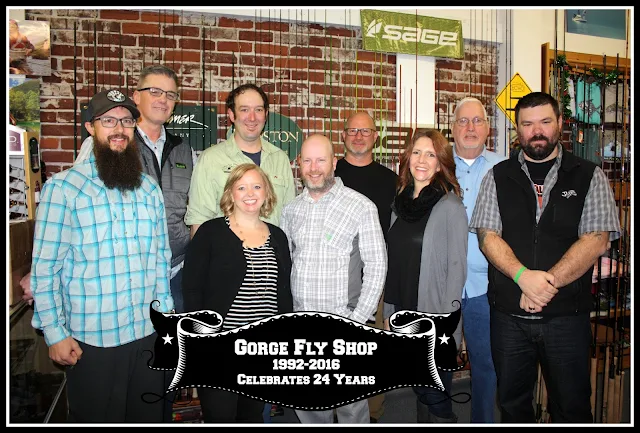
Gorge Fly Shop Celebrates 24 Years

Gorge Fly Shop 24 years photo

Today, February 29th is Gorge Fly Shop’s
24th Anniversary


As Travis Duddles is about to celebrate his 42nd Birthday this year he is also celebrating 24 Years in business. Technically today this is leap day so really the shop is only 6 years old….but however you look at it, Gorge Fly Shop is going strong!

While Travis has worked hard for so many years growing his business he is now able to enjoy a bit of free time as he has a wonderful group of dedicated hard working employees. Without these employees, customers and his business skills Gorge Fly Shop would not be here today.

Gorge Fly Shop serves not only anglers right here in beautiful Hood River Oregon, but all over the world!

- Gorge Fly Shop Team

"Fly Fish the World with Us"

Columbia Gorge Fishing Report (2.29.16)

Fishing Report

Winter Steelhead has been chugging along as expected.  March and early April are usually the most productive times for winter steelhead fishing.  As long as the rains keep coming, the fishing should continue to be good in all of the local rivers from the Hood to the Sandy, Clackamas, and Oregon Coastal Streams

Rainbow Trout fishing has continued to be fabulous on the Deschutes River.  Stonefly nymphs doubled with smaller mayfly nymphs has been the most productive technique, with the #14 Copper John being the most productive fly from what our local anglers are telling us.  Fishing has been good from Mack’s Canyon all the way up to Warm Springs, and the pressure has been minimal.  If you want to get away and have a nice, peaceful day on the river, hit the Deschutes.

Now I did something that I am not too proud of, but I have always wanted to do.  It was just a confirmation that I don’t need to do it again, but everyone should probably try it at least once just for the experience.  Many anglers do find it quite enjoyable, but it wasn’t really my style.

I went to a local lake to catch the “jumbo broodstock” rainbow trout that have been planted throughout the winter.  The specific lake I went to is in Washington, and it is closed from March 1-April 22.  There are several lakes in the area that stock them during the winter. 

There is still something cool about catching a 12-15 lb. trout, regardless of whether all of the fins are worn down.  I couldn’t get most of them into my small trout net; the smallest one did fit at 24”.  The big ones didn’t try too hard to get away when I set them on my legs as they stuck out from my Fat Cat.

The most enjoyable thing about the day for me was sending pictures to Ryan, knowing that his jealousy was building with every 30” trout that I landed while he was working.  Ryan did not know that these fish were missing most of their fins (I took carefully crafted pictures).

Smallmouth Bass fishing has not changed much.  Ryan hasn’t been out in the past week, so there is no new report.  It has been tough in general, but any day now the water should hit about 47 and the fish should get really active. 

As always, we are happy to talk fishing any time.  Give us a call if you have any specific questions on local rivers, gear, and tactics, or if you just want some encouragement to get out of the office.  


Andrew Perrault
Gorge Fly Shop | Product Specialist
541.386.6977


"Fly Fish the World with Us"

Feb 23, 2016

Sling Pack Showdown (2016)

Sling packs lead the way!

Sling packs are all the rage these days, and for good reason. There are several advantages of using a sling pack instead of a hip pack, chest pack or backpack. Slings offer more storage room than a chest pack, easier accessibility than a backpack, and the ability to keep your stuff higher off the water than a hip pack. Another reason why slings are great is that an angler can still have near full mobility without having a pack get in the way of casting. There is very little line catching or protruding gear to inhibit your range of motion. For all of these reasons, sling packs are the hottest selling storage system in the fishing industry.

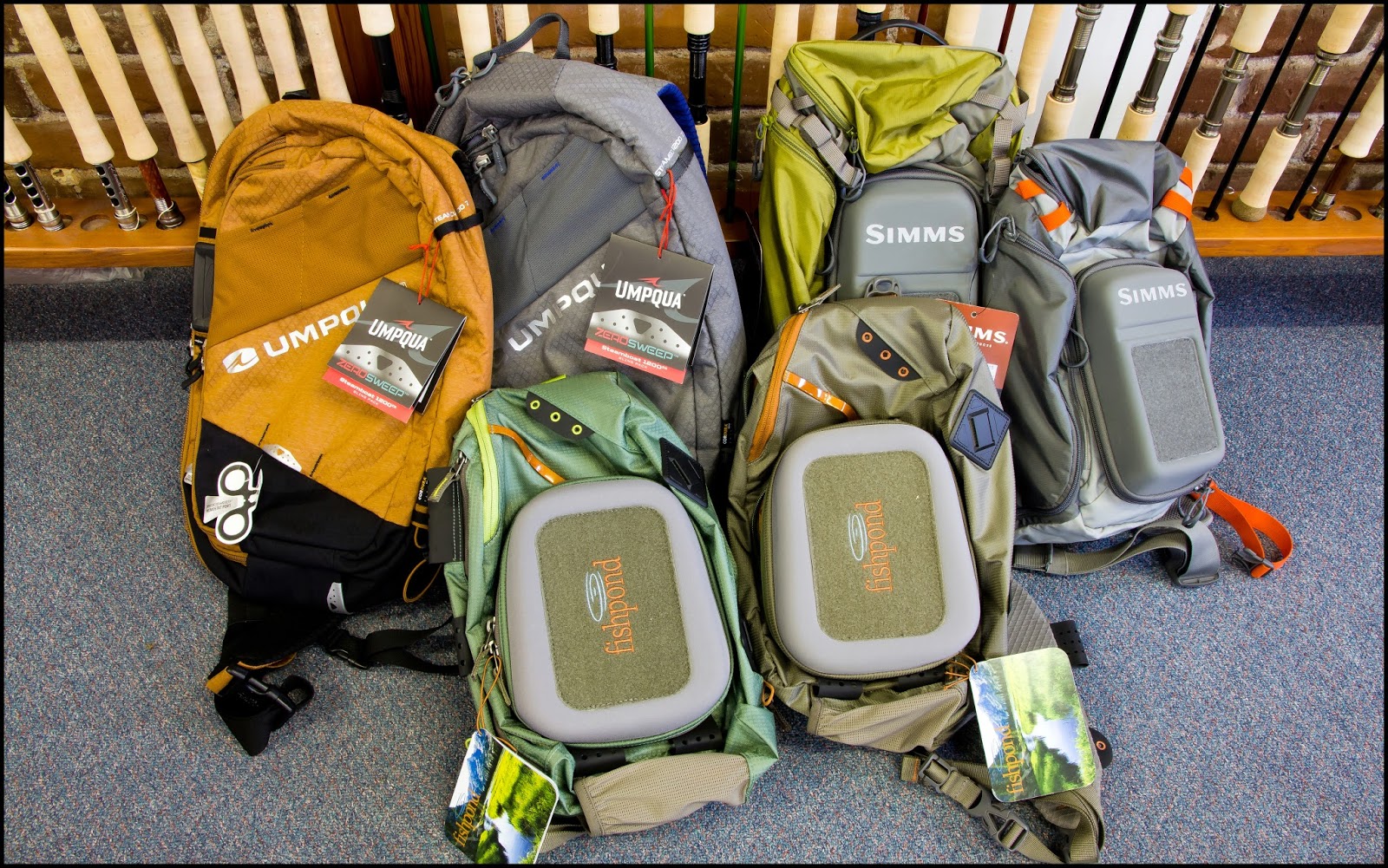
We here at the Gorge Fly Shop carry quality sling packs from Fishpond, Umpqua and Simms. I have spent much of the winter so far studying, testing and playing with all of the slings that I could get my hands on. I prefer a smaller pack that carries just enough gear for a day of fishing. I don’t like packs that I can overload and turn into a dark pit of despair.

Why do I like a smaller pack? Steelhead fishermen (like me) tend to carry less gear, fly boxes, tools and accessories than trout fishermen, so they tend to use smaller packs. I carry one fly box (maybe two in the summer), a handful of sink tips, one spool of tippet, scissor clamps, and whatever I need for the day as far as clothes, food, drink and maybe some sunscreen.

Larger packs are better suited for those trout fishermen that carry thirteen different fly boxes, eight spools of tippet, three types of floatant and six different fishing tools along with a couple of spare spools, just in case. There are a couple of larger options here, but I prefer a smaller pack. Knowing that trout fishermen still dominate the industry, I have included two larger packs that would be excellent choices for the diehard trout bum, as well as anyone else that likes to bring more gear to the river than I do. Big cameras, sunscreen, bug spray and a change of clothes are often the norm for many anglers, and a larger pack should be considered if that is your game, regardless of the target species.

Enough of the intro! Here are the three (four) packs that I have been really digging this winter.
  1. Fishpond Summit Sling
  2. Simms Headwaters Sling (Large and Small)
  3. Umpqua Steamboat Sling
There are some similar features that all of these packs share. One is an external fly patch. This is a key for quick fly changes and preventing unnecessary pack entry. While the Umpqua Sling has a built-in patch, the Simms and Fishpond packs have Velcro pieces to easily attach fly patches. Another key feature is the cell phone/key stash pocket. All three packs have a small, secure pocket that is just big enough to store your most valuable items which do not need to be accessed quickly. Beyond those features, these packs are all unique and full of cool nooks and crannies.


Fishpond Summit Sling

Fishpond makes quite a few sling packs, seven at last count. Out of all of the choices from Fishpond, the Summit Sling definitely stands out from the crowd. I really like this pack. It is comfortable, easily accessible, provides the right accessory options, is constructed very sturdily and with two color schemes to choose from, it looks cool too. I believe that this is the most intuitive, well thought-out pack from Fishpond, or any other company.
  • 549 cubic inches
  • 13” x 8.5” x 9”
  • 32 oz
How is it unique? There are numerous attachment points on the outside of the pack allowing for dozens of accessory configurations. Whatever your choice of tools, or preference for location of said tools, this pack will allow you to access them with ease.

Fishpond Summit Sling
The interior of this pack is roomy, yet it is still compact. There are two bigger compartments that allow you to stash your larger items internally, while keeping your smaller gear in the external pockets. A third front pocket features a workbench area which is big enough to hold a fly box or two. It also folds down and stays rigid so that you can change a fly with ease without (hopefully) dropping small flies, tools and accessories in the river.
Net Stash Pocket

I can go on for days about how awesome this pack is, but I have to keep it brief. Real quickly; three more features that I like are the net stash pocket on the back (super cool!). While I don’t carry a net for steelhead fishing, as a former trout junkie, I appreciate this feature immensely. This allows you to access your net with ease, yet it doesn’t affect the overall comfort. A second cool feature is that this pack has the most comfortable, padded shoulder strap of any sling out there. I will touch on that more on that near the end. The last thing is truly unique to Fishpond; this pack, along with many of their other items, is made from recycled commercial fishing nets. I appreciate any company doing anything they can in helping to alleviate a huge worldwide issue. You can see that I believe that this is a great pack made by a great company.


Simms Waypoints Sling

Waypoints Sling - Small
  • 610 cubic inches
  • 22 oz.
  • 15” x 8 1/2” x 8”
For 2016, Simms has made a solid follow-up to their Headwaters Sling. It is a sweet sling pack that is sleek and minimal. A good alternative to our favorite Fishpond Summit Sling, this pack has less exterior features, but packs a good punch, especially when it comes to organization. There are two sizes, I prefer the small pack, but I will touch on both of them here.

Waypoints Sling - Large
  • 1037 cubic inches
  • 31 oz
  • 18” x 10” x 9.5”

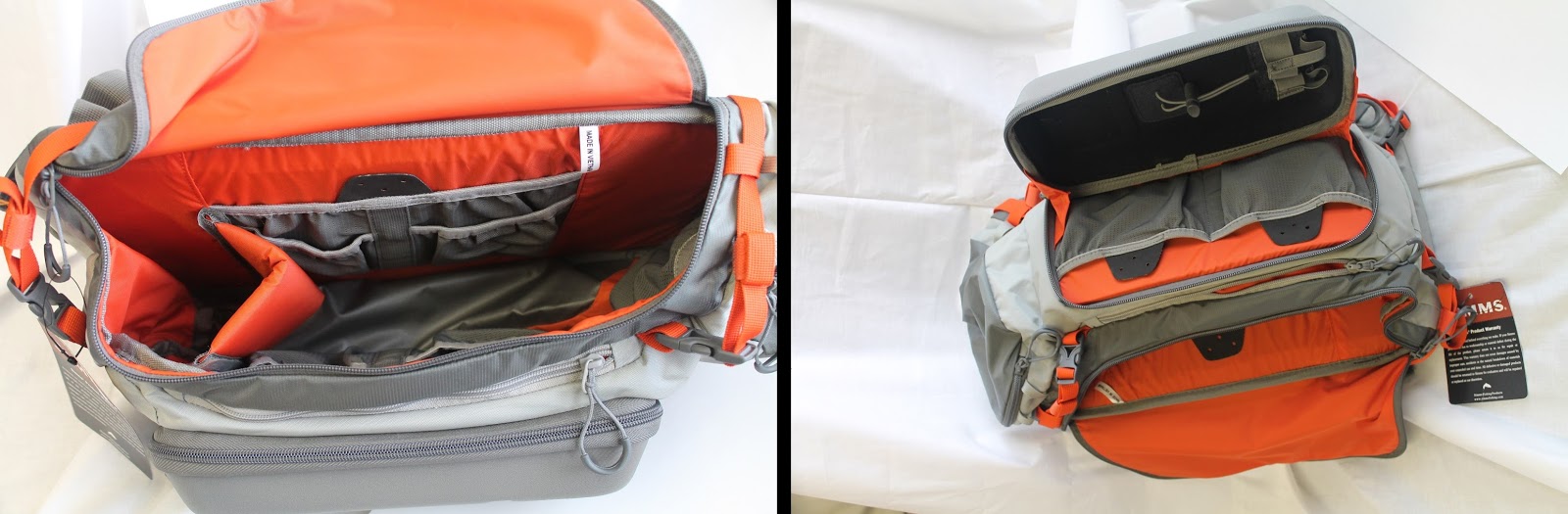
The big difference between this and the Fishpond pack is internal vs. external organization. The Simms pack is all about organizing within the pack, offering several small pockets and dividers internally, while maintaining quick, easy and efficient access. Why? There is less chance of catching your line on your pack when everything is stored internally. While there are a couple of tool tabs on the outside, there are also several on the inside in convenient locations to store your tools.

Like the Fishpond pack, there is a rigid workbench that folds out flat to allow for intricate fly changes. The small pack holds a decent sized fly box in the foldout area, while the large pack can hold several boxes. Both feature a Velcro piece on the outside for attaching a fly patch or the included Velcro tippet and floatant holders. This pack is very lightweight, ergonomic and comfortable. There is sufficient ventilation and padding on the back of the pack, which is very nice and will provide sufficient airflow during a day of fishing in the heat.
Simms Waypoints Sling - Small
A couple of cool features are the magnetic tool ports and compression straps. You can just tap your hemostats against the magnet and they will stay easily accessible. The straps are great for when your pack is stuffed. Pull them tight and compress the pack down to a more manageable size. They are also great for storing a jacket on the outside. The pack overall has a lightweight, minimalist feel to it, yet it has solid construction and strong materials.
Simms Waypoints Sling - Large
The large pack has enough room to stash the kitchen sink along with all of your gear, yet it will stay fairly organized. The small pack will hold everything I need for a day, yet is not so small that I have to remove items in order to find what I need.
Simms always produces high quality gear that will stand up to the test and this new Waypoints Small Sling Pack is no different.

Umpqua Steamboat Sling ZS
  • 1200 cubic inches!!!
  • 24 oz – I weighed it as it is not advertised.
While I touched on this pack in my UMPQUA ZERO SWEEP REVIEW, this pack deserves to stand with the Simms and Fishpond packs at the top of the food chain.

This pack is great for a couple of reasons. The Zero Sweep technology really creates a sleek, snag free pack. Umpqua truly believes that by creating a smooth, snag-free system, the angler can have more quality time on the water, and less time untangling your line from straps and buckles. This is done by creating recessed ports to store your tools, yet keeping them easily and quickly accessible. This pack features rounded smooth surfaces and nicely organized pockets and compartments.

Front main pocket
Main pocket rear
The internal organization in the Steamboat Sling is better than either of the other two packs. There are plenty of variously sized pockets within the compartments to stash all of your gear while keeping it organized and easy to reach. There are two large compartments; I would use one for your fishing gear and one for shore items like a jacket, food and camera. This pack does not have a workbench-style pocket exclusively for fly boxes and small tools, but this keeps the pack more flush and low-profile than the other options out there. For steelheaders, this is not an issue. Trout fishermen are more likely to need a flip-down area to change small flies, and tend to change them more often than spey casters.
Back of Steamboat
This pack is much bigger than the Fishpond pack, and even bigger than the large Simms pack, yet it does keep a low profile, even when full. It doesn’t feel like it is as big as it is. There is plenty of room for everything that you could possibly want to put in a sling pack. The fabric has a more heavy-duty feel to it than either of the other packs, although it weighs less than the large sling pack, plus it has a larger capacity. The fabric is tough and will stand up to heavy abuse.

Let’s talk about the straps. To me, it is the most important feature of a good pack. Why does this matter? Anyone that has done any multi-day backpacking trips with heavy packs knows that comfortable straps on a pack make all the difference when you are wearing them all day. An hour or two is no big deal, but a full day or two or three in a row can really start to dig into your shoulders if it doesn’t fit comfortably. I haven’t had the privilege of doing any rigorous field testing on these packs, and most of us won’t get that privilege before we have to choose a pack. If I had to choose a pack based on only one feature, it would be how comfortable the straps are.
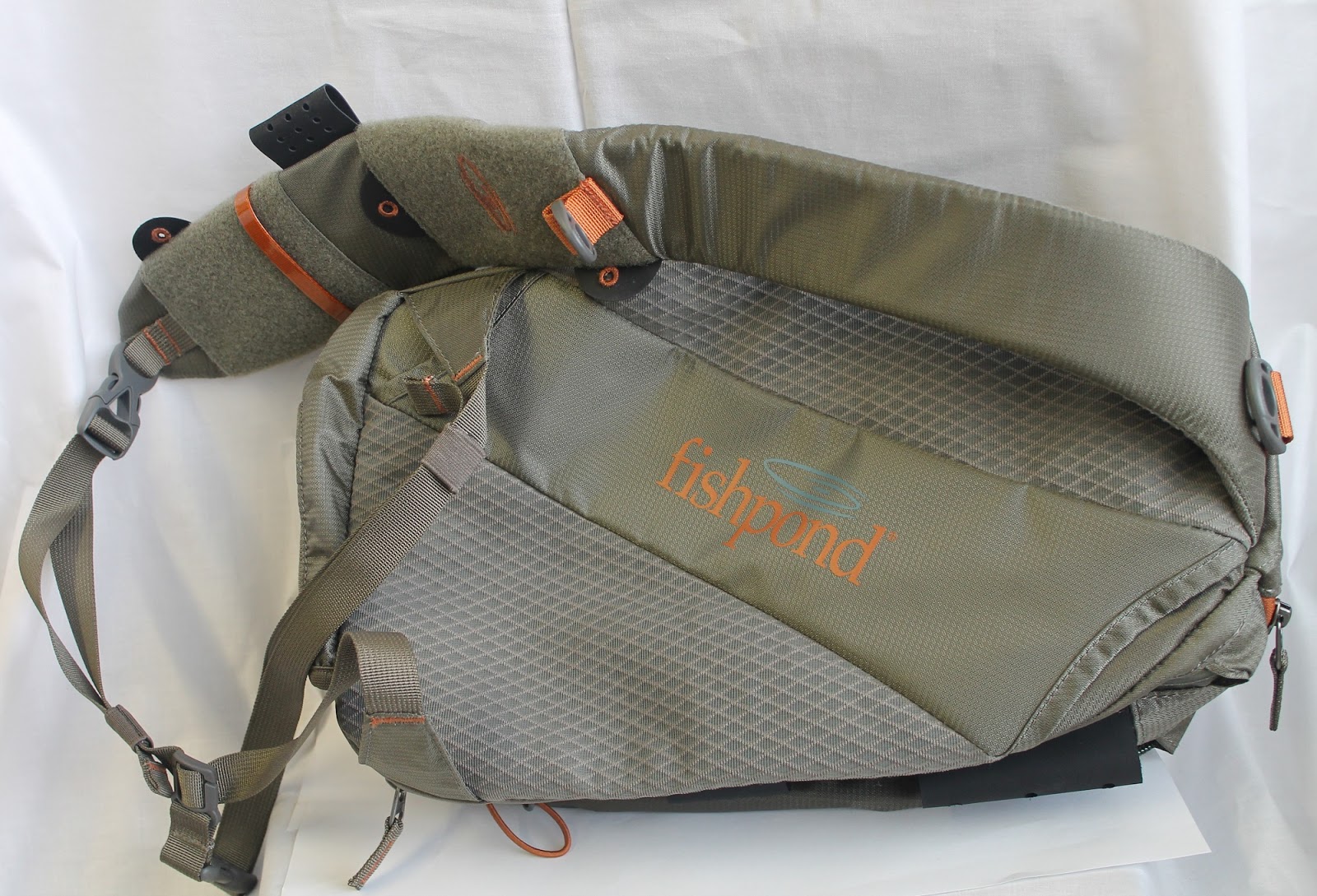
Back Of Summit

The Fishpond pack has the most comfortable strap of the bunch. I would not hesitate to recommend this to anyone that is going to wear this pack every day all summer, especially if it is going to be loaded up with gear. The Simms strap is much lighter and less padded. It is still well constructed and will not fold over on itself when the pack is full, but it is definitely on the minimalist side of the dial. The Umpqua strap is right in the middle. It has very ample padding, easy adjustments and sturdy construction. It has more padding that the Fishpond pack, but it is a slightly harder padding, which is not quite as comfortable right out of the box, yet will likely wear in really nicely after months of abuse.
Back of Small Waypoints

All three Sling packs that I reviewed here have some cool features and are all unique in feel and organization, yet each would be a great addition to any fisherman’s arsenal. They are all built to the highest standards and have been designed by fishermen for fishermen. You could buy and wear any of these packs with confidence.


The Gorge Fly Shop Team

541.386.6977


"Fly Fish the World with Us"

Feb 22, 2016

Columbia Gorge Fishing Report (2.22.16)

Ryan with nice little rainbow trout

Fishing Report

Winter Steelhead fishing has been good throughout the area.  The number of anglers will reflect that just about everywhere that these fish exist.  Fourteen anglers were fishing in one run at the mouth of the Hood River this morning (Sunday).  The Sandy and Clackamas have both been great; we hear more reports from the Sandy as it is closer and has more fly-friendly water (and more anglers).

Ryan with a rainbow
that ate a stonefly nymph
Rainbow Trout fishing was great on the Deschutes.  Ryan and I went out there on Thursday.  Despite 40 mph winds, sleet, snow, rain and colder temperatures, fishing was pretty good. We each caught a fair number of fish, nothing of any substantial size to hand, but a really fun day was had by all.  We were both very appreciative of our surroundings.  There were zero other anglers on the river besides a guide boat that floated by just before dark.  With all of the pressure on the steelhead scene this time of year, we were both very happy to be alone on one of the most beautiful stretches of river in the world.

I threw a double nymph setup under an indicator for most of the day.  A peacock-color rubber leg #8 was catching fish consistently.  I also used a #16 copper john and a red #18 copper john with equal success, as well as a #18 hare’s ear, a #18 Barr’s BWO emerger, and a #18 flashback pheasant tail.  In some areas, all of the fish were caught on the rubber leg, in some areas had all of them eating the small nymph and a few spots produced fish with both flies.  I hooked either an extremely large trout or a steelhead on the rubber leg.  It ran into the middle of the river, put me well into my backing, jumped a few times and broke off the 3x tippet.

We ran into a big pod of nice fish that we could see from the trail above that were working Blue Wing Olive nymphs about 2:00 pm.  It was really windy and they were not eating the adults on the surface, but Ryan did land one on a #18 red copper john before I put a cast well into the bushes during a big gust and put them all down while removing my flies from the shrubbery.

While there was a decent BWO hatch, we never saw any fish consistently working the surface, and despite throwing a dry pattern through a couple of fishy backeddies and riffles, we did not hit any fish on dries, but immediately caught them on nymphs after making numerous casts with the dries.  The heavy wind probably had a lot to do with the lack of surface action.  They were definitely eating the nymphs and fish came very quickly, usually on the first cast or two into a spot.

Blue Wing Olives
Ryan spent most of the day throwing streamers on his Winston 4110-4 MicroSpey.  While the bulk of the day was fairly slow for streamer fishing, there were fish eating streamers in a lot of spots.  Many of the fish early and mid-day that ate streamers were small and non-committal to the fly, nipping at the tail and occasionally getting hooked.

At 4:00, we both started fishing streamers on our switch rods in a nice waist-deep riffle and fish immediately began coming to hand. The action was consistent for the last hour or more of daylight.  We caught several rainbows and each of us landed a bull trout (both were our fish Deschutes bullies).  Both of them had what appeared to me to be Black Spot disease.  It may not be, but it sure looks like it based on my experiences.

I was always told Black Spot disease was a parasite that was often a result of being exposed to warm water for too long, which certainly happened this past summer.  I have heard all sorts of theories of as to how they get it: from eating snails to being exposed to bird feces… I saw this guiding on the lower Teton River in Idaho, where every cutthroat in the river was covered in the same spots, and that water reached the mid 70s every summer.  I am unaware of whether this is a new problem with these fish or something that has been recorded in the river there before.

Smallmouth Bass fishing has been very slow so far this year.  Surface temps in the Columbia backwaters have increased to 47, which should get the fish activated, but locating them seems to be the problem, or maybe it’s just getting them to eat.  He seems to be marking appropriately-sized fish on the finder, but who knows if they are bass or not.  All he knows is that they are not eating anything he throws at them.  The water is only 42 going through Bonneville.  Bassmaster Ryan is perplexed, but is putting in an inordinate amount of time trying to figure it out.  I told him that I will go out there with him once he has it dialed and it is good fishing, then I will let you all know about it.

Just hangin with a fish that ate a stonefly nymph
As always, we are happy to talk fishing any time.  Give us a call if you have any specific questions on local rivers, gear, and tactics, or if you just want some encouragement to get out of the office.


Andrew Perrault
Gorge Fly Shop | Product Specialist
541.386.6977


"Fly Fishing Report"

Feb 16, 2016

Columbia Gorge Fishing Report (2.16.16)

Jeff and my dog Hendrix on a coastal stream

Fishing Report

Local rivers are on their way back up, and we will have another good opportunity for anglers to hit winter steelhead as the flows drop.  All of the local rivers should see an influx of fish when the levels peak.  Our favorites within an hour drive are the Sandy, Clackamas, Washougal, and the Hood.  Within two hours, we can hit the Kalama, Cowlitz, East Fork Lewis and the Santiam.  Portlanders have a nice location as all of the coastal rivers are within a reasonable drive. 
Jeff forgot his wading boots.  Gorilla tape is key

Rainbow Trout fishing has been great on the Deschutes.  If you are looking for a nice change of pace and are overwhelmed with the number of steelhead anglers on seemingly every river, take a day to go trout fishing on the Deschutes.  It is open all the way up to Pelton Dam now and there has been very little pressure. 

Trout are eating Skwala nymphs, March Browns in both nymph and adult stage, along with Blue Wing Olives.  The Skwala nymph should be a go-to for most of the day because of the large size and easy target; they provide a ton of calories quickly.  Fish a Skwala nymph doubled with a smaller mayfly nymph to be doubly effective.  The March Browns and Blue Wings are not entirely consistent as far as hatches go, so they may or may not provide any dry fly fishing on any particular day.  March Browns tend to hatch when it’s warm and sunny, while the Blue Wings tend to hatch on cloudy days.  Blue Wings also often hatch in back eddies and in soft water near the side of the river, where March Browns are more of a typical mayfly and hatch in and near riffles. 

Swinging and twitching streamers can also produce some nice fish this time of year.  Sculpins and leeches are good food for trout, and presented slowly their imitations can be very productive. 

As always, we are happy to talk fishing any time.  Give us a call if you have any specific questions on local rivers, gear, and tactics, or if you just want some encouragement to get out of the office.  


Andrew Perrault
Gorge Fly Shop | Product Specialist
541.386.6977


"Fly Fishing Report"

Feb 11, 2016

Winter Troutin' 2016

Ice on my rod guides and Trout in my hand, Priceless!
Why do I do it? I can give a dozen reasons not to do it like frozen guides, icy cold water, lethargic fish, frozen reels, numb hands, frozen snot and the list goes on. Now clear your mind for a minute and focus on the fishing. You're in a stream with no one else around. The air is crisp and clean. The sounds you hear other than your own can only be of nature. The fish that eat are the strongest in their environment. Just like you, they're not lying around being lazy. Just like you, winter trout have learn to embraced the cold and strive to live a life of solitude and peace even when it would just be easier to rest back in deep holes and sip on midge larvae all winter.

Those words are as much to encourage myself as they are to encourage others. You see I don't need another excuse to not go winter troutin' but when I put it all aside and finally get to release a strong beautiful fish like the one in the picture all of the excuses to not do it are erased.

How to do it
coffee break
I set out on this cold winters day to float about 5 miles of river in my Outcast Stealth Pro. I especially like to float this time of year. It's so much easier to cover water this way instead of trying to access everything on foot. Snow, mud and ice on foot makes trekking very treacherous. It's much easier to float plus I get to cover a lot of water. I'm only looking for the most active eager fish and I find them in current on seams where the water is alive and oxygenated.

On this day I had three rods with me. That's another advantage of floating, you can carry multiple rods.  My tried and true Winston BIIIX 4110-4 Microspey with a Bauer CFX #4 Trout spey reel. I loaded it with the Airflo Switch Streamer line of 330gr and 10 foot of T-7 Sink Tip. I must confess I modified the Airflo line. Everything is perfect about this line except the abnormally large running line part of it. I couldn't take no more so I chopped it at the back side of the head and applied a RIO Braided loop so I could connect it to RIO SlickShooter mono shooting line. I'm not suggesting everyone should do this. Try it first and you might be fine with it. I made it through last year fishing it but winter freezing temps finally made me give up on it. Too thick to work in icy guides and shooting lines such as mono are much better for this cold weather fishing.

Peregrine Falcon

My next outfit is the new Sage ONE 3110-4 Trout Spey coupled with a Lamson Litespeed #3 reel and the RIO Intouch Switch Chucker #3. The Sage rod feels great! I'll be doing a full review on it in the near future once I've had a chance to fish it some more with some different lines and heads. Right away this grip on the Sage feels so great...It just fits me and the rod balances perfect. What I didn't like on this day was the Switch Chucker. I just don't get this line. It just doesn't turn over for me easy. Maybe it's me or maybe I expect too much from it. I started out with 8 foot of T-7 sink tip but backed off to a 10 foot fast sinking polyleader. It still seamed difficult to turn over.  Maybe it needs a 5 foot polyleader or just a regular leader. I will fish the Sage rod again soon with the RIO Skagit Trout Max heads and also try my favorite scandi the RIO Scandi Short VersiTip. I wished I had the VersiTip with me this day. It would have been ideal for some of the slower riffles that were holding fish. The sink tips I was fishing were too much for them.

Mr Brown hammered a streamer in icy cold water
My third outfit was a 9' 7wt unnamed rod let's consider it a prototype coupled with a Bauer CFX #4 Trout Spey reel. For lines I had a RIO 0.024" Powerflex shooting line looped to a OPST 225gr. Commando head and 8 foot of T-7 Sink tip. I can't begin to describe how fun this setup is. Just think about what you want to achieve and do it. Roll cast like a dream, overheads easy and spey is just too fun. Set you anchor and let it rip or perform a touch and go cast. These super short commando heads bring life to single hand rods in ways that one should not overlook. I found myself fishing small micro seams that I used to pass over because my two hand rods were just to much for these little pockets. With OPST Commando heads or the RIO Skagit Trout Max heads I am now seeing new water to fish and it's paying off. The trout on the top of the page came on this outfit on a micro seam.

Towards the end of my float is a long great swing run. Another advantage of floating is I was able to set up on the opposite side of the river of were it could be foot accessed. A nymph angler was across the way so I stayed clear of him. I was backed up tight to the bank and needed to Snap T cast to set up my swing. A minute later the nymph guy yelled down and said "Nice Snap T!" I yelled back and said you are the first person on this river to know what that is. I went on and caught a couple and he also caught a couple. When I left I rowed my boat across river and up the back eddy to the guy. Got out and chatted. Yep he lived in the NW and had been spey fishing for 20 years on the peninsula and BC. He continued to fish as we chatted and I couldn't help noticing the double spey he was doing with his single hand nymph rod setup. The only reason I bring this up is that it doesn't matter what technique you're doing out there anyone can benefit from some two hand techniques. After watching him perform endless double speys I had no reason to doubt any word he spoke of his steelhead experiences. He wasn't thinking about what he was doing, he was just doing it.

So back to the question "Why do I do it?"
 I think the answer to that is somewhere in this article

More articles like this one in Trout Spey Chronicles

BassProGreg


Gorge Fly Shop Internet Sales Manager | Product Specialist


"Fly Fish the World with Us"


Feb 8, 2016

Columbia Gorge Fishing Report (2.8.16)

Outcast OSG Commander: Command the Water!

Ready for your Fishing Report? 

Go Fish!

We are moving into a little bit of a warm and dry spell here, which will be great for the trout fishing on the Deschutes; maybe not so good for the winter steelhead crew.  It has been a great winter so far as far as water levels and snowpack, so a week of low and clear should be welcomed. 

Winter Steelhead:  Rivers are dropping; hit them before they bottom out.  Most look like they are clearing up significantly and many could start to flatten out by the end of the week.  Low, steady flows are not ideal for steelheading, but it should be great in most rivers for the early part of the week.  The rain looks like it will return next week and rivers will bump back up, bringing a wave of new fish in. 

Rainbow Trout fishing should be absolutely stellar this week.  Sunny, warm conditions may not be good for steelheading, but they will produce nice mayfly hatches during mid-day.  Fish should eat dries during the warmest part of the day.  March Brown and Blue Wings Olives could be hatching, so be prepared for both.  Warming water temps should also create great conditions for nymphing and streamer fishing.  Nymph with a small, dark rubber leg doubled with a mayfly nymph in size #14-20.  If you want to swing/twitch a streamer, keep it low and slow through slower runs and tailouts as the water is still cold and fish are not terribly active, but they are warming and will move more than when it is just frigid out. 


As always, we are happy to talk fishing any time.  Give us a call if you have any specific questions on local rivers, gear, and tactics, or if you just want some encouragement to get out of the office.  


Andrew Perrault
Gorge Fly Shop | Product Specialist
541.386.6977


"Fly Fish the World with Us"
Feb 5, 2016

Gearing up for Meat Eating Trout

meat eater

Hi, my name is Ryan and I have a streamer problem.

Some would say I have an addiction. 

Some would say it’s not “real” fly fishing. 

Some would say you might as well fish with a spinning rod. 

I would say bite me!

 I have been a die-hard streamer guy for over a decade now and I will do my best to try to explain why and how I am setup for slinging big flies to monster trout.

There are 3 reasons I have become a streamer junkie:
  • Streamer fishing is active fishing or what they would call power fishing in the tournament bass world. You are casting and moving a lot, and really looking for fish that want to play ball. It isn’t a finesse game, but it will work when you can’t move fish other ways. 
  • Streamer strikes are often vicious and jarring. Once you have felt a few big trout crush a sculpin pattern it is hard to go back to watching a bobber… 
  • Streamers will move the biggest fish in the system. If you want to catch big fish regularly, then you better learn how to feed them some meat! 

Sculpin pattern
There are some important things to think about when considering the whys, whens and hows of streamer fishing. If you think about a simple energy used to energy gained equation, it is easy to understand why a trout would eat a sculpin, dace, leech, or another trout. How many midge larvae does it take to equal the calories in one sculpin? A bunch, I would say. Another crucial aspect of streamer fishing is understanding territorial behavior and reaction strikes. Trout, particularly large trout, will defend their area even if they don’t eat what they attack. Large trout will also strike invaders for no other reason than instinct. If a big “thing” is suddenly slapped in front of them or jigs right through their field of vision, they will often strike with malicious intent.

There are many ways to fish a streamer, and I can’t possibly cover it all here, but there are a few major categories: slapping the bank, swinging, and jigging/twitching. As you dive into the streamer chucking realm you will find out when and where to use each of these, and often I will use all of them in the same day. Now don’t get me wrong, if there is a good steady hatch I will put the streamer rod down, but when the insects aren’t prolific, you will most likely see me with a leech or sculpin on my rig. And I can tell you that I have caught as many sporadically rising trout on a well placed streamer as any dry fly I have tried to present.

Meat Locker

Rainbows on the Yakima River
So let’s get down to brass tax; gearing up for the streamer game… Let me start by saying that you can fish streamers on any trout rod and line you already own, but a dedicated streamer rod will make your life easier, and give you the ability to fish effectively, especially with bigger flies. For me, a single hand trout streamer rod should be a 6 or 7 wt that isn’t too fast. Some of my favorites are the Winston BIIIx, Sage ONE, and G Loomis NRX. I know these are top end rods, but trust me, you want a rod that performs well and is light enough to cast all day when you are throwing big flies. The fly line is equally as important as the rod. For most western rivers you will need a sink tip line. My favorites are the RIO InTouch Outbound Short full floater (WF6) and intermediate/type 6 sink tip (WF6I/S6), the RIO InTouch Streamer Tip intermediate and type 6 and the RIO InTouch 15ft Sink Tip type 6. Of these the 15ft sink tip is the most versatile and the outbound short is easiest to cast. I prefer the type 6 tips for all of these because I rarely if ever wish my flies would sink less, but often wish I could get deeper.

Winter Brownie

Now let me tell you that not all streamer fishing has to be aggressive and with big flies. Fishing a streamer in smaller water or quiet pools requires some finesse and working the fly in a seductive manner. For smaller water, i.e. spring creeks, small freestones and slower tailwaters, etc. you will like a shorter rod in a 5wt as it will really help your accuracy and will load quickly. There aren’t as many choices in short 5wt rods these days, but a few I can recommend are the Loomis Shorestalker 8ft 5wt, the Scott G2 8’4” 5wt and the Winston 8’6” 5wt BIIIx. If you are in really small water or fishing for smaller fish don’t hesitate to throw small streamers on your 7’6” - 8’ 3 or 4wt too! You will also not typically need a sink tip line for small water, but a good all purpose line should get the job done.


Trout Spey Chronicles
Microspey, trout spey, small ball, whatever you call it, trout sized spey/switch rods have changed the streamer chucker’s game for good. How I would have killed for one of these rods 10 years ago. The ability to make long casts with big flies and sink tips across a river and into that deep slot has always been the bane of a streamer nut, but we did it anyway. Now we have rods and lines that can do it with nary a thought. If you find yourself deep in the throes of streamer addiction, grab a trout spey rod from Winston, Sage, Loomis or Echo, put an Airflo Streamer Switch or OPST Commando head in the appropriate size and a T-8 through T-11 tip and huck meat!


Sculpins
Reels for the streamer game need not be too complicated, but having a good piece of equipment that won’t fail you when you hook a monster, is wise. Some of my favorites are the Tibor Back Country Wide, Lamson Litespeed, Ross Evolution and Galvan Torque in the appropriate sizes. I try to avoid very heavy reels as it is a bear to cast with those all day. Just make sure you have something that is dependable.

Leader and tippet should be fairly short and strong. I rarely use anything less than 8# or 3x for streamers and mostly 2x or 1x. I am a big fan of fluorocarbon tippet, but for the most part good mono is just fine. Leaders on your sink tip setup should only be 3-6ft long with a heavy butt section to help turn over your flies. I like to build my own with Maxima or heavy Rio shock or saltwater tippet in 30-50# and then double uni knot to my tippet off of that.

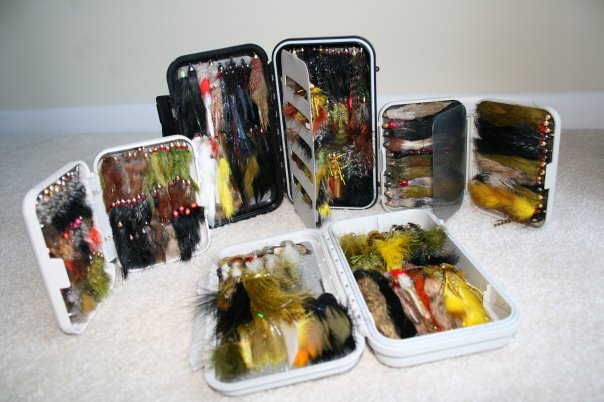
Streamers are as varied as the anglers that fish them, but my most successful flies have been heavily weighted rubber legged buggers, bunny leaches, and big articulated sculpins. My favorite fly, one I dubbed the Mohawk, is a bunny or squirrel strip/bugger mutant. It can be tied with a cone, bead, or dumbbell eyes, but it should be fairly heavy. Some other really good choices are the sculpzilla and skulpin bunny. Colors should range from natural olives, tans and browns to bright colors like yellow and chartreuse, but the go to when all else fails is black.

BB - Before Beard

The bottom line is this: if you want to try a new technique, or are sick of watching a bobber, or want to find out what the biggest fish in your local water is, grab a big meaty streamer, drop it in and find out!
If not...Then Bite Me!

The Bearded Pescador


Ryan Van Duzor
Gorge Fly Shop | Product Specialist
541.386.6977


"Fly Fish the World with Us"


Feb 3, 2016

Going Old School - Click Pawl Reels

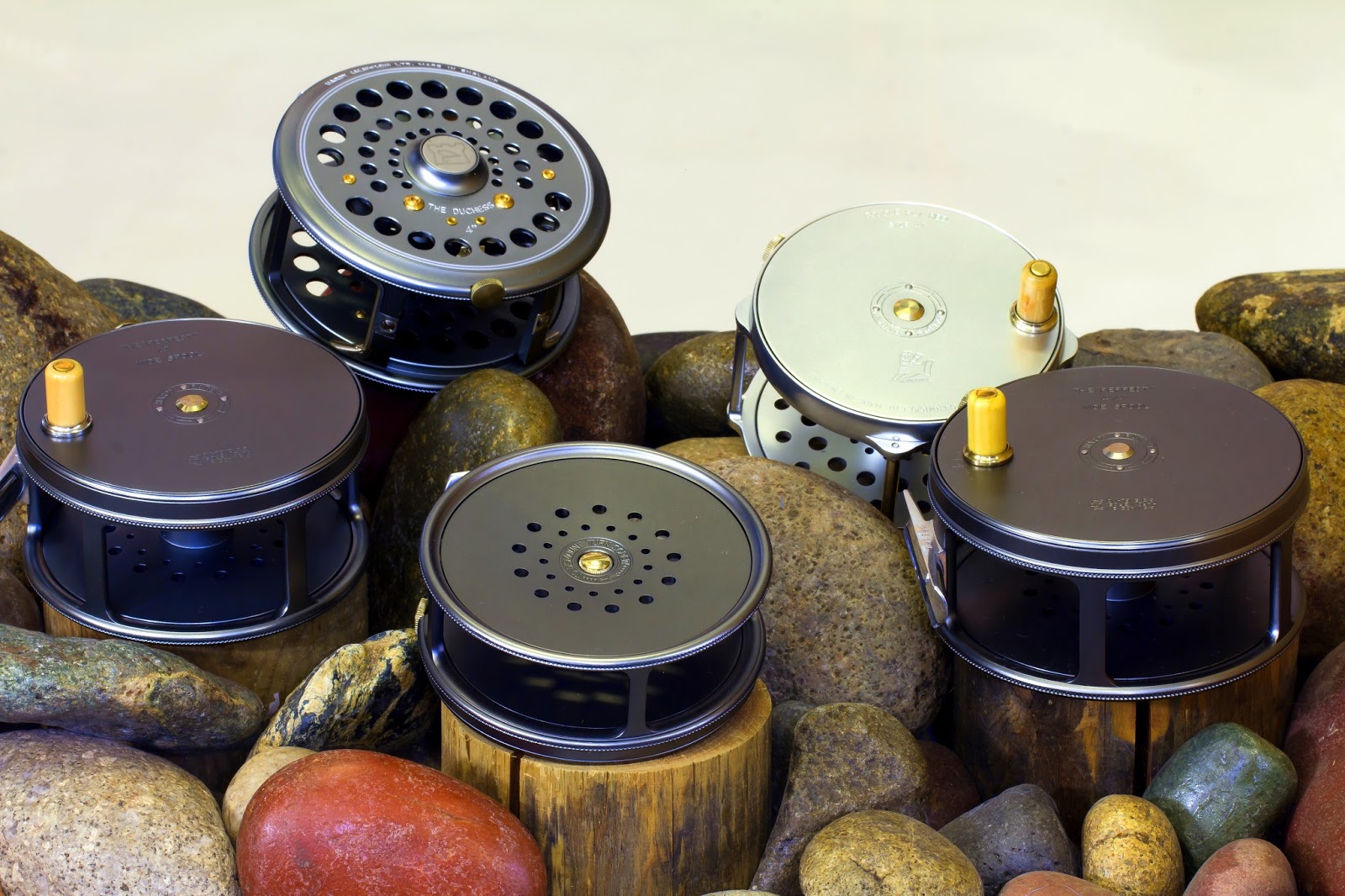
Hardy Clickers

Reel technology has improved by leaps and bounds in recent years.  From stacked disc drags to fully sealed, saltwater-proof drags; there are a ton of choices in reel platforms out there.  All of the fancy drag systems out there have benefits that provide an edge to the most skilled anglers.  Sealed drags are the latest and greatest systems out there.  They are impervious to sand, silt and saltwater, giving anglers a peace of mind that there will likely never be a problem with their reel.  It wasn’t long ago that cork drags were the latest and greatest, offering the smoothest function of any reel.  Before that, the latest were conical clutch systems which were preceded by stacked disc drags and previously by drum brakes.  But in the beginning, it all started with the click pawl. 


Hardy Bougle'
Most modern anglers go for the latest, most modern system, or at least the most modern that they can afford.  Let’s be honest, people love having the greatest, newest technology out there.  That is why people stand in line for days in order to get the new iphone when it comes out. 

But some of us are cut from a different cloth.  I believe that some of the best reels ever made are still made today in much the same way as the very first production fly reel designed in 1874 by Charles Orvis.  His click pawl reel was the benchmark for countless generations of fly reels, and not much has changed in click pawl reel design since then.  Now the gold standard in classic fly reels across the world is the Hardy Perfect.  It has been made in Allenwick, England since 1891 and almost nothing has changed in its design because it is Perfect. 

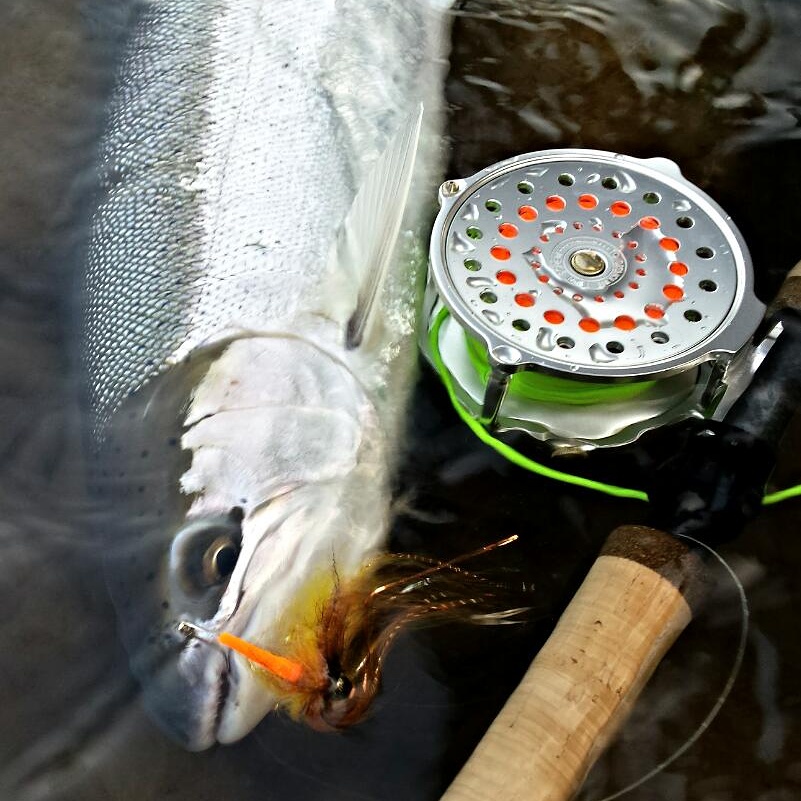
The mechanics of such a simple design leave little room for failure.  The pawls (triangular pieces of metal) in the frame click against a gear on the spool that prevents the reel from overrunning if moved quickly.  There is little to no stopping power on click pawl reels.  While the pressure that it takes to move the pawl can be adjusted on some models, running fish should be slowed down by applying pressure to (palming) the spool.  Anglers can almost never blame a lost fish on a drag that was too tight or too loose on a click pawl reel, nor will you see anglers fiddling with the drag knob at crucial moments, because there isn’t much that can happen between the loosest and tightest setting on a click pawl reel.  Lost fish can only be blamed on an angler’s own lack of controlling the pressure on the reel.  It does take more skill to control the pressure on a click pawl reel, but it takes one back to the simpler times long ago where it was just man vs. fish.
Inside the New Pflueger Medalist

The original reels only had one pawl, forcing anglers to retrieve with only their right hand.  The biggest change in click pawl reel design in the past sixty years is the addition of a second pawl so that anglers can change their reel from right to left hand retrieve.  One pawl or the other is engaged by turning it so that the teeth interact with the gear while the other pawl sits at an angle so that it is not functioning.  Another adjustment in design is the addition of an “adjustable drag”.  It is a simple addition; a small tensioner pushes against the pawl to increase the pressure that it takes to move the gear.  There is not much difference between high and low pressure (hence my quotation marks), but it is enough to give anglers peace of mind and to quell the doubters. 

Hardy Bougle'

Now the best part of a click pawl reel...  Why I love them so much:  the sound.  Oh the sound of a screaming click pawl reel cannot be paralleled!  A digital recording of a screaming Hardy Perfect was set as my ringtone for a couple of years, but just made me want to fish too much every time my phone rang.  Now, I have had anglers in the shop compare the sound of a click pawl reel to nails on a chalkboard.  For them, I suggest a quieter reel like a Bauer or a Galvan.  Not everyone needs a reel like this. 
 
Hardy Bougle'


Why else should you buy a click pawl reel?  You’re buying a piece of history. The Perfect has been made by Hardy since before any of us were born.   The Hardy Bouglé and Lightweight series have been around since before WWII.  The Marquis is one of Hardy’s newer reels, although it has been in production since before the founding of most other reel companies in existence.   

There are some newer click pawl reels on the market, and they also have the same worry-free drag, awesome sound and classic look as the old stand-bys.  Hardy introduced the Duchess last year in both trout and spey sizes.  They are simple, yet elegant and look just as good on the water as they do in the store.  They are also a bit lighter in weight than a Perfect or a Bougle. 

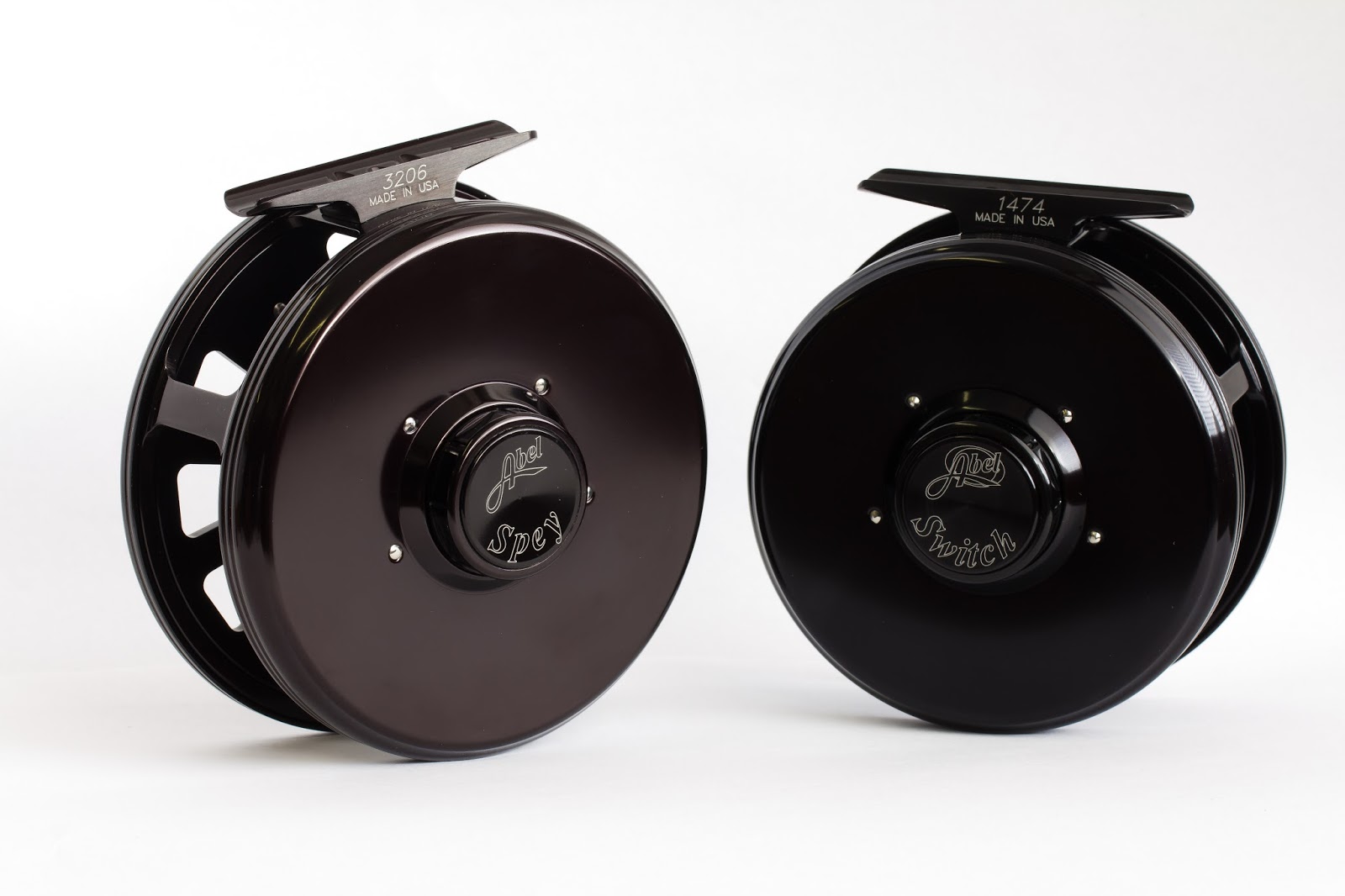
Hardy is not the only game in town when it comes to click pawl reels, even if they are by far the top dog on the street.  Abel has been building their TR trout models since the mid 1990s, and their Classic, Spey and Switch reels since 2012.  The cool thing about Abel reels is the multitude of color and porting options to choose from.  You can customize your reel to the last detail while still getting that classic click pawl experience and the finest craftsmanship, perfect machining and unparalleled attention to detail. 
Abel Classic Spey and Switch Series

Yes, it’s true, click pawl reels are not just for steelhead fishermen, although that is where the majority of our sales go.  As mentioned earlier, Hardy has been making their lightweight series trout reels since the 1930s, with four models to fit any of your trout rods. And Abel’s TR models are beautiful reels with a classic design; but there are more options out there. 

 
Pflueger Medalist mounted to a Fenwick Fenglass
Most seasoned anglers have owned a Pflueger Medalist at some point, or at least have seen them at a garage sale.  I have two old Medalists; one of them is from the 1940s and still works just as smooth as it did on the day it left the factory in Akron, Ohio.  The original Medalists used a drum brake system, which was one basic engineering move above a click pawl, but far less complex than any type of disc brakes that we see today.  Pflueger, which is owned by Pure Fishing, the same parent company as Hardy, re-introduced the Medalist this past year, and the new model incorporates a click pawl system instead of the old drum brake.  This is the most affordable click pawl reel in the store and comes in trout sizes too, plus they look pretty darn cool on the new fiberglass rods.

Galvan Brookie on left and Sage Click on right

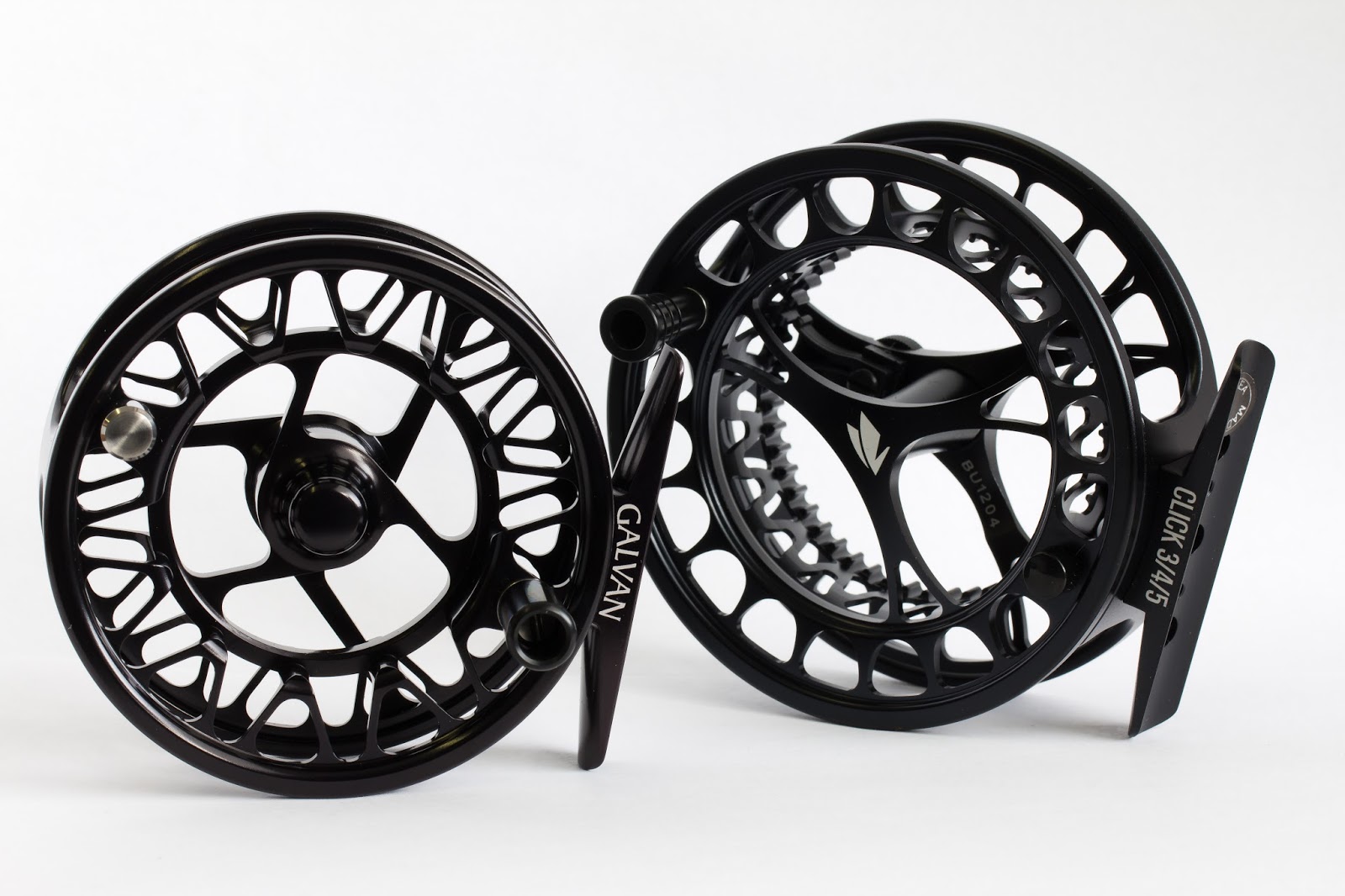
Other companies offer a modern hybrid version of a click pawl reel.  Sage’s new Click series reels feature a composite pawl that is quieter, yet just as smooth and efficient as a traditional reel but with large arbor design and modern looks.  Galvan’s Brookie reel features a Click-Ball system that is similar to a click pawl design but with modern bearings, smooth operation and a similar, modern, large arbor design.  Both of these reels are top-end alternatives to the traditional click pawl reel but with even smoother function and a quieter click. 
Hardy Marquis

I have heard concerns from anglers about using click pawl reels for trout.  They are afraid that delicate tippets will break easily because of the “startup inertia” required to move the pawls.  A couple of thoughts on this:  In the past one hundred years, tippet strengths have increased dramatically while engineering abilities have improved substantially.  Anglers back then caught plenty of fish on poorly machined reels bought at local drug stores using the weakest of tippets.  Abel, Hardy, Sage and Galvan are big names in reels today.  Many of their best small stream trout reels are click pawl (or similar) designs.  This should give you a little comfort in knowing that these systems have been designed by the best reel manufacturers in the world and after more than a hundred years, they are still the go-to reels for some of the best anglers on earth.

The only thing that has really changed that would hurt an angler fishing light tippet for big trout is a fast, stiff rod.  If you prefer a fast rod for sneaky trout fishing, I would suggest reading Ryan’s article on Soft Rods and Light Lines There is a lot to be said for the capabilities of soft rods when it comes to casting at, hooking and playing big fish on light tippet.  His article is definitely worth the read. 

Maybe a click pawl reel isn’t for everyone and I am ok with that.  I still own plenty of reels from names like Ross, Bauer and Lamson and I will continue to collect reels like my girlfriend collects shoes.  But when I am looking to find that reel that I will never sell to put on the one rod that I will own until I die, there is only one thing for me to do, and that is to go old school.   


The Gorge Fly Shop Team

541.386.6977


"Fly Fish the World with Us"

  © 'and' Steelhead.com Mike Prine 2009-2014

Back to TOP