Showing posts with label salmon. Show all posts

Sep 5, 2025

Fly Fishing the Klickitat River


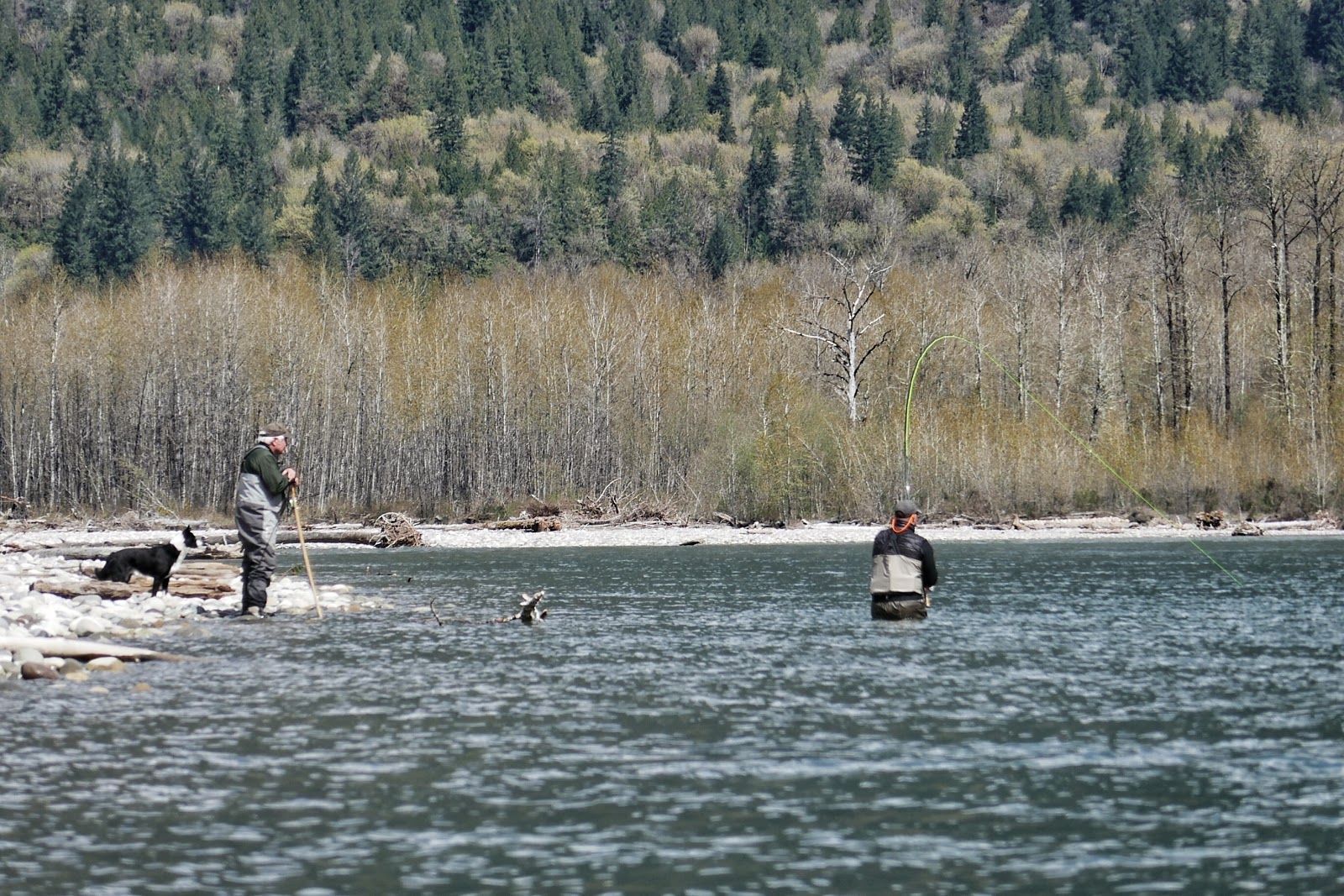
Discover fly fishing on Washington’s Klickitat River. Learn about steelhead and salmon seasons, river access, boat launches, guides, and the best places to stay and eat near the Columbia River Gorge.


The Klickitat River, known locally as “the Klick”, is a 95-mile, glacier-fed river that offers anglers incredible opportunities for Summer Steelhead, Chinook Salmon, and Rainbow Trout. Even Mountain Whitefish have their place here, though they’re less pursued.

With plenty of bank access, multiple boat launches, and campsites scattered along its course, the Klick is one of the Columbia River Gorge’s most versatile fisheries. Whether you’re hiking in, floating by drift boat, or camping riverside, this river delivers. Along the way, keep an eye out for wildlife—turkey, deer, otters, and even elk in the upper stretches.

Fishing Seasons:

  • Steelhead: Typically June through November (check yearly regulations).

  • Salmon: Year-round below Lyle Falls; above the falls reopens Aug. 1, 2025.

  • Whitefish: Open all year, with winter being the prime season.

Access:

  • Road: Hwy 142 parallels 18 miles of the lower Klick, offering excellent bank fishing.

  • Boat: Popular floats include Slide to Ice House and Ice House to Town. Longer floats like Stinson to Ice House are also a favorite.

Where to Stay & Eat:

Guides:

For fishing licenses, visit Bridge Mart (Bingen), Lyle Merc, or Canyon Market (Klickitat).

Whether you’re after steelhead, chasing salmon, or just soaking up the Gorge scenery, the Klickitat offers one of the Northwest’s most rewarding river experiences.


Thanks for reading, get out there, be safe on the water and have fun!

GFS Team
John

Want to dive deeper into fishing the Klickitat? Visit SteelheadBum for more.

https://www.gorgeflyshop.com/store/pc/Sale-Closeouts-c38.htm

"The Gorge"

Gorge Fly Shop Team - 541.386.6977


"Fly Fish the World with Us"

Nov 29, 2023

Tibor Billy Pate Anti-Reverse Fly Reels


Very few fly reels can claim a legacy as deep as the Tibor Billy Pate Anti-Reverse fly reels. At time of this post we currently have sizes Salmon, Bonefish and Tarpon...ALL IN STOCK...all have species ENGRAVING...all come with a FREE FLY LINE. 


https://www.gorgeflyshop.com/store/pc/Sale-Closeouts-c38.htm

"The Gorge"

Gorge Fly Shop Team - 541.386.6977


"Fly Fish the World with Us"

Jan 28, 2022

Friday's Feature Fly - Senyo's OCD

Senyo's OCD is a great fly in low water conditions because it's unweighted and 3 1/2 inches long. Tied using Senyo's articulated shank, ostrich, and Angel Hair, for a fly that swims well in the water. Shank length: 25mm.


https://www.gorgeflyshop.com/store/pc/Sale-Closeouts-c38.htm

"The Gorge"

Gorge Fly Shop Team - 541.386.6977


"Fly Fish the World with Us"

Nov 19, 2020

Columbia Gorge Fishing Reports 11/19/2020

Photo Credit Jet Boat Fly Guides

Trout

Deschutes River:

Spoke with a buddy who fished below Sherars falls recently and it sounds like the water clarity is much improved but still not what it normally is. Fishable though which is good news. He said a couple foot visibility. 

Trout fishing throughout the Maupin area and down below towards the mouth has remained pretty solid as December slowly creeps up on us. I haven’t had a chance to get down there recently, but am planning on going this weekend hopefully. 

Mainly a nymph and streamer show down there at the moment. Small window for some possible blue wing olive hatches mid day but I wouldn’t always count on fish cooperating with eating on top this late in the season.
Shop Trout Flies

Lake Fishing:

Lakes are slowing down. Pretty cold up there in the mornings causing the fish to not be as active. If you do fish, same techniques as always but definitely slow down your presentation as fish are going to get more lethargic. With so much moisture and colder weather it will be getting snowy up there soon too so be careful if you decide to get out.

Summer Steelhead

Deschutes River:

The steelhead fishing has been a little tough from what I’ve been hearing. Fish are really spread out and have been somewhat elusive and hard to find. But there are still some good late season fish to be had, so definitely still worth getting out. Worst case, you get a day of spey casting practice in which never hurt anyone! Down below the mouth, I’d think bigger profile flies and dark colors with slightly off color water.

Hood River: 

There are probably quite a few old springers in the lower few miles but not super high on people’s list to be targeting at this time as they have been in the river for quite some time now. There are definitely summer steelhead spread throughout much of the Hood which can still be caught on the swing and nymphing. Recent rains can get the fish freshened up and more willing to bite. If you’re swinging, using an egg sucking black leech is a tough fly to beat. Other good patterns are dark colored intruders or hobo spey type flies.


Smallmouth Bass/Carp 

Smallmouth fishing has remained pretty tough recently. Fish are still fairly spread out making them tough to find. Sinking lines with streamers and crayfish patterns are getting it done down there. People gear fishing have a better advantage of getting their presentation down in their face quicker.

Stay safe out there and best of luck! 
-Gorge Fly Shop 

https://www.gorgeflyshop.com/store/pc/Sale-Closeouts-c38.htm

"The Gorge"

Gorge Fly Shop Team - 541.386.6977


"Fly Fish the World with Us"

Nov 7, 2020

Columbia Gorge Fishing Reports 11/7/2020

Trout

Deschutes River:

Due to recent rains on Mt Hood, the White River has once again blown out causing the Deschutes below the White to be muddy and unfishable. Above the White River, around Maupin and up to Warm Springs, the trout fishing remains strong as we move into November. 

Blue winged olives are the most predominant insect that will hatch and bring trout to the surface in the coldest months of the year out there. Look mid to late day for a short window where blue wings will be hatching and trout feeding on them in the back eddies. Deep nymph rigs will always continue to work. Big rubber legs, October caddis pupa, san juan worms (especially effective in more off color water), and small beadhead mayfly nymphs work great. Euro nymphing is super effective too and will allow you to achieve the most natural drift resulting in more hook ups. 

Concentrate on the slow and deep water, as well as back eddies now, through the rest of the winter months. Streamer fishing on trout spey gear can be effective in the cold months too with various sculpin patterns. In the colder months with colder water, look to achieve a slower swing, similar to that of the swing you strive for when targeting winter steelhead. Giving your rod tip the occasional twitch can get the fish to react better to your fly as well. Once your swing is over, don’t be afraid to strip your fly in, lots of hookups happen here. This is where an integrated line like OPST commando smooth comes in handy as there is no bump in line connections when stripping the line through your rod’s guides.
Shop Trout Flies

Lake Fishing:

Lakes are slowing down. Pretty cold up there in the mornings causing the fish to not be as active. If you do fish, same techniques as always but definitely slow down your presentation as fish are going to get more lethargic.

Summer Steelhead

Deschutes River:

Steelhead fishing below the White will not be good for the foreseeable future until the White clears, which is unpredictable as to when that will be. Supposed to be pretty rainy all weekend, which is what caused it to blow out this time. Around Maupin up to Warm Springs remains fair to good. Sink tips and big flies are getting it done for the people fishing it regularly. 

 About 3 more solid weeks of fishing on the Lower before it starts getting too late in the season, with cold temps, and much fewer fish entering the river. The ones that have been in the river will be getting darker by then and preparing to spawn in January/Feb.

Hood River: 

There are probably quite a few old springers in the lower few miles but not super high on people’s list to be targeting at this time as they have been in the river for quite some time now. There are definitely summer steelhead spread throughout much of the Hood which can still be caught on the swing and nymphing. Recent rains can get the fish freshened up and more willing to bite. If you’re swinging, using an egg sucking black leech is a tough fly to beat. Other good patterns are dark colored intruders or hobo spey type flies.


Smallmouth Bass/Carp 

Smallmouth fishing has remained pretty tough recently. Fish are still fairly spread out making them tough to find. Sinking lines with streamers and crayfish patterns are getting it done down there. People gear fishing have a better advantage of getting their presentation down in their face quicker.

Stay safe out there and best of luck! 
-Gorge Fly Shop 

https://www.gorgeflyshop.com/store/pc/Sale-Closeouts-c38.htm

"The Gorge"

Gorge Fly Shop Team - 541.386.6977


"Fly Fish the World with Us"

Oct 30, 2020

Columbia Gorge Fishing Report - 10/30/2020


Trout

Deschutes River:

Fall is definitely in full force out on the lower Deschutes. Lots of very cool mornings, but there are certainly still some sunny and warm days to be had out there. Looks like it’s going to be a nice weekend in terms of weather, and the fish of course! 

The White River is still off and on causing clarity issues down below the confluence of the Deschutes. With more consistent colder weather on the forecast, it should finally steady out the White and improve water on the Deschutes. Down below the White all the way to the Columbia can be hit or miss with clarity. When the clarity is good, it is somewhere around 18-24 inches of visibility. Bad days, just a few inches. 

If you can find clean water above the White, the trout fishing remains strong throughout the fall. The trout are moving into their winter feeding lanes of slower pools and big back eddies where they do not have to exert as much energy. 

Look for blue winged olives to be the primary food source for these trout heading into the winter months. These small mayflies generally hatch on the Deschutes in a size 16 on the large side, to a 20 on the smaller size. Deschutes trout can be found slurping these bugs in the winter months in the back eddies, so that is a good place to focus on. 

Deep nymph rigs still produce consistent fish as well with either an October caddis pupa or rubber legs stone as your lead fly, and a smaller caddis pupa, zebra midge, or soft hackle pheasant tail as your dropper.
Shop Trout Flies

Lake Fishing:

Lakes are good and will continue to be good for another month or two. Fish will be feeding pretty heavily trying to fatten up before winter. 

Fishing a full sink line with brown, black, olive or purple wooly buggers and crystal buggers are great options. 

Fishing indicators with balanced leeches, chironomids, scuds or pheasant tail nymphs is another productive method to try if stripping flies isn’t producing. Giving your indicator some twitches and movements every now and then will help trigger bites if it’s super calm out. 

Crowds from the summer have thinned out some and will continue to go forward into fall. The lakes can be a great option to escape for a few hours and have some productive fishing opportunities.

Summer Steelhead

Deschutes River:

Steelhead fishing has been fair to good for the folks fishing it consistently and keeping their fly swinging in the zone the most throughout the day. Sink tip season for sure now. 8-12 feet of t-11 is a good tip to have on the lower. Sometimes T-8 or T-14 for certain types of water, but T-11 is a good starting point sink tip. 

Large black and blue intruders, orange and black intruders, bright marabou tube flies, black egg sucking leeches, and more sparse hobo spey type flies all get it done. Be prepared to work for it though. No fish are coming easy down there this time of year.

Hood River: 

There are probably quite a few old springers in the lower few miles but not super high on people’s list to be targeting at this time as they have been in the river for quite some time now. 

There are definitely summer steelhead spread throughout much of the Hood which can still be caught on the swing and nymphing. Recent rains can get the fish freshened up and more willing to bite. 

If you’re swinging, using an egg sucking black leech is a tough fly to beat. Other good patterns are dark colored intruders or hobo spey type flies.

Smallmouth Bass/Carp 

Smallmouth fishing has remained pretty tough recently. Fish are still fairly spread out making them tough to find. Sinking lines with streamers and crayfish patterns are getting it done down there. 

Stay safe out there and best of luck! 
-Zach  

https://www.gorgeflyshop.com/store/pc/Sale-Closeouts-c38.htm

"The Gorge"

Gorge Fly Shop Team - 541.386.6977


"Fly Fish the World with Us"

Sep 8, 2020

Fishing Off Color Water for Steelhead and Salmon

Update 9/8/2020 - With recent White River blowout reminded me of this article by John Garrett. What do you do when the water goes off color? Do you stay home? Personally that is not an option for me. Not only because I planned my fishing days in advance but it's not an option because I have a desire to succeed no matter what the conditions hand me to work with. Experienced anglers know that fish are capable of eating in all but the most extreme situations. The key to success becomes the quest. 

Colored, off colored or dirty water, how much color is to much? 

That is entirely up to you. Honestly I can’t tell you, because I have seen some really good fishing is some extremely colored water.

Hopefully this post gives you something to think about. But in the end it is really up to you if the river is fish-able or not. Me personally I would rather fish muddy water for a chance at a fish than go to work, but that is just me.


I get the question all the time; "I hear the White blew out the Deschutes, is it fish-able?" 

We have to be very careful with our answers, because each angler’s definition of un-fish-able is different. Some people won’t fish the Deschutes River when it is down to 3’ of visibility, but they are excited to fish the Klickitat River in with the same 3’ of visibility. Doesn’t make sense to me, but hey everyone is different.

It is amazing the difference of opinion from one angler to another on how dirty the water is. You can talk to 3 different anglers on the same morning at the mouth of the Deschutes and those three reports will all be different.
One will say it was zero visibility. The second will say 12” of visibility, but I hooked 2 steelhead! The third will say 18” of visibility and it is not fish-able.


This is a big variation of visibility from the same anglers on the same piece of water at the same time. Several factors play into this.

First light level, at low light the visibility of the river will look less.

Second, did they actually wade in the river and see how deep they could see the top of their boots? That is the best way to see how far you can see in the water.

Third where did they look at the river to judge water color? If it was at the boat ramp at the mouth for example, that is the worst spot. This is because that is an all sand bottom which combined with sandy cloudy water makes the visibility look much less.

There are some key things to think about here. 

What do the fish see? Well we really don’t know that for sure, but the general consensus is that they see much father in colored water than we do. Anywhere from two to four times farther than we do. This is because we look through the water towards the bottom into darkness. Fish look through the colored water into light.
So if you wade into the river and you lose sight of your boots with a distance of 15” of water between the surface and the top of your boot multiply that at least by 2 if not more.

Why do you think a Steelhead hits your small wet fly on a swing near or on the surface in extremely low light?
You and I could barely see the fly when it is almost dark. Remember they are looking up into light, they see that silhouette of the fly in near darkness.

But I think the biggest factor why we like to fish in low visibility conditions is that fish get aggressive. Think of it like this when we swing a fly we are fishing for that aggressive steelhead. The aggressive fish may be the one out of ten or more.

In clear conditions fish see your fly coming from a long ways away. This gives them lots of time to decide if they are going to attack it or not. Most chose not. In low visibility conditions, the fly suddenly appears a few feet away from them they have to react very quickly.

The first reaction is to snap at the fly. Now you are not fishing for the 1 in 10 like clear water, you fishing for the nearly 10 out 10. Your odds just went up!

Keep in mind you need to fish bigger, darker flies in colored water. I prefer to fish a light tip even in low light situations.

When visibility gets to about 2 feet I will go back to my floating line in low light, but make sure I am still fishing a darker bigger fly like a #4 or #2 instead of my usual #8 or #7 flies.


Last thing to think about is in colored water fish feel safe therefore they will slide in much closer to the bank than in clear conditions. Make sure you fish your fly in tight to the bank. With this all said I can’t tell you when the river is fish-able or not unless it is high and solid mud. It is really your choice and confidence. These thoughts on river color really apply to all rivers for Steelhead and Salmon, not just the Deschutes. I use the Deschutes as an example, because it is the river that most anglers let water color decide if they fish or not.
Trav

https://www.gorgeflyshop.com/store/pc/Sale-Closeouts-c38.htm

"The Gorge"

Gorge Fly Shop Team - 541.386.6977


"Fly Fish the World with Us"

Aug 20, 2020

Columbia Gorge Fishing Report 8/20/2020


Trout 

Deschutes River: 

The trout fishing should be good going into the weekend with slightly cooler temps than we saw last weekend. Caddis is still the main topic of discussion and will be for the rest of August. Fish are eating dead caddis in the mornings and are positioning themselves in the foam lines where the current acts as a conveyor belt, delivering caddis that hatched the previous night and have died, downriver to the opportunistic redsides.

Fishing a dry dropper is a great late summer technique. Using a euro style nymph with a tungsten beadhead helps get that fly down in the zone fast. Jig style tungsten cdc pheasant tail nymphs are a great dropper when fishing suspended under a dry. Use larger caddis dries with foam to help hold up a tungsten beadhead nymph underneath. Vary your tippet length depending on the run but a 2-3 foot section between the dry and dropper is a good starting length. Be sure to douse your fly up good with dry fly gink and fish the faster riffles and you will find success.

Lake Fishing: 

Not a lot has changed since my last report on the Mt. Hood lakes. Later in the summer however, the fishing can be a bit more challenging due to heavy pressure throughout the whole summer. Fish have wised up (maybe not the stockers), and won’t eat that traditional size 8 black wooly bugger anymore like they did in June and July.

Great place to beat the heat up there with great views of Mt. Hood and lots of fish around however. Usual lake methods of nymphing or stripping flies. Running a size 16 ice cream cone chironomid in red/black and a 16-18 non beadhead pheasant tail nymph or dark assassin nymph is a deadly combo. The pheasant tail/dark assassin fly imitates a callibaetis nymph really well and is a good dropper behind the chironomid. Don’t be afraid to twitch your indicator rig a bit to give those nymphs some life if its calm out on the water. If it’s windy and there’s some chop on the water then that alone will move your nymphs around enough.

Summer Steelhead Deschutes River: 

Steelhead numbers over the Dalles Dam have slowed down quite a bit. Earlier in the month and in late July we were seeing lots more fish daily come over the dam, and those numbers have slowed down. There are still lots of steelhead around in the lower 20 miles of river, the key now with less coming into the river (at the moment), is swinging lots of water and moving. You can’t catch em if you’re fly isn’t in the water so being efficient is important. Fishing a sink tip with a big fly in the middle of the day is effective as is nymph fishing with an egg sucking stonefly nymph.

Be prepared to see quite a few folks out there. With the Oregon Coast buoy 10 fishery opening this past week, it has lessened the crowds slightly, but still lots of anglers out trying to connect with a steelhead.

We are starting to see some early fall chinook enter the Deschutes as well so don’t be surprised to hook one when steelhead fishing. The water temps have been running cooler now as they lowered them at the dam, but on super hot days they have still been creeping up towards 70.

With as many people who are out on the Deschutes, it’s important to practice good river etiquette and take care of our wild steelhead!

Here’s water temps over the last week. Been trending up with hot weather but should start trending down towards the end of the week with weather forecast to be in the low to mid 80’s instead of high 90s and 100s.

Hood River: 

The Hood has been pretty colored up with all this hot weather. Been pretty unfishable for the most part this week, but could come into shape towards the end of the week. There are steelhead in the river and people who are fishing the Hood consistently, are the ones getting them.

Smallmouth Bass/Carp:    

Carp fishing continues to be good out on the main Columbia as well as the countless side sloughs and ponds along I-84. Later in the summer, there is more algae and weed growth in the Columbia which can make keeping your fly clean a bit difficult.

Carp are still eating good and are super happy with the hot weather we’ve been having. I run a 9’ 8 weight rod with a general weight forward floating line and either run a heavy tapered leader to my fly or if I am lazy, will just tie like 4-5 feet of 20 pound maxima tippet off my fly line with a perfection loop.

Smallmouth fishing is good if you know where to fish. The Columbia is low right now and the fish are in deep water with structure. A friend of the shop had a great day fishing full sinking lines, similar to that of trout lake lines but heavier and faster sink rates, stripping streamers in about 15-30 feet of water. Most of these fish are closer to the bottom so having a type 3 sinking line is a good bet to get down quick. Topwater action when the winds stops blowing is good, but its been pretty rare to have no wind in the gorge lately.
Zach

https://www.gorgeflyshop.com/store/pc/Sale-Closeouts-c38.htm

"The Gorge"

Gorge Fly Shop Team - 541.386.6977


"Fly Fish the World with Us" 

Jun 13, 2020

Airflo Salmon Steelhead 10' Polyleaders


Airflo Polyleaders have many applications. They make great tips for skagit and scandi spey applications. They also work well for many trout spey applications. Quickly turn your floating single hand line into a sink tip.

Airflo Polyleader construction starts with a 24lb mono core that is than taper coated with the same material as fly lines are made from. The result is a uniform, strong leader that provide excellent turnover.

Airflo polyleaders feature welded loops on the back end and perfection loops on the front.

Shop Airflo Polyleaders

https://www.gorgeflyshop.com/store/pc/Sale-Closeouts-c38.htm

"The Gorge"

Gorge Fly Shop Team - 541.386.6977


"Fly Fish the World with Us"

Jun 12, 2020

Airflo FLO Tips


The spey angler has alot of sink tip choices. Once you migrate beyond the basic T-series of sinking material you now start to venture into the "transitional tips."

These type of tips start out as one density and transition into another density. They can be extremely useful for particular fishing situations as well as improving cast presentations by creating smoother transitions between head and sink tip.

Airflo FLO tips are designed to give you this smooth transition and helps you to keep your fly in the zone longer. It's a win win!

FLO Tips come in 10 foot and 12 foot configurations. One quarter of the tip on the head side is intermediate material that transitions into the remaining three quarter which is sink tip. The sink tip part comes in four different densities including T-7, T-10, T-14 and T-18. Ten Foot FLO tips are 2.5' intermediate and 7.5' sink tip. Twelve foot FLO tips are 2.5' intermediate and 9.5' sink tip.

Each tip also features color coded head loops for quick identification as well as looped on the business end for easy tippet application.


FLO Tips also come in a Kit including a tip wallet. The ultimate FLO Tip Kit for steelhead setup could be a Kit plus add a 12 foot FLO in T-10 and T-14 and you'd have every tip you could need for any steelhead situation.

Shop Airflo FLO Tips and Spey Lines

https://www.gorgeflyshop.com/store/pc/Sale-Closeouts-c38.htm

"The Gorge"

Gorge Fly Shop Team - 541.386.6977


"Fly Fish the World with Us"

Jun 8, 2020

Airflo Salmon Steelhead 5 Foot Polyleaders

Airflo Polyleaders in 5 foot can have many uses. They handle well on single hand fly rods. They perform excellent as trout spey leaders. Also very useful for scandi applications.

But on 24lb cores just like the bigger 10 foot models and come in all the same densities including 3 clear models of Floating, Hover and Intermediate.

Shop Polyleaders

https://www.gorgeflyshop.com/store/pc/Sale-Closeouts-c38.htm

"The Gorge"

Gorge Fly Shop Team - 541.386.6977


"Fly Fish the World with Us"

Dec 19, 2018

Redington Dually II Spey, Trout Spey and Switch Rods

New for 2019

Shown in Matte Bronze finish
The original Dually series of rods from Redington proved for species such as trout, steelhead and salmon that in fact, indeed "Two hands are better than one!" To further this progression Redington conceived the all new Dually II series of spey and switch rods.
Special Edition Purple comes in 7116-4, 7126-4, and 7136-4
A long list of improvements including weight reduction, tip stability and new handle design featuring a fully anodize reel seat. Whether this is your first spey purchase, backup rod, or looking for a great "don't break the bank" dedicated purchase, you'd have a hard time finding a better value in a lifetime warranty, two hand rod series.
What makes the Dually II a really impressive for the price two hand rod is the easy medium fast action. Fast enough to cast like a champion but moderate enough to enjoy it at the same time.
Dually II sports a traditional finish in matte bronze throughout the rod lineup but for those in the market for that special steelhead stick all 7 weights models are also available in special edition purple.

Features include -

  • Medium Fast action
  • Anodized Aluminum reel seat
  • Soft-Touch EVA pinch sections, This really helps with mono shooting lines
  • Alignment dots make assembly easy
  • Cordura divided rod tube
  • Lifetime Warranty


https://www.gorgeflyshop.com/store/pc/Sale-Closeouts-c38.htm

"The Gorge"

Gorge Fly Shop Team - 541.386.6977


"Fly Fish the World with Us" 

May 9, 2018

Columbia Gorge Fishing Report 5/9/18


Steelhead: The winter-run fishing is all but done with the exception of a few fashionably late fish. The good news is that summer fish are on their way, and so far I’ve heard some good predictions for the Columbia returns (fingers crossed!). Personally, I love fishing dryline and dry flies for summer fish, so I've been anxiously awaiting summer-runs. Though it's still a little ways still before I swap out my skagit lines. Over on the Sandy and Clackamas, folks have been finding a few summer steelhead already. Both these rivers host an artificial/hatchery summer-run with no native summer-run fish that are perfect for the dinner table! A couple weeks back I got a last minute opportunity to venture up to the Skagit/Sauk for the opening after a 10-year closure for their true spring-run of brutes. Luckily, we had a great tour guide, an old timer who used to live on the river and still had access to many private runs. It’s amazing country and we were able to find a few fish too that made the trip all that much more memorable. Hopefully, with responsible angler stewardship that watershed will remain open for future seasons.

One of my favorite parts of fishing is just observing.

Salmon: Numbers are picking up over Bonneville and I’ve been seeing quite a few boats out on the Columbia or at Drano chasing them around. However, I haven’t heard much reported yet from the tributaries of guys catching them on flies.

Of course I saw a snake while at Rattlesnake Canyon.

Trout: It’s that time of year again where many of us get excited for the Deschutes’ Salmonfly Hatch! I was out last week on the “middle-lowers” and saw a handful of adults flying around, though the trout weren’t quite queued into them at the time. Since then it sounds as though the fish have been paying more attention to the big bugs up top, along with some quality fish being caught. Last year I decided to get creative and bring out the trout spey to skate and dead drift some salmon flies, and it was a blast! I love how versatile those rods are. If venturing out to the mighty Deschutes I would certainly bring an assortment of Salmon/Stonefly dries and nymphs along with some standard Deschutes dry flies such as BWO’s, Caddis, midges, etc., just in case. Along with your favorite go-to nymphs and streamers. If you’re ever curious what to bring, give us a shout and we can tell you what’s been working well for us.

Bass: Bass fishing has turned on lately with this warmer weather and some big boys eagerly moving to the largest flies you can throw. Top water action hasn’t quite begun yet, but I would think with some warmer weather coming after the weekend it will be picking up shortly thereafter!

A hefty smallmouth putting a bend in a 7wt.  
Cheers!
Cody

As always, we are happy to talk fishing anytime. Give us a call if you have any specific questions on local rivers, gear, and tactics, or if you just want some encouragement to get out of the office. 

Local Fishing Information

Bookmark our new link to Weather, Stream Conditions and Fishing Licenses


"The Gorge"

Gorge Fly Shop Team - 541.386.6977
GorgeFlyShop.com Join our TeamContact Us


"Fly Fish the World with Us"

Mar 21, 2018

Airflo Super-Dri Bomber Fly Lines


Airflo Super-Dri Bomber Fly Lines were developed specifically for dry fly atlantic salmon and steelhead applications. If features a front loaded taper to turn over long leaders with wind resistant flies. Super-Dri technology enables the line to be extremely buoyant for high floatation and Ridge Technology helps line shoot for distance.

Two Tone Mint Green / Sandy Tan identifies optimum loading point for exceptional precise casting. Micro Looped on both ends. Power Core provides strength and strong hook sets.

Specs -
Line SizeColorHead WeightHead LengthSink RateTotal Length
WF7FMint Green/Sandy Tan310gr46ftFloat90ft
WF8FMint Green/Sandy Tan360gr46ftFloat90ft
WF9FMint Green/Sandy Tan400gr46ftFloat90ft

Find Bomber and all Airflo Fly Lines at...
"The Gorge"


The Gorge Fly Shop Team

541.386.6977


"Fly Fish the World with Us"

Jul 31, 2017

Fishing Bear Lodge | Alaska

Bucket List worthy fly fishing travel destinations.
In the heart of the Wood-Tikchik State Park and backed by the Wind River range.
Destination Location:
Fishing Bear Lodge is located in southwest Alaska, due west of Dillingham and backed against the surreal spires of the Wind River range.

Bucket list worthy.
In the heart of southwest Alaska's 1.6 million acre Wood-Tikchik State Park, Fishing Bear Lodge is at the mouth of Alaska's Peace River. At it's core The lodge is a modest and endaring family run Alaskan Lodge that employs jet boats to fly fish a host of seldom seen small streams for hearty rainbows, abundant Arctic char and large surface oriented grayling.

Fish On!

Rainbow Trout
Wild native rainbow trout are fished on four spectacular Alaska rivers and several streams. They average in size ranging from 18 to 24 inches.

Arctic Char
During the month of July, Arctic char fishing is exceptional and are voraciously feeding on the salmon fry and smolt.

Arctic Grayling
Grayling are generally abundant throughout the season. A light weight 1-3 wt. rod makes a day of grayling fishing one of the most gratifying and fun days of fly fishing in Alaska you will ever experience with a light fly rod.

Northern Pike
When one talks about Northern Pike on the fly, the word explosive comes to mind especially when taking a fly and most guests ask to fish for pike again after trying it the first time.

Sockeye Salmon
During July, the fly fishing for fresh Sockeye in Alaska is excellent and fish are 6 to 12 pounds.

"When it comes combining value, angling variety and a warm family-run wilderness experience, Fishing Bear Lodge is hands down the best in Alaska." - Ken Morrish


The Gorge Fly Shop Team

541.386.6977


"Fly Fish the World with Us"


Dec 1, 2015

The Gorge Fishing Calendar

Andrew Perrault with Winter Steelhead

Here in the Gorge (Columbia River Gorge) we have a lot of water and we fish a lot of water. We are fortunate to have 365 days a year with some kind of fishing that can be enjoyed. We get asked all the time what fishing is going on at a particular time of year, so Andrew put together a fishing calendar to help everyone get answers and plan your next Columbia River Gorge Fishing trip. 

January/Feb

This is a great time of year to be fishing in our area. Winter Steelhead are the primary target for local swingers and nymphers. Most of the Oregon and Washington coastal rivers will kick out a few early wild steelhead this time of year, especially as the river drops after a good storm. Avoid the valleys and peaks. Which means don’t fish it too hard when the river is cresting or when it is low and clear, but fish it as it is rising, but more importantly, FISH IT ON THE DROP! When the river crests and starts to drop, that is when the fish really move in and get on the bite.


Rivers that have a winter steelhead hatchery program often get earlier returning fish than the wild runs that appear more into the spring, especially rivers that stocked the Chambers Creek strain of winter steelhead, which were chosen partially for their tendency to return starting as early as November, but peaking in January. The North Fork of the Nehalem is famous for its early returning hatchery fish, which peak in early to mid January. The Wilson is also a good bet, along with some of our favorite rivers in Washington, including the East Fork Lewis, Washougal, Cowlitz and the Kalama. They can all produce some nice fish, with more wild fish coming in February than January. The further upstream we are on the Columbia, the later the run tends to be.

There are plenty of Summer Steelhead still hanging around rivers like the John Day, Grande Ronde and the Umatilla. Anglers have even been known to swing the Columbia River around Hanford near the Tri-Cities. There are no winter steelhead above the Dalles Dam. No matter what time of year a steelhead passes through the Dalles Dam, it is a summer run.

The Hood can give up a fish any time of year, but the most consistent fishing is later in the year.


Trout fishing can be absolutely epic on the Deschutes during January and February. This is the most underrated fishery anywhere in the area. If this fishery existed in Montana or Colorado, it would be absolutely packed to the brim every day, but seeing another angler in January is a rarity. Big trout can be caught off guard sipping on Blue Wing Olive Baetis in back eddies, while swinging a sculpzilla on a micro-spey will also produce some fatties. Redband rainbow trout will also munch on small midges throughout the day. The river is open downstream of the Warm Springs Reservation this time of year, so Maupin area down to the mouth is where the action is.

Fish tend to sit in softer water when it’s really cold. The soft water is often close to shore and fairly easy to read. The take can be really soft too, so set the hook if any disturbance occurs to your setup, from a stop in the indicator to the tiniest tick. The best part of the Deschutes in winter is that it is a great time to be on a gorgeous river in solitude. There are rarely any people out and there is no more beautiful river than the Deschutes… except maybe the Metolius.

The Metolius and the Crooked Rivers are also great winter fisheries. Nymphing #20-#24 midge patterns and BWO nymphs are both productive methods of trout fishing in cold water. Very gorgeous and potentially very productive, the Crooked can give up a ton of fish when it’s on. The Metolious is much like a steelhead river in that getting a fish or two a day is very good and you are likely working very hard for those fish too. You are often sight fishing for sippers and refusals come far more often than takes, but the reward is amazing as the Metolius fish are chunky, beautiful and hard fighting.

This is not the peak of Oregon’s winter steelhead run by any means, so take a day or two and get into some quality trout fishing before the steelhead get thick and it’s harder to convince yourself to go trout fishing.

We often get calls asking about the winter steelhead run on the Klickitat. There is a small winter run, but the river is closed this time of year. It opens up June 1.

March/April


Now we’re talking winter steelhead! Pick a coastal river in Washington or Oregon and it will likely be producing winter steelhead, especially after a good spring rain. Local favorites include the Wilson, Nestucca, the Alsea and the Siletz (all are worth the drive). The Columbia Tributaries are producing fish too! In Oregon, the Sandy is a personal favorite, along with the Clackamas. They can both get busy on a weekend, but there is good reason for that. The Hood is generally fishing well by April and improves until about the first of May when there are very few fresh fish to be found. The East Fork Lewis and the Washougal also produce fish, but always check the regulations in Washington because they change constantly and the Washougal has been closing around March 15 in recent years. If you have a chance to visit the famed Olympic Peninsula, this is the time to do it. While the Sol Duc, Hoh, Quinault and the Queets get most of the attention, the Humptulips is closer for us and gets nice fish with easy access. But there are quite a few hidden gems along the Oregon Coast. All of the Oregon coastal rivers can kick out some big fish and good numbers, usually peaking in early to mid April.

Rainbow Trout fishing on the Deschutes is also absolutely stellar this time of year. Stormy, cloudy days will get trout into back eddies to eat Blue Wing Olives, while the March Brown Mayfly and Skwala (little brown stonefly) hatch can really get some big fish up to eat dries. On warmer days, fish a #8 or #10 brown Jimmy Legs (rubber leg stonefly nymph) with a #12 or #14 Possie Bugger or Anato-May Hare’s Ear (both are excellent March Brown Mayfly nymphs). On colder, cloudier days, pull streamers or look for fish in foam lines and back eddies eating Blue Wing Olives (baetis). Another great option is the steak and eggs; San Juan worm with a small egg pattern (tiny yellow eggs from spawning Whitefish) deep under an indicator. All of them will produce fish under the right circumstances.

Eastern Washing Trout
April also means it’s time to get your float tube out, because lake fishing for trout is never better than in April. There are hundreds of lakes within a three hour drive of Hood River. I look forward to my annual trip out to the Columbia Basin Lakes in Central Washington all year and wish I could spend a couple of weeks trout bumming around the lakes up there. The trout are big, hungry, hard fighting, numerous and fairly easy to catch. The Lenice-Nunnally chain is a good bet, along with the “Seeps Lakes”, Sun Lakes State Park, Potholes Reservoir and Quincy Lakes. Pulling an olive bugger very slowly on an intermediate line is a great move, as well as nymphing with a chironomid setup. Both are deadly.

Hiking in can get you to some great water


The trout fishing is also great at the local lakes in the Gorge, although long winters can make it hard to get to some of these lakes early. Some of them could be inaccessible until May or later depending on snowpack and spring temperatures. Local springtime favorites include Timothy, Lost, Clear, Kingsley and Trillium. (Laurence is closed until the fourth Saturday in April). These are all mountain lakes and the fishing is best as soon as the roads are clear of snow enough to get in. I had to drag my float tube almost a mile to get into Timothy once in March and was rewarded with some of the best trout fishing I had ever experienced. Using the same techniques as in the basin lakes, fish a chironomid under an indicator on a floating line about two feet off the bottom, or troll an olive woolly bugger on an intermediate sink line very, very slowly, but either way you better hold on because no trout fights harder than a fish just out of winter!


Smallmouth Bass fishing improves significantly during the springtime. By April, nice smallies should be easy enough to find, although they will likely be fairly deep early in March, but will move into rocky areas by mid-April. They tend to pod up quite a bit by April and will often move in quite shallow. The best part is how aggressive they are. Any baitfish pattern will work, but reds and yellows are a favorite. The lower Yakima River is a great place to catch some big fish during the spring time, along with the Columbia. The John Day is often colored up, high and cold until May, but keeping an eye on the conditions is well worth the effort when the fish are on…

Greg Darling provides some insight for Columbia River Bass fishing in the early spring in his article titled "Spring Bassin'"


May/June

Deschutes River

May and June are difficult months for the hardcore steelhead junkie around the Gorge, forcing many diehards to become temporary trout fishermen. Fortunately for them, it is the best time of year for trout, bass, and well, just about everything else. There are a few late winter steelhead hanging around the rivers in early May, but most all of the catch are kelts (post-spawn steelhead working their way back towards the ocean). Travis always says that fishing for spawn and post-spawn fish is like dating in a nursing home.

June 1 signifies the opening of summer steelhead season here. The Klickitat opens June 1 and can kick out a super-early fish or two. Conditions are highly dependent on snowpack and weather. In most years, the river is too high and muddy from runoff to fish in most of June. Given a cold spring, it could be fishable early, but will likely be muddy by mid-June regardless of snowpack and weather. The Klick is a finicky river. It can get very muddy very quickly and snowmelt in the early season can cause the flows to be too high for quality fishing. There are rarely any summer steelhead in the Deschutes in fishable numbers in May or June, but the bright spots are the lower Columbia tributaries. Late May and Early June is often when a nice push of summer run steelhead enter the Sandy, Clackamas, Washougal, and Lewis Rivers, and often no one chasing them.

Salmon Flies doing their thing

The big thing around here is the Deschutes River as Salmonflies and Golden Stoneflies start popping in May. The first two to three weeks of May is a nymphing game, but the dries start popping in the second half of the month, and then epic dry fly fishing dominates the scene from late May through mid June. Some years it is a little earlier, some a bit later. Most of that depends on weather and water temperatures.

Big trout that are rarely seen the rest of the year suddenly become very catchable and eager to eat big dry flies. While much of the focus is on the river from Maupin up to Pelton Dam, great fishing can be had throughout the lower river, with the big bugs hatching a week or two earlier in the lower river than the upper, although the hatch can linger for quite some time below Sherar’s Falls with very few anglers venturing down the lower access road.


Spring Chinook are also available during May and June. We can find them on the Hood River, along with the Klickitat (only open for 1.4 miles of the lower river and only a few days a week until June 1). The Wind River has been known to kick out a “springer” or two. Catching them on a fly is definitely a difficult proposition, so this is the time of year that many hardcore fly fishermen dust off their bait rods, adorn full camo and secretly pull a few fresh spring salmon from the local rivers. The places where springers stack up are usually few and far between, so they can be very crowded. Finding them in catchable numbers in catchable places with a fly rod is all but impossible as there are no secrets during salmon season.

Lakes fishing is usually fabulously during May and June. This is when Lost Lake starts to get really good, and Laurence Lake is at its best. Goose Lake in Washington should give up a couple dozen fish per day to an angler with the right setup. Fish eat flies early and often and a variety of hatches keep them happy. Callibaetis Mayflies are a good bet for mid afternoon dry fly action, while nymphing a chironomid early in the day is a great choice. Damselflies start hatching during this time and fish will chase them into shallow water throughout the day usually starting in late May or early June, but in hotter years, we can see them hatching in early May. A good old olive woolly bugger catches fish all day, but there are many, many flies that would all be good choices. Another prolific hatch to prep for is the Hexagenia Mayflies that are the lake equivalent of the Deschutes Salmonflies, as big fish get really stupid for a couple of days. The bugs hatch at night in bigger lakes like Timothy and Lost, but the most famous “Hex” lake is Merrill up by Mt. St. Helens. The hatch starts right at the end of June and can go through mid-July (into August in some lakes), but that last couple of days in June is a good bet in most lakes. Anglers should fish dries and nymphs in shallow, muddy water at last light and Hex spinners at first light.


20" Smallies live in the Columbia River
May and June is when the most consistent smallmouth bass fishing happens on the Columbia. The June full moon is when most of the fish will spawn. This means that they will hang out in big groups in shallow water and are usually easy to locate. A float n fly will work great, but stripping baitfish patterns is also very productive. Red is the classic pre-spawn color of choice for bass fishermen, but pink, chartreuse, olive, black and yellow have all brought many fish to hand during the late spring. Once you find fish, there should be piles of them in the same area and same type of structures.

The John Day is starting to heat up for smallmouth fishing. If I told you that you could catch sixty plus fish a day between ten and twenty inches all on dry flies, you would definitely be interested, correct? Well just because they are bass and not trout, many people never get to experience a day on the John Day River. Cottonwood Canyon State Park is a peaceful place to go fishing. Take someone that is new to the sport and it will get them hooked for life! Take any popper, Chernobyl Ant, mouse pattern or streamer, it will get eaten repeatedly.

If you ever wanted to catch a Tiger Muskie, May is probably the best month to do it. Evergreen, Merwin and Mayfield Lakes are all within 3 hours of Hood River and all have been known to give up trophy Tigers. These voracious fish area cross between a sterile cross between a Northern Pike and a Muskellunge. A smallish unweighted baitfish pattern works fine, just remember to use a wire leader. I prefer a white deceiver, but black is the classic choice for those die-hard Midwesterners (I don’t care what color fly you use as long as it is black). Getting one fish to take in a weekend of fishing is very good, so it’s not a hard transition for steelheaders to make. Don’t actually expect to catch one and then you will never be disappointed.

Carp really start moving up into the shallows in May and June, and the limited weed growth early in the season makes fishing for them quite a bit easier than later in the summer. Early season carp have been known to be a little pickier than mid-summer fish, but carp are the most finicky fish around. They can turn on or off to any fly at any time. They can appear and disappear in seconds and refuse a hundred flies only to rise to a piece of garbage floating on the surface just to show you how it feels about you.

July/August

July and August can be tough or they can be amazing. Hot, dry years, like 2015 are on the tough side. During hot summers, high mountain lakes and small streams are the choice for many anglers in the area. There are literally hundreds of lakes in the Gifford Pinchot forest near Mt Adams, and dozens of lakes by Mt. Hood. Doing a little backpacking, bushwhacking and exploring is on the menu during our summers. Trout Lake Creek is a go-to for small stream trout anglers, as well as the Oak Grove Fork of the Clackamas, Eagle Creek near Bonneville Dam, and the East Fork of the Hood River. The rest are for you to find and for you to keep secret (please). There are so many creeks and lakes in our area that an angler could never fish them all (I am trying, but I always add more to the list than I am checking off).


Lost Lake is a great place to spend a day or weekend fishing. While there is little for solitude in mid summer (the locals call it “found lake”), the fishing is absolutely stellar during the hottest part of the year. There is not always direct sunlight all day as the topography gives some relief from the relentless sun that you would have to deal with on the Deschutes. Days are usually pleasant and nights are often cool. The lake stays cold, at least once you get down a few feet. It is around 200’ deep in the middle, so there is a good supply of cold water for fish to thrive. You may have to use a deep sinking line during the middle of the day, but fish will come into the shallows to eat Callibaetis in the evenings all summer long, and will eat a small, black or olive leech pattern deep yet not too far from shore.


Summer steelhead really start showing up in the Gorge in July, but numbers and water conditions in the Klickitat and Deschutes are generally inconsistent until late August or September in some years. Given good conditions, the chances of hooking a fish are decent throughout this time period, and definitely better towards the end of August. The Deschutes can get very, very hot as the canyon walls reflect a heck of a lot of heat during July. It can be 85 degrees in Hood River and well over 100 in the Lower Deschutes Canyon in July, or 100 in Hood River and 110 in the canyon. There is generally little pressure until late August on either river, but more and more anglers come to both the Deschutes and the Klickitat earlier every year. The Klickitat will likely be very muddy and off-color this time of year, as the Big Muddy Glacier shows us how it got its name… Hood River can kick out a fish for the ultra-dedicated angler, but spotty clarity and low water generally prevent the Hood from being a good choice until the fall. It often has clarity as poor as the Klickitat.

Steelhead from a float tube? Two good choices for steelheaders in August are Drano Lake and the Herman Creek estuary near Cascade Locks. The bulk of the Columbia River steelhead run passes through Bonneville Dam in August and many of them “dip in” to these backwaters to get some cold water through their gills as the Columbia can run above 70 degrees. Many steelhead will enter one of these little hideaways and cool off for a day or two or more. Most fly guys troll little buggers and brassies on intermediate lines in either place. They also like to anchor up, cast, let the line sink to the right depth and strip the flies back with a slow and steady retrieve emphasizing on the twitch. You have to put in some work to find the fish, but once you do it can be really fun and productive. Steelhead tend to stack up in the same areas every year and don’t really move a lot. Go in the mornings, or try fishing Drano at night in your tube. It opens August 15 to night fishing on most years, but the bait crowd can get quite unruly by evening. I have witnessed a couple of screaming matches and near fist fights in the evening, so I prefer early morning or after dark when I can fish in peace and quiet.

September/October


This is the time of year that most anglers look forward to the most. We fondly refer to September and October as “Fishtember” and “Fishtober”. My dreams involve a never ending October. Pick a fish and likely it is biting.

The Deschutes and the Klickitat draw most of the attention, but just about everywhere is good. September is when the big run of Fall Chinook run enters the rivers, while October is when the Coho start running. Steelhead fishing is at its best, although incidental salmon bi-catch is quite regular. It is not unheard of to catch a Steelhead, Coho and Chinook all in the same run, back to back to back. Finding steelhead when the salmon are in thick can be tough, but once you figure out what type of water they are hiding in it’s game on. Look for steelhead to be in the riffles ahead of the salmon, the soft water on the sides of salmon schools and behind them deep into the tailouts. My favorite runs to fish this time of year are typically shallower than usual and they don’t hold salmon very well. These steelhead can be found in some atypically shallow water if you look for them. Once the Chinook start dying off in late October, the steelhead will move back to more traditional spots, but then slide into softer water as the river temps drop. Cold water holds more oxygen than warmer water, so as it cools down, the fish can work less to get the same oxygen… so fish slower water on cold days and later in the time period.

Steelhead tend to hold more in the lower part of the Deschutes, while they are distributed all throughout the Klickitat by September. A fall float down the Klicktat canyon from Stinson to Ice House is one of the most beautiful stretches of river you’ll ever see, plus the fishing should be excellent. Most focus on the canyon stretch above the town of Klickitat, but the lower river can give up some nice fish too.

The Deschutes fish tend to start pushing above Sherar’s Falls on the Deschutes (mile 43) after the first heavy rains in late October or early November. While fish can be found throughout the system, the bulk of the action is still in the lower 15 miles. The reason is that many of the Idaho and upper Columbia River fish tend to move into the Deschutes and hold there. They run up to 15 miles upstream and can hold for weeks or months before returning to the Columbia and continuing their journey to the upper reaches of the Columbia or Snake River tributaries. If you are looking for some solitude during steelhead season on the Deschutes, good luck. Your best bet is to fish above Maupin.

The trout fishing is absolutely amazing during this time of year too, but it is nearly impossible to convince anyone to go as long as the steelhead are running. So next time you head out to the Deschutes this time of year, take a 5wt or 6wt and some October Caddis patterns and fish that trout water that you have always been curious about when you have a few minutes. It can be very rewarding.


The lakes are fishing really well too this time of year. Trout feel a sense of urgency to put on some weight before winter sets in. Laurence tends to fish very well this time of year. There are a few lakes that will get very low in our area, but Lost and Laurence tend to hold water better than others like Timothy and Clear Lake by Mt. Hood; both of which tend to get very, very low by October. Laurence closes on Halloween, so get your fish on while you can. You can fish some pretty ridiculously large streamers and go head hunting for the big fish that you know are in there that you’ll never see the rest of the year.

Many of our local waters close to trout fishing on October 31. The East Fork Hood River, Eagle Creek, and the Deschutes upstream of the Northern Boundary of the Warm Springs Reservation, which is upstream of all of the Maupin area access points. Laurence Lake also closes Nov 1.

Bass fishing on the Columbia can be spotty, but can also be very productive depending on conditions. If we have a cooler fall with good flows, the bass will get very happy. They should be chasing baby shad into the shallows and the topwater bite can go off at any point, but cloudy, dreary days are a good time to go chase smallies.

November/December


November and December are definitely more mellow months to be fishing in our area. While September and October produce a full frenzy of salmon and steelhead action, November can be the best month for steelheading. The Klickitat is not too crowded, the salmon are dying and the action can be great. The weather and lack of daylight are the biggest factors to productive fishing this time of year. Big rains or early snows can make fishing much more difficult to impossible.

The Deschutes will still kick out some great fish this time of year, but the numbers are not going to be there like in September. I will take one gorgeous B run fish with nobody around over battling the crowds to catch a bunch. The lower couple of miles gets plenty of those Idaho Clearwater B run steelhead that hang out in the lower 15 miles before moving down and out to Idaho. They don’t have to be in the Clearwater until the spring, so there is no rush for them to get there. I would hang out in the Deschutes over the Columbia if I was a steelhead too.

The upper part of the Lower Deschutes from Trout Creek upstream to Warm Springs is a good place to catch some late November and December summer steelhead. It is open for steelhead fishing until December 31, and will produce fish all the way to Pelton Dam until the river either closes or freezes. Road access is tough, and not a lot of guys want to float the three days from Trout Creek to Maupin in such cold conditions.

The John Day is a good place to go steelhead fishing in November. While there is little to no classic swinging water, there are enough fish and (hopefully) enough water to get the job done. Cottonwood Canyon Park is a good place to start. Look for steady flows above 300 cfs at the USGS Service Creek gauge to pull fish in. The John Day can fish well into December, but often freezes enough to prevent quality fishing by Christmas.

Trout fishing is epic! Fish are eating whatever they can get in their mouths. Whether it is a salmon egg, October caddis, Blue Wing Olive, or a big, meaty streamer, trout are looking for food in a bad way. The Deschutes downstream of the Warm Spring Reservation is the place to be. If you bought a Micro Spey, now is the time to go use it! An egg-sucking sculpin is my favorite pattern to swing, just add a little twitch to entice trout to take.

Lakes can still fish really well through November if they are still accessible. Roland Lake just east of Bingen is planted on Thanksgiving with a bunch of fish, including some jumbo trout. Goose Lake up above Trout Lake, WA is a wonderful place to go fish late in the year. Just call the Mt. Adams Ranger station in Trout Lake if you are wondering about road conditions.

Bass fishing on the Columbia can be really good as the temps start to plummet. Bass will really get moving once the temperature of the Columbia hits the mid 50s. Just because it is cold outside doesn’t mean the fishing is cold. The Columbia tends to stay warm late into the year.

From Thanksgiving to Christmas can be a tough time for steelheaders. The summer run has about wrapped up, but the winter run hasn’t quite got moving yet. Early winter steelhead are just starting to move into coastal streams, especially the hatchery fish. The North Fork Nehalem and the Grays River are both well known for their early returning hatchery steelhead. If we get a good storm cycle anytime after Thanksgiving it will likely pull some fish into the rivers, but nothing in the early season is guaranteed. The Hood doesn’t really start producing fish for several months, so putting some miles on the truck in order to chase a fish that exists in tiny numbers and doesn’t want to be caught during the darkest, coldest part of the year is what we get to deal with.



The Gorge Fly Shop Team

541.386.6977


"Fly Fish the World with Us"


Visit our Relaunched Steelhead Only Site

Shop Gorge Fly Shop & SteelheadBum.com

  © 'and' Steelhead.com Mike Prine 2009-2014

Back to TOP