Showing posts with label Sink Tip. Show all posts

Oct 24, 2025

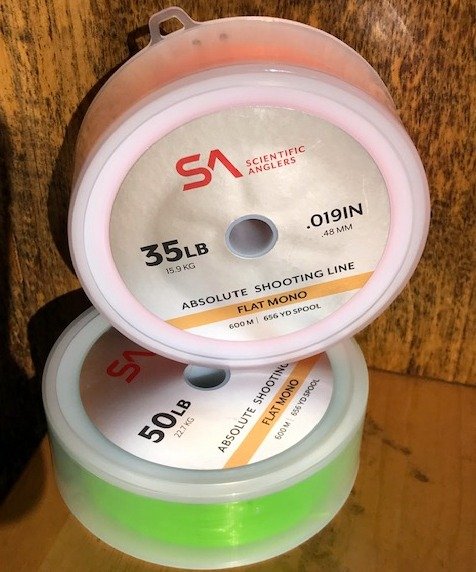
New Arrival! Fine-Tune Your Swing with Scientific Anglers Skagit Sink Tips & Kits

The Kit comes with everything you need for MOST situations in a handy
Sink tip wallet.  Stay organized and ready!

Gorge Fly Shop's family of sink tips just grew bigger with the addition of Scientific Angler's Skagit Sink Tips. If I were to tell you that we sell more sink tips than leaders you may not believe it, but it's fact!  Tips are a very popular item and we are happy to let you know that we now have the SA Skagit Tips in stock! These tips are not hot off the press, but they are new to us here at the Gorge Fly Shop.

Q: What stands out about Scientific Angler Skagit Sink tips?

A: First off these tips are textured, which reduces friction, making it a tad easier to pick up off water and secondly, they're tapered, thirdly they are density compensated, so they'll turn over your flies smoother and make your presentations better.  Tips can be bought separately or in a complete kits.

As a side note to the introduction:

Most manufactures of Skagit and Scandi lines have their own versions of sink and floating tips that marry well with their products and this can be convenient, but that doesn't mean you couldn't mix and match with other manufactures tips.

For example, if I'm using an Scientific Anglers Skagit Head, I can use a RIO M.O.W. tip for sure.  The beauty of this is that different makers of sink tips offer different lengths and sink rates to cover absolutely every fishing situation you find yourself in.

The Scientific Anglers Skagit Sink Tips have you covered in situations where you need a 1 inch per second sink rate up to a 6-7 inch per second sink rate.  In comparison the the sink 6-7 inch per second would be equivalent to RIO'S M.O.W. Light Tip (T-8), which also sinks at about 6-7 inch per second.

Overwhelming would be an understatement when considering all the options we have in sink tips.  There have been plenty of articles written on the subject over the years and it's all good...once you grasp it, it becomes much easier and makes sense.  If you are interested in learning more about tips, click link below and read on.


If you have any questions or are interested in the SA Skagit Sink Tips, you can visit our website at gorgeflyshop.com.

Prefer to talk it through? Call 541-386-6977 and we’ll set up your head + tip + leader, then place the order for you.

We are eager and always happy to help.

GFS Team
John G.

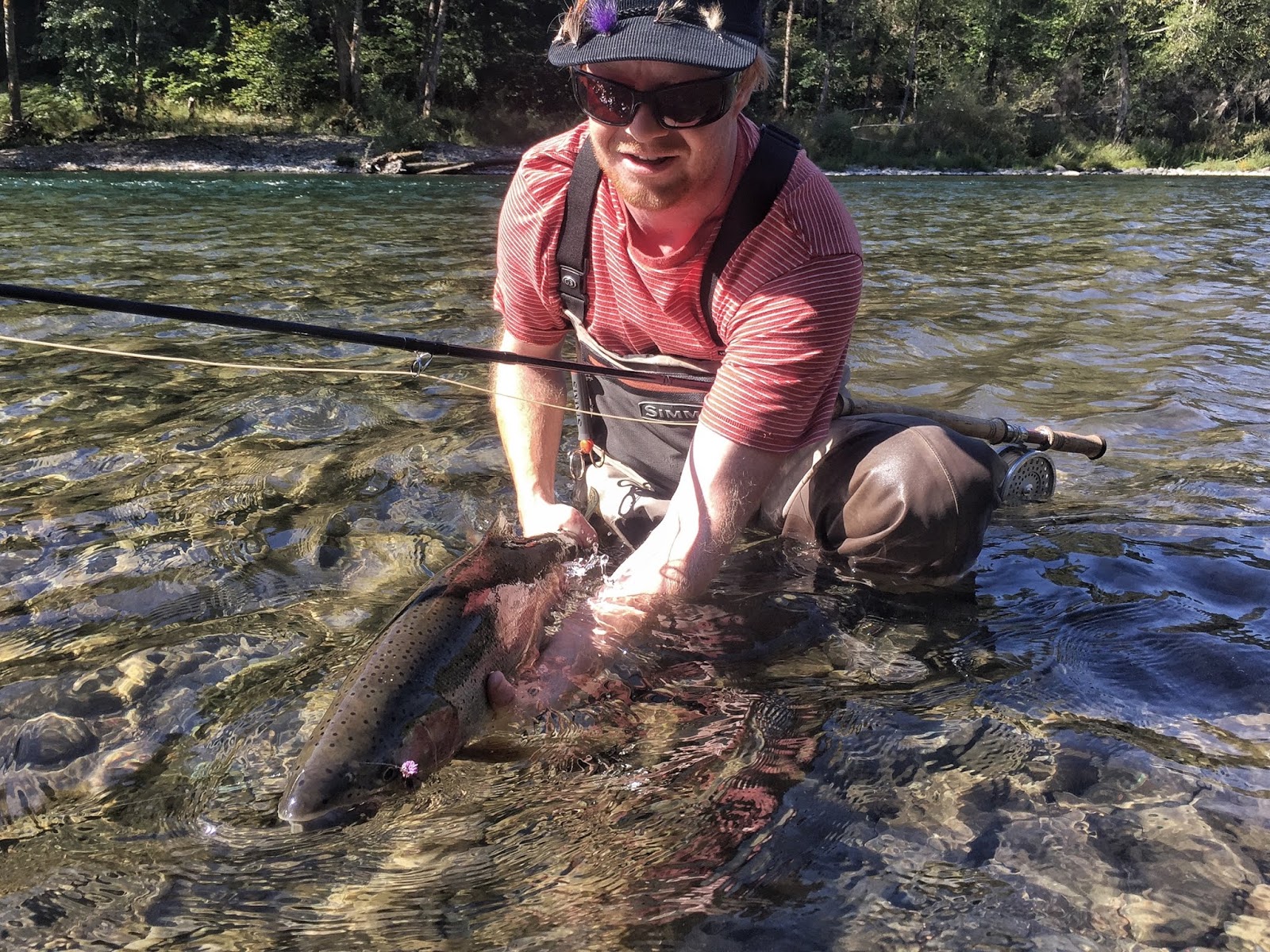
Parting Shot: Deschutes River Steelhead love them a Marabou Tube fly!
Superb choice when fishing with sink tips.


https://www.gorgeflyshop.com/store/pc/Sale-Closeouts-c38.htm

"The Gorge"

Gorge Fly Shop Team - 541.386.6977

"Fly Fish the World with Us"

#Spey #TroutSpey #WinterSteelhead #ScientificAnglers #GorgeFlyShop

Aug 13, 2025

Fall 2025 Launch - New From RIO Products


Our friends at RIO Products have some exciting new gear that just launched!  Here's the rundown of the new products available 8/12/25.  

Elite Scandi Body


RIO's original Scandi Body has a long-standing cult following among Spey enthusiasts.  It was particularly unique in that you could fish it on a shorter rod with a shorter 10' leader or light tip or add a longer tip to fish it on a longer rod.  This still holds true in the new Elite Series Scandi Body, but they made a few distinct changes.  This series comes with the current core and coating tech found in other Elite Series lines.  From a fishing perspective, the head length now varies more with the corresponding grain weight.  The heavier versions are a bit longer to better accommodate commonly used Spey rods in 8-10 weight.  

Elite Scandi MDC Kit


These kits are replacing the Scandi Short Versitip and Scandi Versitip.  Kit includes an Elite Scandi Body shooting head, spool of RIO Slickshooter, four new MDC Sink Tips and a Sink Tip Wallet.  This system allows anglers to cover most depths with small-medium sized flies.  With a short and longer offering, the RIO Elite Scandi MDC Kit has all bases covered for Spey rods of any length imaginable.  

Ambassador Series - Skagit Timberline
The RIO Ambassador Series Gray Struznik Skagit Timberline is an 18-foot shooting head that brings effortless performance to your coastal steelhead program. The compact design makes shorter two-handed rods sing when casting space is limited. Because of its heavily rear-loaded and progressively tapering design, it easily handles the heaviest T-tips, while still delivering a full range of marabous and modern steelhead flies with controlled loop precision.

MDC Versitip


The VersiTip gets an upgrade for 2025.  This Alaska favorite now comes with the tech advantages of the Elite Series core and coating.  Similar to RIO's other line kits, the RIO Elite MDC VersiTip Fly Line comes with the line, four new MDC Sink Tips and a Leader Wallet.  

MDC Sink Tips


After all this "MDC" talk, what the heck does "MDC" mean!?  It stands for Multi-Density Control.  Beyond the full floater tip, all other tips in this series are dual or triple density with the terminal end being the most dense.  The idea here is to facilitate positive turnover and hold your fly at depth.  The MDC Sink Tips are available in 12' 75, 90 and 100 grain and in 18' 130 and 150 grains.  

Classic Sink Tip


By the popular demand of B.C. anglers in particular, RIO launched this new line of 15 footers in the Classic Sink Tips Series.  Available in five different densities at 95, 110 and 125 grains, these tips will be right at home on any big river with gravel bar runs.  

Micro Leader Material


Euro Nymphers rejoice!  There's a new leader material!  RIO's Micro Leader Material is made of a unique nylon polymer that knots easily and firmly and is also incredibly sensitive.  Available in brown, pink and white to allow for endless customization of tight-line leaders.    


https://www.gorgeflyshop.com/store/pc/Sale-Closeouts-c38.htm

"The Gorge"

Gorge Fly Shop Team - 541.386.6977


"Fly Fish the World with Us"

Nov 20, 2024

Late Fall Tactics For Summer Steelhead:

inflatable pontoon
My OSG Outcast Pac 1000 patiently waits for me to finish swinging a run.

Seems like every steelhead season we're in at the time is my favorite, however, the Fall is definitely my favorite.  Each season offers something different.  Fall brings spectacular colors that line our favorite runs, low lying fog just touches the tops of those colorful trees, salmon have endured the journey and made it back home to spawn, not to forget the cooler mornings just bring a crispiness to the air.  There's a bald Eagle perched in the fir tree above looking for a meal, I mean seriously what a beautiful time of year and what's not to love? It makes you feel alive!

Disclaimer:  Below are tips which have worked well for me over the years.  There are a lot of experienced, amazing steelhead anglers who could easily add to this list.  Sometimes just thinking outside the box will produce results, but listed below are some tried and true tips that I hope will help you on your next trip out to your favorite river.

Fly Choices:  Generally, fall fly selections would be dominated by the use of sink tips and or sinking polyleaders or versileaders.  This is mostly due to the temperature of the water, depth and speed.  I really love and would rather fish an appropriate sized unweighted fly for the conditions of the run rather than fishing heavy weighted flies or heavy sink tips any day.  It's no secret that it's easier to cast unweighted flies and use the sink tip to get it down. However there are times you just have to go heavy. Heavier sink tips and heavier flies.

That being said, my fly choice really comes down to the color, speed and depth of the water I'm fishing.  The more off colored the water is the bigger and darker my fly choice would be.  As the river drops and becomes more clearer the smaller my fly choices become.  For instance, if water is dropping and the river is green and cold but not clear I will use more colorful fly such as the famous Fish Taco in Pink! I feel that the extra bling bling helps in the cold water temps. 

If the water gets really, really low and clear from a long spell of no rain, I will even fish my Scandi set up with a sinking polyleader or versileader and use a smaller summer style wet fly, like the Purple Muddler Minnow or a Mack's Canyon for example.  If fish become spooky because of pressure and or a lack of water, this tactic has proven successful in the past for me.

Historical Flies of Choice:

Fishing Tip:  If you're swinging a larger fly and you get a grab or a pluck during the swing, change your fly to a smaller one in similar colors and often enough you will get smoked!
  • Hartwick's Marabou Tube - variety of colors.
  • Hoh Bo Spey - variety of colors.
  • Fish Taco's - variety of colors.
  • Bantam's - on the smaller side - various colors.
  • Brett's Klamath Intruder - on the smaller side - Black/Blue a favorite, but other colors work.
  • Stu's Intruders (Ostrich and Barred Ostrich) - various colors.
  • Muddler Minnow (Yes, on a sink tip) - Purple is a favorite.

Sink Tips:  Undoubtedly one of the most confusing parts of fishing with spey rods, especially if you're new to the game.  There are way too many options, right?  I assure you that it's nice to have an assortment of tips, but I find that I use the basics most often.

For nearly most conditions I will use 4 or 5 different sink tips to cover the water I am fishing.  Rather than changing sink tips 2 or 3 times in a run, I will adjust my cast to accomplish what I need to do to cover the water effectively.  My go to sink tips would be, the:
  • RIO MOW Tip Light 10' T-8
  • MOW Tip Medium 10' T-11
  • RIO MOW Tip Light 5'Float/5' T8
  • RIO MOW Tip Medium 5' Float/5' T-11
  • Occasionally RIO MOW Tip Heavy 10' T-14.
Those tips are what I use the majority of the time and even within those tips, the two tips that get the most play are the 10' T-8 and T-11.


Fishing Tip:  You may or may not know that sink tips have a dual purpose.  #1. Not only does it get your fly down faster, but #2, it also helps turn over the weighted fly better.  A good example is that 10' of  T-14 is better at turning over a heavily weighted intruder, than a much lighter T-8 or even T-11.  Mass moves mass.  If you're using that T-14 sink tip to help turn over a heavy intruder better but it gets down too deep too fast, simply direct your cast more downstream and bring the fly into tension quicker to keep it from sinking too deep.  Hope that makes sense.

Sinking Leaders (Airflo Polyleaders or RIO Versileaders):  Polyleaders and Versileaders designed for and work well when using a Scandi style head or a single hand rod.  They don't really work very well when combined with a Skagit type head.  The easiest way to explain and describe the difference between a "Sink Tip" and a Polyleader or Versileader is that the latter replaces your leader, whereas a sink tip, has more mass and sinks much better and stays down better.  Polyleaders and Versileaders have a monofilament core and Sink tips will have a braided core that is much thinner in diameter and will stay deeper in the water column.


Fishing Tip:  In continued low and clear conditions during late fall and even through winter, don't be afraid to use your summer "Scandi" set up with an intermediate or slow sinking polyleader or versileader and a smaller non-weighted fly.  You may be surprised of your success in tough conditions.

Swing Speed:  Some may not even think about this, but your swing speed is crucial for success.  General rule is that the colder the water, the more you should slow down your swing.  When I first started fly fishing for steelhead, I'll admit that I just cast out there and let what happen, happen.  I even caught a few steelhead.  Dare I say even enough to think I was doing it right.

But, I'll say that again, BUT, when I discovered and learned how to control my swing speed and mend correctly my hook up ratio skyrocketed and I realized the importance of this.  I started to visualize my presentation of the fly and how it looked during the swing.  I also realized how much I was over mending, way over mending.  Now, when I mend it's rarely, and most often it's just a slight lift of the rod tip either upstream or downstream of my fly line to make the adjustment that's needed and that is it.

Fishing Tip:  The more you angle your cast downstream, the slower the swing will be.  Once you cast, then set the fly up for the swing there is less resistance against the line when compared to casting at a greater upstream 45 degree angle.  If you need to get deeper, then a greater angled cast upstream with an extra mend or two will give your sink tip and fly more time to sink deeper.

Fishing Through a Run:  Cover the water well. That doesn't mean fish it forever.  Having a system enables you to know that you fished it well.  I would rather cover more water in the time I have to fish than fish one spot the entire time.  Even if I am only going to fish one run, I would rather fish it twice than just once real slow.  I can tell you without hesitation that I have caught more fish going through the same run two or three times than I ever have fishing it super slow.

Visualize a grid, and when you step into the run, if deep enough, start with about half of your Skagit head out of the tip of your rod.  You'll be surprised how many fish you will catch before you ever get the full Skagit head out of your rod.  It's exciting to catch a short line steelhead!  After each cast, pull off another strip of line and make another cast, repeat this process until you have cast as far as you can or as far as needed.  Then after that cast, take a step or two downstream and make that same long cast again.  By the time you reach the end of the run you will have completely covered the entire run in a grid like fashion and any fish would have been able to see your fly.

In addition, say you're fishing a deeper run and need to get the fly down deeper.  Using the same Grid like pattern and rather than taking a step or two down before your next cast, make the cast first, pull your fly into position, throw a slight down stream mend in the line and then take your step or two downstream.  This will allow your fly time to sink deeper before coming into tension and start your swing.

Fishing Tip:  When fishing a run with lots of boulders and conflicting currents, using a line such as the Airflo F.I.S.T. or RIO GameChanger , or the RIO PickPocket will help you get most of the head under the surface current and it really, really helps to slow down your swing.  Which is perfect for late fall and through the winter months when water temps are getting colder.  This is a go to set up to use when your typical Skagit looks like a snake swimming on the surface of the water during the swing.  This scenario typically calls for way more mending with you typical Skagit head to achieve a nice swing but using the above listed types of heads will give you a more uniformed juicy swing we all have come to love, with very little mending at all!

A side note to swinging flies during the fall, especially later, is those beautifully colored leaves we all love and admire start to fall to the river and can become a nuisance to say the least.  On a windy day the river can become completely inundated with the leaves and make it very difficulty if not almost impossible to swing a fly with out hooking leaves. Leaves will be in every column of the water depth.  My experience with this situation is that I rarely catch steelhead utilizing any technique while this is happening.  I have caught a few fish during the leaf hatch, but when it's at it's worst it's difficult!  I would say that most of the steelhead that I have caught during the leaf hatch have come while indicator fishing.

How I Deal With the Leaves:   
  • I will Indicator Fish: This is a more effective way to fish for the Steelhead when the leaves are bad enough that it is difficult to swing flies.  The presentation is more up and down rather than swinging through the run.  This doesn't mean fishing with an indicator set up is a fool proof way to avoid the leaves because it isn't, you'll still have to deal with them but it's less frequent.
  • I will give the river a rest and organize your gear or work on my "honey do" list.
Hope this helps as you fish this fall and winter.  Have a great fall & winter season, if you have any questions we love to talk fishing here at the shop.

John

https://www.gorgeflyshop.com/store/pc/Sale-Closeouts-c38.htm

"The Gorge"

Gorge Fly Shop Team - 541.386.6977


"Fly Fish the World with Us"

Sep 2, 2022

RIO Versileaders for Trout, Steelhead, and Salmon - New for 2022

Versileaders come in configurations to match single hand, trout spey, steelhead spey, salmon spey and work well for single hand, scandi and light skagit applications. Four different densities including clear floating, clear intermediate, medium sink, and fast sink, in each of three size categories including 7' Trout, 10' Medium, and 10' Heavy. 


Shop RIO Versileaders

https://www.gorgeflyshop.com/store/pc/Sale-Closeouts-c38.htm

"The Gorge"

Gorge Fly Shop Team - 541.386.6977


"Fly Fish the World with Us"


Jun 12, 2020

Airflo FLO Tips


The spey angler has alot of sink tip choices. Once you migrate beyond the basic T-series of sinking material you now start to venture into the "transitional tips."

These type of tips start out as one density and transition into another density. They can be extremely useful for particular fishing situations as well as improving cast presentations by creating smoother transitions between head and sink tip.

Airflo FLO tips are designed to give you this smooth transition and helps you to keep your fly in the zone longer. It's a win win!

FLO Tips come in 10 foot and 12 foot configurations. One quarter of the tip on the head side is intermediate material that transitions into the remaining three quarter which is sink tip. The sink tip part comes in four different densities including T-7, T-10, T-14 and T-18. Ten Foot FLO tips are 2.5' intermediate and 7.5' sink tip. Twelve foot FLO tips are 2.5' intermediate and 9.5' sink tip.

Each tip also features color coded head loops for quick identification as well as looped on the business end for easy tippet application.


FLO Tips also come in a Kit including a tip wallet. The ultimate FLO Tip Kit for steelhead setup could be a Kit plus add a 12 foot FLO in T-10 and T-14 and you'd have every tip you could need for any steelhead situation.

Shop Airflo FLO Tips and Spey Lines

https://www.gorgeflyshop.com/store/pc/Sale-Closeouts-c38.htm

"The Gorge"

Gorge Fly Shop Team - 541.386.6977


"Fly Fish the World with Us"

Oct 27, 2018

Do you let the loop hang?


To hold a loop, or not to hold a loop: That is the question: Whether 'tis nobler in the mind to suffer The slings and arrows of outrageous fortune, Or to take arms against a sea of troubles, And by opposing end them?

I bet if Shakespeare were a steelheader, he'd probably swing flies for them...

I've been asked this a few times before and my answer is never exactly clear-cut, but I do have a couple ground rules. For example, when I fish sink tips I never hold a loop, and when I dryline fish I do so about half the time. Why? Well for starters if I'm fishing a tip for winter-runs, I'm already swinging my fly down in the water column and the fish tend to move laterally rather than vertically in the water column. Therefore, when I fish a dryline the fish always have to move up in the water column to take the fly that's at or near the surface. A line from Dec Hogan that always stuck with me was, "what goes up, must come down."

So why don't I carry a loop every time if fishing a floating line? Well, it's purely situational for me. Say I'm fishing river right and trying to reach a specific distant spot- Instead of casting switch (with my non-dominating hand on top) I'll do whatever cast puts my fly where it needs to be, but as my line is shooting out the guides I'll pass the rod off to my left hand and only hang onto the bottom grip. The reason I do this is because I can control the fly much better with a little extra reach. I'm also able to slow my fly down or keep more line off the water if there is a funky surface current. When I fish this way my rod tip is almost always up high and if a fish takes the fly I simply bow the rod to the fish in respect for the steelhead taking my offering. Though it's really more because I want to give my fly to the fish and not pull it away. Similarly, if I'm twitching/skating/chugging dry flies for steelhead my rod tip is always high as I work a fly across a run. I'd much rather drop my rod tip to the fish, and if I'm fishing with my tip up I'll be less inclined to "trout set" by pulling my fly away from a fish out of excitement. Remember that, "what goes up must come down."

So when else do I fish a dryline without a loop? Sometimes in slow, froggy water or when there is a good chance for the fish to take the fly on the hang down. When these situations present themselves I believe I've got better feel with my two fingers holding the line, rather than pinching the line down on the cork by holding a loop. Sometimes I'll even pulse my finger on the running line to give the fly a little more movement in that soft/hang down water to entice the take, similarly if I'm fishing sink tips.

Is holding a loop an exact science? Not really, but it seams to be working for me and if it's not broke I ain't gonna fix it! So what do you do? Hold a loop? Sometimes? Never? Always? Situational? I think its good to be diverse in your tactics for how you approach steelhead. Either way, it's always a learning experience!


Cody Booth
Gorge Fly Shop | Product Specialist
541.386.6977
  

Jul 6, 2011

Land More Fish - Fish a Tube Fly.

Like a diamond yet to be unearthed, the tube fly waits to get its foot into the next willing fly box. But more times than not, it sits there beneath upturned noses and passing glances and it shudders as fingers reach for the General Practitioner tied on a #3 TMC.

It is a formidable battle – to fight tradition and embrace change. But, although fraught with meaning, history is just what the word suggests. History is history. This is a dynamic world. Evolution is all around us. Today is not yesterday. Tomorrow is not today. There are more pieces to the puzzle…

Of course, we all have our preferences; like those who are unwilling to swing a sink tip or those who would prefer to use a bamboo single hander as opposed to a graphite two hander. If these methods peak one’s enjoyment, then evolution is dead and this is ok. End of story. There is no argument against someone’s glowing, stagnant contentment.

But if there is a budding will to land more fish – to lengthen your connection to a pinned steelhead, the benefits of swinging a tube fly should no longer be ignored.


Why?

Well it all comes down to the hook. These stinger hooks have a shorter shank which translates into a shorter lever. On longer hooks (even your traditional spey flies in sizes 5 and larger) the fish is more able to spit the hook during battle because this extended lever can often work the sharp end free. Kind of like how the longer the tire iron, the easier the nuts will turn…

Additionally, we are able to set the hook where we want it to sit at the tail of the fly. We can set it with the point riding down or, if we are worried about hooking rocks, we can set it with the point riding up. A hook positioned back towards the end of the pattern helps encourage a solid hookup into the corner of the fishes jaw. This is right where we want it – sunk right into the sinewy corner of the lip. Often when the fish comes up to take the pattern, her mouth will slide down the line and the hook will head straight for the money zone. Patterns tied on fixed hooks with too much material hanging behind will often result in short strikes with no purchase granted.

Days may pass before we get the grab so we need to be swinging flies that have razor-sharp hooks. It is hard enough to locate a willing steelhead so when the time comes we best offer them something that is going to sink in. Tube patterns give anglers the ability to always present a factory fresh point. Believe it or not, changing a hook is quite an easy task. Basically, the mono is threaded through the tube and then a loop is tied at the tag end. (The two most popular loop knots being the Double Surgeons or the No-Slip Mono Loop). The pinched loop is then threaded through the eye of the hook and then seated by passing the hook through the loop and then snugged up tight to the eye. Some hooks are beyond repair or require too much attention in the heat of a run. This is when I reach into my wader pouch and pull out a freshie. (Freshie: Gamakatsu Octopus #2 or Owner #2). I want to turn that otherwise brief encounter into an elongated one. I want to see cunning swath of nature up close and personal.

It should be noted that many stinger-style patterns that are tied on shanks or wire can also accomplish a great hookup. In this case, hooks are fastened on a fixed loop of either heavy mono, backing material or in some cases light gauge wire that is tied into the fly. These are great patterns, but it is typically much more difficult to change out the hook on these flies when the time comes. Often the loop material is either too short, or too thick to make switching it out very efficient.

Well, as if we really need to speak of more benefits of the tube fly, but yes, there are more. One major advantage is fly longevity. When a fixed hook pattern finds that unforgiving stump out in the meat of the run anglers are all too often faced with donating the pattern to the river. Conversely, tube fly patterns that have securely hooked the infamous rock fish are often reeled back into hand with only the hook missing. Furthermore, if the loop that holds the hook is seated loosely to the tube, often the fly will slide up the line, away from the thrashing jaws of the fish. Time and time again, after a formidable battle with a fixed hook pattern, releasing the hook from the jaw is followed by an early fly retirement party.

When it’s time to bust out the sink tip and fish some larger profiled patterns, that’s when I reach for the tube fly. I guess I just enjoy fishing a fly that has the tendency to land fish and remain in the lineup to fish and fish again. It seems that they are all I swing anymore and this will likely be the case until I learn something new that can add to or change the process. As I said before, we all have our preferences. I’m just saying that I prefer the tube fly because I land way more fish when I use them.

We are stalking more tube patterns in the shop this year. Swing on by and we’ll show you the patterns and the hooks we like to fish as well as a quick and easy way to rig up the stinger hooks. Here at the Gorge Fly Shop we honor the annals of history, but we keep an even closer eye on the remarkable, yet completely natural innovations of today. This story is seen in our fly bins. Come check out some of the latest, cutting edge patterns developed from the passionate folks at Idylwilde. Tied by guides. Fished by guides. I guess they want their customers to land more fish, or at least grant us the opportunity…
Shop Steelhead Flies

Visit our Relaunched Steelhead Only Site

Shop Gorge Fly Shop & SteelheadBum.com

  © 'and' Steelhead.com Mike Prine 2009-2014

Back to TOP