Showing posts with label Two Hand. Show all posts

May 21, 2025

Choosing the Right Spey Rod for Steelhead


Spey rods for steelhead vary in size almost as much as the fish themselves. With so many rod weights and lengths available, selecting the right setup for a specific fishery can feel overwhelming. Fortunately, there are great options tailored to every steelhead scenario—from summer-run rivers to deep winter flows.

If you're looking for a basic overview to help match your rod to your fishing goals, this guide covers the essentials.

Quick Breakdown of Spey Rod Weights:

5wt (12'–13') – Light and fun! Best for summer steelhead in the 2–5 lb range. Great with Scandi heads and light flies.

6wt (12'–13'6") – Versatile for floating lines and mid-sized summer fish. Can handle mild sink tips and medium flies.

7wt (12'–13'6") – The most balanced, all-around rod for both summer and winter steelhead. Ideal for larger flies and windier conditions.

8wt (12'–13'6") – Your go-to for winter steelhead and bigger rivers. Handles heavy tips and flies with ease.

9wt (12'–14') – For the trophy hunter. Perfect for massive fish, oversized tips, and deep-water tactics.
 

Looking to dial in your setup? Click below to get the full buyer’s guide, including detailed weight-by-weight breakdowns and recommendations for Skagit and Scandi line pairings.


https://www.gorgeflyshop.com/store/pc/Sale-Closeouts-c38.htm

"The Gorge"

Gorge Fly Shop Team - 541.386.6977

"Fly Fish the World with Us"

Jan 18, 2024

New 2024 - Rio Elite GameChanger Body

The original Skagit Max Gamechanger set the bar for multi-density heads.  The new Gamechanger Body taper is based on the rocket launcher that is the RIO Scandi Body. Available in a variety of densities to get you down in the zone, this head is certain to become a favorite of winter Steelheader's everywhere.


https://www.gorgeflyshop.com/store/pc/Sale-Closeouts-c38.htm

"The Gorge"

Gorge Fly Shop Team - 541.386.6977


"Fly Fish the World with Us"

Feb 23, 2021

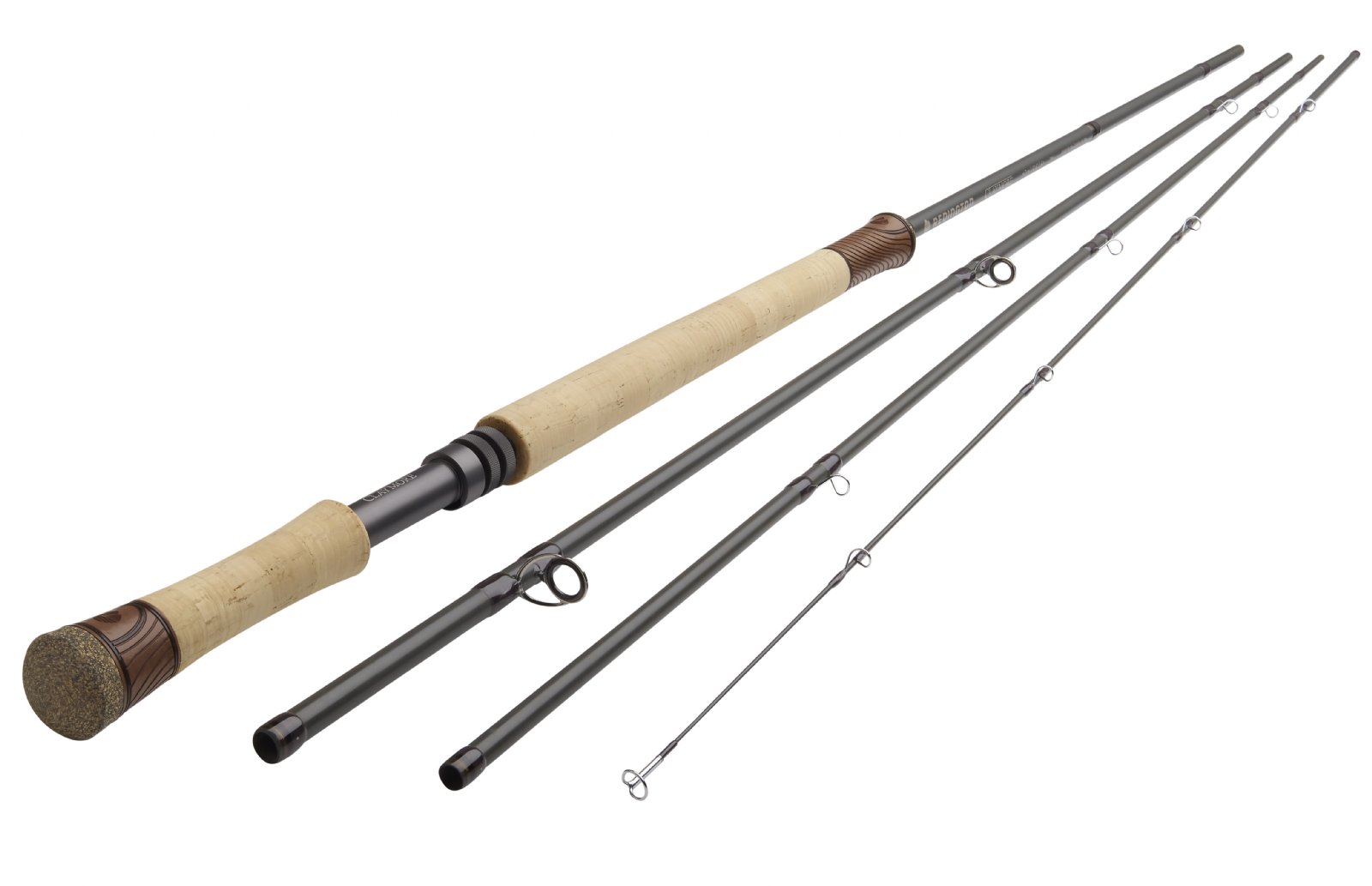
Redington Claymore Trout Spey

Claymore Trout Spey Rods 2021


Info the work of 
George Cook/ Erik Johnson

2110-4 11’ 4pc 2 wt: 
The little guy trout spey is upon us. Bringing performance and value to center
stage the 2wt Claymore brings true trout spey to the west, be it an easy-going soft hackle swing session,
or select streamers swung mid-current the delightful ultra-lightweight toy has arrived.
  • Line Match: RIO Skagit Trout Spey (Head) #2/3 250gr, RIO Trout Spey (Scandi) #2 230gr, Single Hand Spey WF5F
  • Sink Tips: 10’ MOW Light Sink Tip, 10’ Scandi Light Scandi Versi-leader’s All Types
  • MOW match: MOW Light Series (all types)
  • Reel Match: Rise 7/8, Spectrum LT 7/8, Spectrum C 7/8

3113-4 11’ 3” 4pc 3 wt: 
Trout Spey in a 3wt provides versatility across a wide range of angling pursuits.
From mid-current salmon fly endeavors, to Sculpzilla (size 8) sneaky swims, the 3wt Trout Spey is
destined to become a western favorite. Be it Trout, Southern Oregon, Northern California half pounders
the 3113 Claymore will find its place in haunts both near and far.
  • Line Match: Trout Spey (Scandi) #3 265gr, Skagit Trout Spey (Head) #3/4 300gr, Single Hand Spey WF6F
  • Sink Tips: 10’ Standard Sink Tips (55gr) Matches with Trout Spey (Scandi/Skagit), 10’ MOW Light Sink Tip, 10’ Scandi Light Scandi Versi-leader’s All Types
  • MOW match: MOW Light Series (all types)
  • Reel Match: Rise 7/8, Spectrum LT 7/8, Spectrum C 7/8

4116-4 11’ 6” 4pc 4wt: 
Small plays big here. 4wt in trout spey takes the angler straight to the men’s
tees for trout, West Coast half Pounders along with sea-run Cuts and Dollies. Summer time swings for
aggressive smallmouth makes the menu as well. In the 4wt. theater fly use size takes a jump up
providing a list of targets and success stories for the taking… start the truck, Launch the boat.
  • Line Match: Skagit Trout Spey (Head) #4/5 350gr, Trout Spey (Scandi) #4 305gr, Single Hand Spey WF7F, Skagit Max Power 325
  • Sink Tips: 10’ Standard Sink Tips (65gr) Matches with Trout Spey (Scandi/Skagit), 10, 12.5’ MOW Light and Medium Tips, and Scandi Versi-Leader’s All Types.
  • MOW Match: Light and Medium MOW Series
  • Reel Match: Rise 7/8, Spectrum 7/8, Spectrum LT 7/8


Description

The CLAYMORE Trout Spey Fly Rod is designed to handle any trout river. This fast action rod was built using a smooth yet powerful blank that progressively increases as you move up in line weight. This progression allows for intuitive casting while providing the perfect combination of power and feel. With features that include a down locking reel seat for balanced and Polymer Pinch Grips for increased line control, the CLAYMORE makes casting a two-hander more enjoyable and less like you’re swinging a medieval weapon around. So go ahead, grab on with two hands and enjoy a day swinging your favorite run.

Whether you’re in the pursuit of wild steelhead or just enjoy swinging soft hackles on your local trout stream, the CLAYMORE Two-Handed Rod was designed to handle the needs of any battlefield. This fast action rod family is built using a smooth yet powerful blank, making for intuitive touch-and-go style casts when fishing classic style patterns early season as well as turning over the heaviest of sink tips during the colder months of winter. Offered in everything from a lightweight 2wt Trout Spey to 13 ½ foot 8wt Spey, the CLAYMORE rod family will cover any run you might find yourself in. With features that include a down locking reel seat for improved balanced and Polymer Pinch Grips for increased line control, the CLAYMORE makes casting a two-hander more enjoyable and less like you’re swinging a medieval weapon around. So go ahead, grab on with two hands and enjoy a day swinging your favorite run.

Features

  • Fast action
  • Premium grade cork handles
  • Polymer Pinch Grip sections on top and bottom handles for increased line control
  • Anodized aluminum down locking reel seat for improved balance
  • Section tips epoxy coated to prevent sticking
  • Spey, Switch, and Trout Spey rod models
  • Fully protective cordura rod tube with dividers
  • Lifetime warranty

https://www.gorgeflyshop.com/store/pc/Sale-Closeouts-c38.htm

"The Gorge"

Gorge Fly Shop Team - 541.386.6977


"Fly Fish the World with Us"

Dec 19, 2018

Redington Dually II Spey, Trout Spey and Switch Rods

New for 2019

Shown in Matte Bronze finish
The original Dually series of rods from Redington proved for species such as trout, steelhead and salmon that in fact, indeed "Two hands are better than one!" To further this progression Redington conceived the all new Dually II series of spey and switch rods.
Special Edition Purple comes in 7116-4, 7126-4, and 7136-4
A long list of improvements including weight reduction, tip stability and new handle design featuring a fully anodize reel seat. Whether this is your first spey purchase, backup rod, or looking for a great "don't break the bank" dedicated purchase, you'd have a hard time finding a better value in a lifetime warranty, two hand rod series.
What makes the Dually II a really impressive for the price two hand rod is the easy medium fast action. Fast enough to cast like a champion but moderate enough to enjoy it at the same time.
Dually II sports a traditional finish in matte bronze throughout the rod lineup but for those in the market for that special steelhead stick all 7 weights models are also available in special edition purple.

Features include -

  • Medium Fast action
  • Anodized Aluminum reel seat
  • Soft-Touch EVA pinch sections, This really helps with mono shooting lines
  • Alignment dots make assembly easy
  • Cordura divided rod tube
  • Lifetime Warranty


https://www.gorgeflyshop.com/store/pc/Sale-Closeouts-c38.htm

"The Gorge"

Gorge Fly Shop Team - 541.386.6977


"Fly Fish the World with Us" 

Oct 6, 2017

Gear Review: RIO InTouch Scandi 3D - Floating/ Hover/ Intermediate

Swinging Flies
Every year it seems fly line companies attempt to release the new “latest and greatest.” Nowadays fly lines are so tailored for rod action, purpose, and user preference that options abound. Indeed, RIO Products is certainly an industry leader and always attempts to bring you the best products possible. When it comes to two-handed casting, RIO has been right there with each evolutionary step. Certainly Skagit and Scandi style Spey lines developed autonomously from one another and employ slightly different characteristics among Spey rods. Skagit lines were born here in the Pacific Northwest, where casting traditional mid or long belly lines under a canopy of trees and in cover simply weren’t possible. Meanwhile during this evolution, Scandi lines were being developed independently in you guessed it- Scandinavia. These lines more closely resembled traditional mid and long belly lines with their taper only in a shorter package, but like the Skagit lines are an interchangeable system. Both lines are highly versatile with the ability to swap heads and tips rather than whole lines, although Scandi lines generally require a tad more casting room and really excel at throwing smaller flies to ride at or near the surface. Therefore, I like to think of them as more of a summer line when low and clear water allows us to fish smaller flies up top, as opposed to Skagit lines that effectively throw heavy sink tips and big flies. The two lines are characteristically different by one thing- sustained anchor vs. touch-and-go anchor casting. Scandi being the latter with an up-tempo casting stroke due to the longer/lighter line, while skagit is slow and more compact. Scandi appears to have more finesse and quieter presentations while Skagit looks more machine-like and is a workhorse for getting big flies deep.

I could go on about their similarities and differences, but I think you get the point. Personally, I dream all winter of being able to cast floating lines again. While I guess I could for winter-run fish, the right conditions seem far and few between. I simply prefer the casting stroke of a Snake Roll or Single Spey cast over a Snap T or Double Spey. Furthermore, Scandi casting keeps my flies swimming longer. For example, the longer Scandi head has me stripping in less running line than a Skagit while casting the same distance, and downstream roll casts are often not required as flies are up top already. Plus, the casting stroke is quicker and often with fewer steps, thus keeping my fly swimming longer throughout the day. Although, those reasons might not be enough for you to justify using them, but just seeing a fish rise to a fly on a floating line is purely addicting. But, what do you do when water conditions don’t warrant full confidence on floating lines, such as this summer over on the Klickitat River with all the turbidity its had, or for those seasons when cold water temps don’t warrant floating presentations? Well, fortunately RIO had been developing their InTouch Scandi 3D line overseas and just recently brought it to the States. After our rep, George Cook showed us some of the new products, I knew this line was one I wanted to get my hands on and try!
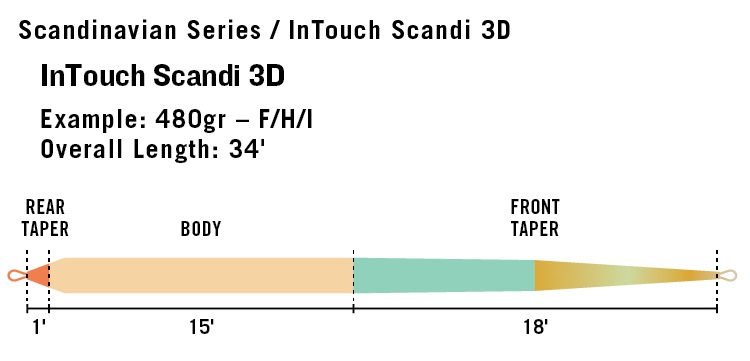
RIO Scandi 3D Profile

My test setup was the new Sage X 7130-4, coupled with the RIO InTouch 3D 480gr 7/8- Floating/Hover/Intermediate line and a 6’ tapered mono leader attached, as instructed by George Cook (the other 3D lines accommodate standard 10’ sink tips better). The rear body section is 15’ of Floating, while the front tapered section is 9’ Hover and 9’ Intermediate that sink at 1” per second and 2” per second respectively. Floating down the Klick in the upper canyon, water had a bit of color but still had that fishy feel. Now the wind was just picking up (as is tradition) and the first run I pulled up on to test this line had a little more depth and surface speed, but has produced before. It’s the type of water you feel a little more confident in with a sink tip on rather than full floater. Initially, I tried a smaller fly and the first thing I noticed was that it required just slightly more pull to get out of the water on the hang down, which was kinda expected. Not quite like a Skagit tip but it did take a little more lifting force. While the upstream wind would generally collapse my other Scandi lines, this multi-density line seemed to slice right through. I also have to attribute some to the new Sage X as it provided ample power and a little extra bottom hand sent nice loops off with ease. I appreciated how much control I felt on the fly, fishing it deeper if desired by adjusting my casting angle and stepping downstream before my fly came under tension rather than after the swing. All of a sudden I felt I was fishing in a water column I could only previously reach with a Skagit line but it certainly didn’t cast like a clunky Skagit.

Later on the wind had subdued some and I was able to try all the casts I knew for river-left and river-right. The quick answer was that it casted just like a Scandi should, only requiring the occasional downstream roll cast to bring the fly up as I was my fly was probably down about 3 feet in the water column. Nonetheless, like a Skagit, I felt I was probing the water deeper and fishing the zones I wanted to while still not dredging the bottom or hanging up on rocks. Next, I tried a few different fly sizes. A 3/0 Blue Heron hook dressed with a traditional feather wing pattern. These hooks/flies provide the profile of a 3” fly but aren’t quite as heavy as dumbbell eyed intruders, but they sink exceptionally well. The Scandi 3D had no issues until I got past the 10 strip mark of running line and I began to lose the consistency that I had before at shorter lengths (note- this could purely be pilot error). The same was noticed fishing un-weighted tube and shank flies. I even tried a dumbbell eyed intruder-like fly in a medium size and was still able to cast, though with much less finesse and more force.  

Overall, I appreciated the fact that I could do Scandi-style touch n’ go casts while also being able to select a wide variety of flies from small to medium/large-ish. I also appreciated the fact that I could get my flies down approximately 3 feet under the surface. Basically it’s a happy medium when full floating line situations aren’t available, but you don’t want to dredge the bottom with MOW tips on a Skagit line. For the most part the Floating/Hover/Intermediate line is a solid addition to the quiver of tools we bring out to the river. I am however a little unsure of the other multiple density 3D lines with faster sink rates, but shouldn’t knock it till I try it I guess. Shoot, maybe I’ll have to try those lines in the winter under the right water conditions!  

Scandi 3D Specs -

Floating/Hover/Intermediate: The ideal head for swinging flies in the top three feet of the water column. The floating back portion makes mending and pickups easy, while the hover mid-section and intermediate tip keeps the fly fishing below the surface.
Hover/Intermediate/Sink 3: This head is built for deeper presentations or heavier currents, swinging the fly, on average, two to five feet below the surface. The Hover back section allows for easy casting and line control, while the intermediate mid-section and Sink 3 tip hold the fly at fish level.
Intermediate/Sink 3/Sink 5: When you really have to get down to the fish, this is the fastest-sinking, deepest-fishing head we make. It swings the fly, on average, between four and 10 feet deep, and yet the graduated density still allows for outstanding line control and easy casting.

SizeRod SizeHead LengthColorSink Rate
390gr 5/6 32ft / 9.8m Clear Camo Glacial/Salmon/Orange Float/1ips/2ips
440gr6/732ft / 9.8mClear Camo Glacial/Salmon/OrangeFloat/1ips/2ips
480gr7/834ft / 10.4mClear Camo Glacial/Salmon/OrangeFloat/1ips/2ips
520gr8/938ft / 11.6mClear Camo Glacial/Salmon/OrangeFloat/1ips/2ips
580gr9/1039ft / 11.9mClear Camo Glacial/Salmon/OrangeFloat/1ips/2ips
640gr 10/11 40ft / 12.2m Clear Camo Glacial/Salmon/OrangeFloat/1ips/2ips
700gr 11 40ft / 12.2m Clear Camo Glacial/Salmon/OrangeFloat/1ips/2ips


390gr 5/6 32ft / 9.8m Glacial/Gray/Brown/Orange 1ips/2ips/3ips
440gr 6/7 32ft / 9.8m Glacial/Gray/Brown/Orange 1ips/2ips/3ips
480gr 7/8 34ft / 10.4m Glacial/Gray/Brown/Orange 1ips/2ips/3ips
520gr 8/9 38ft / 11.6m Glacial/Gray/Brown/Orange 1ips/2ips/3ips
580gr 9/10 39ft / 11.9m Glacial/Gray/Brown/Orange 1ips/2ips/3ips
640gr 10/11 40ft / 12.2m Glacial/Gray/Brown/Orange 1ips/2ips/3ips
700gr 11 40ft / 12.2m Glacial/Gray/Brown/Orange1ips/2ips/3ips


440gr 6/7 32ft / 9.8m Tan/Brown/Black/Orange 2ips/3ips/5ips
480gr 7/8 34ft / 10.4m Tan/Brown/Black/Orange2ips/3ips/5ips
520gr 8/9 38ft / 11.6m Tan/Brown/Black/Orange2ips/3ips/5ips
580gr 9/10 39ft / 11.9m Tan/Brown/Black/Orange2ips/3ips/5ips
640gr 10/11 40ft / 12.2m Tan/Brown/Black/Orange2ips/3ips/5ips
700gr 11 40ft / 12.2m Tan/Brown/Black/Orange2ips/3ips/5ips


Gorge Fly Shop | Product Specialist
541.386.6977


"Fly Fish the World with Us"


Oct 31, 2015

Redington Chromer Two-Hand Spey and Switch Rods

"And On the Seventh Day We Hucked"

Fall colors in full bloom. The Redington Chromer 7136-4 got the job done and done very well!

First off, let me just state for the record that the title of this article is not just a catchy sales slogan, but something George Cook has said several times when referring to the Redington Chromer and in fact what I can confirm to be truly - A FACT! More on that later. When Georgie (our Redington Rep) first revealed the Redington Chromer to us at the Gorge Fly Shop I became super interested in it. What caught my eye was its unique design with the Polymer pinch grip sections on the handles. The main reason for this is that I’ve been a longtime fan of monofilament running/shooting lines for the extra distance and line speed that is generated by a “slicker” shooting line.

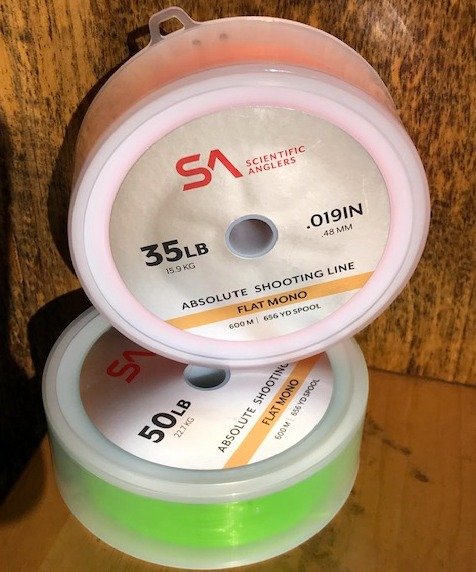
After using mono shooting lines for years, it’s almost impossible for me to use a “fly line type” of shooting line for any length of time. This is not to say that they are not a quality product and can’t get the job done, they can and do get “r” done, but for me and what I am used to, and what I like most, mono suits me well. I have used lots of different running/shooting lines that are available on the market and believe me each one has its issues or drawbacks. Maybe in the future I could do a breakdown of pros and cons of each running line that I have used, but not today. Today I want to focus on the design of the addition of the Polymer pinch sections on the handle and the benefit that it has for the mono lovers or the folks who are on the verge of trying a mono type shooting line.

A few years ago RIO created the “GripShooter” shooting line which incorporates a thick “fly line type” handling section to help prevent the slipping of the mono through cold, wet fingers and yet still have the benefit of a mono shooting line. The very fact that Rio would create such a line is proof of the benefits of a mono shooting line and the need to help anglers transition from the fly line type of lines to a mono type shooting line. Essentially giving the angler the best of both worlds. Although Rio’s mission was accomplished with the creation of the “GripShooter” and many made the switch, I felt that the shooting line was slightly slowed down by the fly line handling section until it transitioned into the mono shooting line and then, shot out like a rocket. But remember I am so used to mono that any fly line type of shooting line seems slow to me, and that if you’re transitioning from a fly line type shooting line to a mono type, you may not notice the difference, and I would highly recommend the GripShooter if you need a line to help you transition. The bottom line is the need to help alleviate line slipping from your fingers in wet and cold conditions because this is the major issue anglers have with mono shooting lines.

Jamey slips on the big rock at the tail out of “Magic”, a sweet run on the Deschutes River. I was told by Sam to huck it out there as far as I could so I launched a cast that left only a few wraps of my running line still on the reel and hooked that fish right on the lip of the tail out about 20 feet away from him. The Chromer had no problem helping me get the distance I needed for success.
Going back even before the creation of the GripShooter, anglers who wanted to help stop line slipping from their fingers would use non-adhesive tape (like that used on golf clubs) to help them solve the mono dilemma. I say all this to lead up to this point…In steps the Redington Chromer. Seriously a sight for sore eyes. I don’t know, maybe it was Georgie, who thought of the idea for the Polymer Grips, but its genius. They should give the man a raise! It’s one of those ideas that you wonder how come we hadn’t done this sooner. Brilliant but simple. The Polymer grip doesn’t hurt the effectiveness of the rod at all. It certainly, in my opinion, doesn’t hurt the aesthetics of the rod, in fact I think the rod looks pretty sweet. I love the matte black finish and even how the word “Chromer” on the rod shines like a freshly washed chrome bumper on a classic car (see photo below). On a clear sunny day you better make sure you have your shades on while fishing with the Chromer!

Better wear your shades
I am also a big fan of the price tag on this rod. I’ve said this before but I believe it’s a better rod than the price tag indicates. Travis, the shop owner has a saying and it certainly is true with most rods and that saying is… “If you don’t want to spend more money on a better rod then don’t cast one.” I will tell you this, if you were to put the Redington Chromer on the counter with the rest of the rods that I have tested and used in the same price range, even up to a few hundred dollars more, I would, without hesitation, fight you over the Chromer.

On the first full day of fishing this rod, I only had one time that the line slipped from my grip and that was no fault of the rods. I was purposely trying to see how loose I could pinch my mono shooting line against the Polymer Grip before it would slip. No joke, the Chromer does exactly what it was designed to do, and it’s just innovative enough that I think the idea will be around awhile. There are numerous other things I like about the Chromer besides the Polymer Grip, like the cork handle, it fits nicely in my hands and feels super comfortable, this is a big deal for me. I don’t like a thick handle, it doesn’t feel right to me. Its light in hand at only 6.8 ounces (I didn’t weigh it, I am actually taking their word for it and honestly don’t feel like I have to weigh it because it feels light in my hand). I fished with my Hardy Bougle #4 on it and it felt a little rear heavy due to the weight of the reel but when I fished it with my Lamson Litespeed #4 on it the Litespeed balanced the Chromer absolutely perfectly. It is important to place your fore grip at the position where the rod balances while casting, for comfort and power, and the Chromer and Litespeed balanced at the point my fore grip was exactly in the middle of the Polymer Grip. It does have a smooth fast action as Redington claims and It cast effortlessly at normal casting distances but when you need that extra umph to huck it out of bounds it has no problem accommodating you. Put a little more power into your bottom hand and watch it launch. By the way I put a RIO Skagit Max 525 grain head on it when I need to use a sink tip and a RIO Scandi 450 grain head for surface work.

Bottom Line:

The Chromer is legit, a dandy, worth every penny, and I would highly recommend it to anyone shopping around for a rod in this price range and as I said earlier, even a few hundred dollars more. The only drawback that I can come up with on the Chromer when compared to rods in its class is that - I DIDN’T COME UP WITH THE IDEA!

The Details:

  • Super-smooth fast action
  • Down locking reel seat for improved in-hand balance
  • Polymer Pinch Grip sections on top and bottom handles
  • Polymer grips maintain body temperature for comfortable winter fishing
  • Matte finish blank for flash reduction
  • Section tips epoxy coated to prevent sticking
  • Full Anodized aluminum reel seat
  • Premium grade cork handles
  • Fully protective Cordura rod tube with dividers
  • Lifetime warranty


The Specs for the 7136-4 Chromer:

  • Handle - “C” (pictured above)
  • Length - 13’6”
  • Line weight - 7
  • Rod weight - 6.8 ounces
  • Skagit Grain Weight - 500 +/- 550 (the Rio Skagit Max 525 grain was MONEY!)
  • Scandi Grain Weight - 425 +/- 475 (the Rio Scandi 450 was dead on!)
  • Price Tag - $399.95

A well-deserved break after hundreds of cast…I think I like this rod. I like it a lot!

Remember, if you can’t find it at the Gorge Fly Shop, you don’t need it!


Gorge Fly Shop
John Garrett | Product Specialist

541.386.6977

"Fly Fish the World with Us"


Visit our Relaunched Steelhead Only Site

Shop Gorge Fly Shop & SteelheadBum.com

  © 'and' Steelhead.com Mike Prine 2009-2014

Back to TOP