Showing posts with label andrew perrault. Show all posts

Sep 6, 2016

Simms Headwaters Boot Review

A solid boot that should last for years to come

It has been about six months now since I got my new Simms Headwaters Wading Boots.  Six solid months of fishing is enough that I feel that I have a good idea how they will preform over the long-haul.  I have really been procrastinating on posting this because I really, really want to make sure that these boots are going to continue to perform; and they are still holding up as well today as they did on day one.

 I have been burned before by writing a review of a product without putting it through strenuous field testing first.  In some cases, like the Sling Pack Showdown, we just don't have the time or resources to extensively field test everything.  In the case of wading boots however, it is very important to actually put the miles on those soles.  I feel that I have put more than enough miles on these boots now to see how they have performed and how well they will hold up.

I absolutely loved my Simms G3 Guide Boots.  They were easily hands-down the best boots I have ever owned.  You can see my post on those here: Killing my G3 Boots.  So needless to say, the Headwaters Boots have a high standard to meet.

I chose felt soles. Why?  Well this could easily be an entirely different article, but a quick explanation is always welcome.  Felt soles are far more "grippy" on the slick basalt that is abundant in many of our local rivers than a Vibram or sticky rubber sole.  Even with Simms Hardbite Felt Studs, I still fall in the Deschutes on average of once every other day.  I fell into a run called Hot Rocks twice in one pass earlier this summer.  Had I been wearing Vibram soles, I doubt I would have even made it the 30 yards from shore to the rock where you start fishing before falling in.  I am sure that I would not be able to effectively fish the water I want to fish without studded felt.  Some rivers are not an issue, but two in particular have caused me to fall in and bang up my shins more than any other... the Deschutes and the Wilson.

I would only get Vibram soles if I legally was required to do so, and I always put studs in all soles.  I have a raft and was concerned for a couple of years about studs on the raft, but it has not been an issue.  I do have a hard floor in my raft that is definitely scratched up now, but there is no excess wear on the raft itself.

Because everyone like ratings!
My first and most important conclusion about the Headwaters Boots: They are built like a rock.  While the boots are solid and sturdy, there is no overkill on the materials or design.  The lace eyelets are riveted well, the stitching is smooth and well-placed, and the materials are heavy-duty, durable, but not too heavy to be comfortable.

The collar, or strap that you grab on the top rear of the boot when putting them on is not as beefy as with the G3 Guide Boot, but it is very functional, well designed, and has shown no signs of durability issues after month of abuse.  The padding around the top of the boot is similar in quality and comfort to the Guide Boot, although these boots are not quite as tall, which reduces the overall weight on the Headwaters.  While not as tall as the G3, they still provides good ankle support.  They are taller than the Vapor Boots, and about the same height as the Freestone Boots.

The biggest difference between the two boots that I noticed is that the Guide Boot has more of a flexible, form fit, while the Headwaters Boot has more of a solid, roomy construction.  The material has stayed rigid over several months, and that provides plenty of room for your feet (especially the toes).  Simms is known for having rock-solid boots that take quite some time to wear in and these boots are still almost as solid as the day I first tried them on.

The first handful of times I wore these boots I did have to work to get the laces cinched down as tight as I wanted.  The boots did feel a little bit loose, even after tightening the laces down as far as they would reasonably tighten.  Now that I am six months into these boots, they are quite a bit easier to get them sufficiently tight against my feet, but it is nowhere near "form fitting".  Although the boots are still roomy around the toes, the top of the foot and ankle are adequately tight and very comfortable.

One drawback about Simms Boots is that the laces that come with their boots are not the most heavy-duty laces out there.  I have already busted through a lace, and I would bet it has a lot to do with putting heavy pressure on the laces in the first two months in order to get them cinched down as the rigid material is not entirely easy to tighten up.  Good thing that I always keep a pair of Simms Replacement Laces in my pack.  Everyone should order a set when they get a new pair of boots.

I do have to loosen the laces up before I can get my feet into them, especially at the top eyelet. It is in that perfect spot to prevent your feet from sliding in with ease.  Once that one eyelet is loosened, it is easy to get in and out of because the boots are roomy.  Minor, very minor...
Six months old, still looking brand new
and just seconds before I broke a lace!

The toe guard at the end of the boot is not as large as with the Guide Boot, but again, still very adequate.  I have seen no sign of durability issues yet with the toe guard, which is one of the most likely spots to experience failure.  That is generally a long term issue, but I think that in six months of solid use I would have seen them starting to separate if they were going to do so.

Jeff's G3 Guide Boots failed at the toe guard fairly quickly, while my pair never showed any sign of trouble.  It is one of those spots that is prone to wearing out, yet that wear seems highly dependent on how you walk in them.

These boots are easy enough to hike in, but the Vapor Boot is a better choice if you hike 5 miles before ever casting a line.  The stiff  materials make it a solid boot, but not the most comfortable for hiking long distances because it does create resistance around your ankles, and resistance equals more energy spent over a long time period.  Short hikes are no problem.  I haven't hiked more than three miles at a time in them yet, but I can feel my feet dragging a little after hiking to the Helicopter Hole and back (1.5 miles each way).  

These boots are aesthetically pleasing, comfortable and well built, without being too heavy, clunky or expensive.  At $179.95, these boots are near the top end in both price and quality.  They are definitely not as heavy-duty as the G3 Guide Boots (nor as expensive), but I believe that the quality and durability should be more than sufficient for even the most hardcore anglers.


Andrew Perrault
Columbia Gorge Fishing Reports
Gorge Fly Shop | Product Specialist
541.386.6977


"Fly Fish the World with Us"


May 3, 2016

Killing my Guide Boots

Its official: I have worn my Simms G3 Guide Boots into the ground.  

Two and a half years of solid abuse, still in great shape
I have never been able to wear a boot all the way through the felt before.  In my fifteen years or so of being a professional fishing bum I have owned a dozen or so pairs of wading boots.  Brands like Hodgman, Chota, Patagonia and Orvis have all had their chance, and most all of them have failed before I had worn them out.  In my history of abusing gear, I have found that it is usually a seam, stitch or eyelet that fails with wading boots.  I have owned a few sets of boots that have had the soles separate.  My first pair of Simms split open above the toe, and I duct-taped it right up and finished the season out.  But there is something special about these G3 Guide Boots; they have been abused beyond what any “typical” fisherman could do to them and they have come out the other end valiantly.

How do I know that my boots are finally dead?  My first clue is that there is nearly zero felt left on the soles.  The studs are worn down to nubs and they are faded, worn, scratched and beaten.  I am going to keep them around for a few years to use with my float tube, and for “emergencies” (misplacing my other boots) but it was definitely time to move on for the sake of safety... and because I really wanted to check out the new Simms Headwaters Boots.

Felt and studs worm down to almost nothing.  
Safety is seriously a top priority for me, so even if they are still comfortable and technically functional, I have to look at other options now.  Proper felt and good studs are a necessity for me to go anywhere near the Deschutes and a few of our other slick, basalt-laden rivers.  I take a swim in the Deschutes about every six hours of fishing even with studs and felt.  Without good studs and felt, I might as well just jump in when I get to the river and save myself  the trouble of worrying about whether I will stay dry or not.  Without good felts and studs, these boots are no longer river worthy for me, but they can have a nice, comfortable retirement for a few years kicking around in the local lakes.

Before!
I had bought these G3 Guide Boots in November, 2013.  I had intended to keep wearing an old pair of Orvis boots for a few more months as they seemed to have some life left in them.  Fortunately, I made the mistake of trying on the Guide Boots after a long day of fishing in my overly-tight, fairly uncomfortable Orvis boots sometime in early December of that year.  It was immediately apparent how superior the G3 Guide Boots were before I had even laced them up.  They were so comfortable I couldn't believe it.  I let out a muffled groan at the realization that I had been needlessly sporting inferior footwear.  The Guide Boots were incredibly easy to get on, comfortable and lightweight.  I threw out those Orvis boots on the spot and never looked back.

What I liked about them:

Everything about the G3 is oversized, extra strong and bulletproof, yet the boot maintains a very lightweight feel.  The high-ankle support is a solid feature that provides fragile ankles with extra stability and also provides the anglers attached to those ankles with peace of mind when wading in sketchy, slippery spots.  The rear pull-strap that is used to help get your feet into the shoes is big, beefy and easy to use.  They are very comfortable to hike in, which is a big deal for those of us that put the miles on our feet to get to the big ones.  The extra tough, oversized toe guard is a great feature that provides protection against painful encounters with big rocks underwater.  

The primary material used for the boot is just soft enough to be really comfortable on your feet, yet it stays rigid enough to keep your boots roomy and sturdy.  Solid stitching and strategically placed reinforcements do a good job at preventing the separation of materials.  The shoelace eyelets have been functioning fully with no concern about failure.  I didn’t even replace the laces in two and a half years of fishing hard. 

What I didn’t like about them:

There were no serious issues for me in over two years.  They were incredibly durable, comfortable, lightweight and easy to wear; hands down the best boot that I have ever had.  There are lighter boots on the market, but they don’t have anywhere near the ankle support that these do.  I would not hesitate to purchase the Simms G3 Guide Boot again in a heartbeat. 

Minimal toe guard separation, but nothing serious
One minor gripe is that the upper hook eyelets for the laces were not super easy to get my laces into.  I had the laces slip out a time or two while in the river, and I had to dig them in really tight to get them to seat well.  I found when my laces were wet and swollen, they were not as easy to work with in the hook eyelets.  Very minor issue in the grand scheme of things.   

Other than the felt wearing out, the only “failure” with my boots was the toe guard.  The softer boot material began to separate from the rigid toe guard.  The separation is very minimal and I honestly did not notice it until I started taking pictures for this article. 


My G3 Guide Boots have served me well over the past two and a half years.  Through thick and thin, three pairs of waders, winter steelhead, spring trout, summer steelhead, fall Chinook, bass, carp, muskie and shad, they had a great run.  These boots have set a new standard of excellence for both durability and comfort for me, but it is time for me to move on to other boots.  I now have the new Simms Headwaters Boots and am looking forward to finding out if they will hold up as well as these did.  


Andrew Perrault
Columbia Gorge Fishing Reports
Gorge Fly Shop | Product Specialist
541.386.6977


"Fly Fish the World with Us"

Apr 6, 2016

Spey Day with George Cook


A few brave souls casting some sweet sticks from Sage and Redington

On a snowy March morning Ryan and I drove (Ryan drove, I was Miss Daisy) up to Bend Oregon to meet up with George Cook for Georgie's annual Spey Day event of 2016. George puts on this private event so dealers and their employees have the opportunity to come out and test drive all Sage and Redington two hand spey and switch rods equipped with the latest RIO spey lines. No pressure to cast like a champ in front of the general public; just a few guys on the river taking as much time as they want getting to know the rods that they talk about on a daily basis. 

Andrew’s Overall favorite:  

This hasn’t changed for me at all in three years now.  It was the Sage ONE 7136-4.  There is not a rod that is easier to cast out there.  It is just such a joy to cast and fish all day.  If I had just one rod, this would be it. (Let’s hope that I never have to have just one though).


Ryan’s Overall Favorite: 

Mr. Wiggles for the win! The Accel 7126-4 was awesome!  A med/fast action rod that is smooth, powerful, light in the hand and super responsive.  I have been leaning towards shorter spey and swicth rods these days as they are better fits for my casting stroke and the water I fish the most.  This rod would absolutely cover most any condition you could run into for winter or summer steel.  Plain and simple, Mr Wiggles is the bomb!

Super sweet smooth loops with the Accel


Andrew’s Surprise favorite:  

The Accel 7126-4, a.k.a. “Mr. Wiggles” blew me away.  I couldn’t believe how comfortable and responsive it was.  It reminded me of the old Z-Axis, but the handle is smaller and more comfortable, and it feels lighter and more responsive.  I absolutely love it now, and I hadn’t given it much thought before.  It isn’t as fast as the ONE, but faster than the MOD.  It is in the favorites list for sure. Just because it isn’t Konnetic Technology doesn’t make it any less of a sweet stick.

Ryan’s Surprise Favorite:  

The Sage One Trout Spey 10’9” 2wt.  I thought this stick would just be too wimpy, but it has amazing casting distance and control and is unbelievably light and crisp.  This would be so much fun to fish soft hackles, dries, and small streamers on.  If you are looking for some small ball fun, this is it!


Andrew’s Sleeper favorite:  

Andrew ripping some off
The Redington Dually 8119-4.  I was expecting it to be heavy and clunky.  After ten minutes or so, I was formulating reasons (excuses) to buy this rod when I already have three switch rods.  This is light and powerful, and is just right for small coastal streams with big, strong winter fish.  I feel a little under-gunned with a 7wt switch on the coast in February when the potential for a 20# chromer is very good, but this fills the gap and is fun to cast. 

Ryan’s Sleeper Favorite:  

The Accel 7114-4 Switch!  I love switch rods, and have had my Sage One 7116-4 in my hand almost every day on the water since I bought it.  This Accel is so sweet and smooth.  Again very light like the One, but a bit softer.  This would be a great all around switch 7wt for anyone.

Andrew’s Redington Favorite:  

The Chromer 7126-4 is such a sweet rod!  I had cast the 7136-4 a few times and really it, but the shorter spey rod had a nice feel to it and really stuck out as a rod that I could get used to.  My casts were flying long and straight with ease. 

Ryan’s Redington Favorite:  

Going to be a broken record here: The Chromer 7126-4.  As I stated above I really have started to favor shorter spey rods and this one proves it once again.  Light in the hand, smooth but powerful casting, the best of both worlds.  I have been a fan of the Chromer 7136-4, especially at the price it retails for, and I think I like the 7126-4 even more!

Andrew’s Least Favorite:  

The Sage Pulse 7130-4 was my least favorite in the bunch.  I can say with confidence that any spey rod that Sage or Redington makes today is far, far nicer than any rod that I learned to cast with nearly 15 years ago.  This rod is stiffer than I prefer and it feels unresponsive.  I still would fish it with confidence as it is powerful and can launch casts with accuracy, but it was my least favorite rod in the bunch. 

Ryan’s Least Favorite:  

Well, I might catch some flak for this, but the MOD 7130-4 and 6130-4 were a bit of a disappointment to me.  Some guys at the spey day liked them, but these rods were just missing something to me.  I am not going to say they are bad rods, maybe just that for the price they disappointed me the most.  They are moderate action, but it doesn’t have that umpf and “soul” that good moderate rods like the Winstons or Burkheimers have.  They just felt a bit lifeless to me and that is no bueno for a $1000+ rod.

Another great Spey Day with George Cook!

We are both looking forward to doing this again next year as any day that we can spend on the water casting different rods is a bonus.  If you have any questions about any Redington or Sage spey/switch rod, feel free to give us a call, there is a good chance we spent some time on the water with it recently.


Andrew Perrault
Columbia Gorge Fishing Reports
Gorge Fly Shop | Product Specialist
541.386.6977


"Fly Fish the World with Us"

Feb 3, 2016

Going Old School - Click Pawl Reels

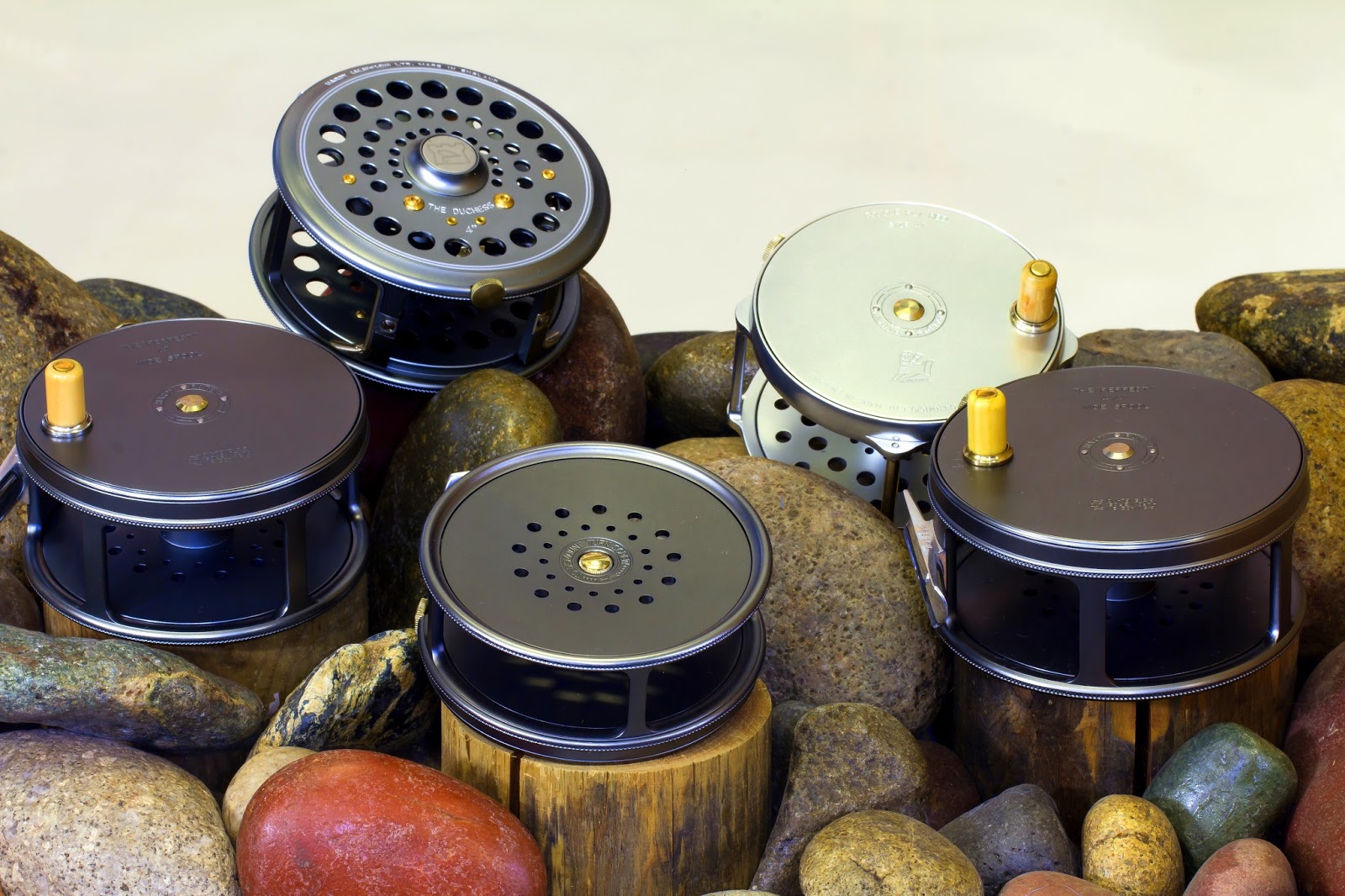
Hardy Clickers

Reel technology has improved by leaps and bounds in recent years.  From stacked disc drags to fully sealed, saltwater-proof drags; there are a ton of choices in reel platforms out there.  All of the fancy drag systems out there have benefits that provide an edge to the most skilled anglers.  Sealed drags are the latest and greatest systems out there.  They are impervious to sand, silt and saltwater, giving anglers a peace of mind that there will likely never be a problem with their reel.  It wasn’t long ago that cork drags were the latest and greatest, offering the smoothest function of any reel.  Before that, the latest were conical clutch systems which were preceded by stacked disc drags and previously by drum brakes.  But in the beginning, it all started with the click pawl. 


Hardy Bougle'
Most modern anglers go for the latest, most modern system, or at least the most modern that they can afford.  Let’s be honest, people love having the greatest, newest technology out there.  That is why people stand in line for days in order to get the new iphone when it comes out. 

But some of us are cut from a different cloth.  I believe that some of the best reels ever made are still made today in much the same way as the very first production fly reel designed in 1874 by Charles Orvis.  His click pawl reel was the benchmark for countless generations of fly reels, and not much has changed in click pawl reel design since then.  Now the gold standard in classic fly reels across the world is the Hardy Perfect.  It has been made in Allenwick, England since 1891 and almost nothing has changed in its design because it is Perfect. 

The mechanics of such a simple design leave little room for failure.  The pawls (triangular pieces of metal) in the frame click against a gear on the spool that prevents the reel from overrunning if moved quickly.  There is little to no stopping power on click pawl reels.  While the pressure that it takes to move the pawl can be adjusted on some models, running fish should be slowed down by applying pressure to (palming) the spool.  Anglers can almost never blame a lost fish on a drag that was too tight or too loose on a click pawl reel, nor will you see anglers fiddling with the drag knob at crucial moments, because there isn’t much that can happen between the loosest and tightest setting on a click pawl reel.  Lost fish can only be blamed on an angler’s own lack of controlling the pressure on the reel.  It does take more skill to control the pressure on a click pawl reel, but it takes one back to the simpler times long ago where it was just man vs. fish.
Inside the New Pflueger Medalist

The original reels only had one pawl, forcing anglers to retrieve with only their right hand.  The biggest change in click pawl reel design in the past sixty years is the addition of a second pawl so that anglers can change their reel from right to left hand retrieve.  One pawl or the other is engaged by turning it so that the teeth interact with the gear while the other pawl sits at an angle so that it is not functioning.  Another adjustment in design is the addition of an “adjustable drag”.  It is a simple addition; a small tensioner pushes against the pawl to increase the pressure that it takes to move the gear.  There is not much difference between high and low pressure (hence my quotation marks), but it is enough to give anglers peace of mind and to quell the doubters. 

Hardy Bougle'

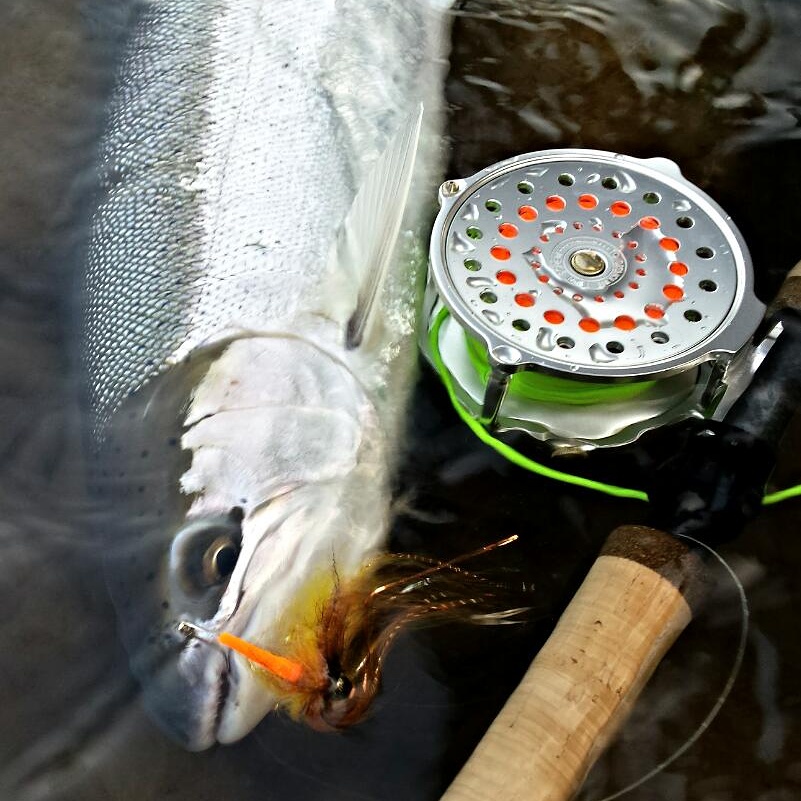
Now the best part of a click pawl reel...  Why I love them so much:  the sound.  Oh the sound of a screaming click pawl reel cannot be paralleled!  A digital recording of a screaming Hardy Perfect was set as my ringtone for a couple of years, but just made me want to fish too much every time my phone rang.  Now, I have had anglers in the shop compare the sound of a click pawl reel to nails on a chalkboard.  For them, I suggest a quieter reel like a Bauer or a Galvan.  Not everyone needs a reel like this. 
 
Hardy Bougle'


Why else should you buy a click pawl reel?  You’re buying a piece of history. The Perfect has been made by Hardy since before any of us were born.   The Hardy Bouglé and Lightweight series have been around since before WWII.  The Marquis is one of Hardy’s newer reels, although it has been in production since before the founding of most other reel companies in existence.   

There are some newer click pawl reels on the market, and they also have the same worry-free drag, awesome sound and classic look as the old stand-bys.  Hardy introduced the Duchess last year in both trout and spey sizes.  They are simple, yet elegant and look just as good on the water as they do in the store.  They are also a bit lighter in weight than a Perfect or a Bougle. 

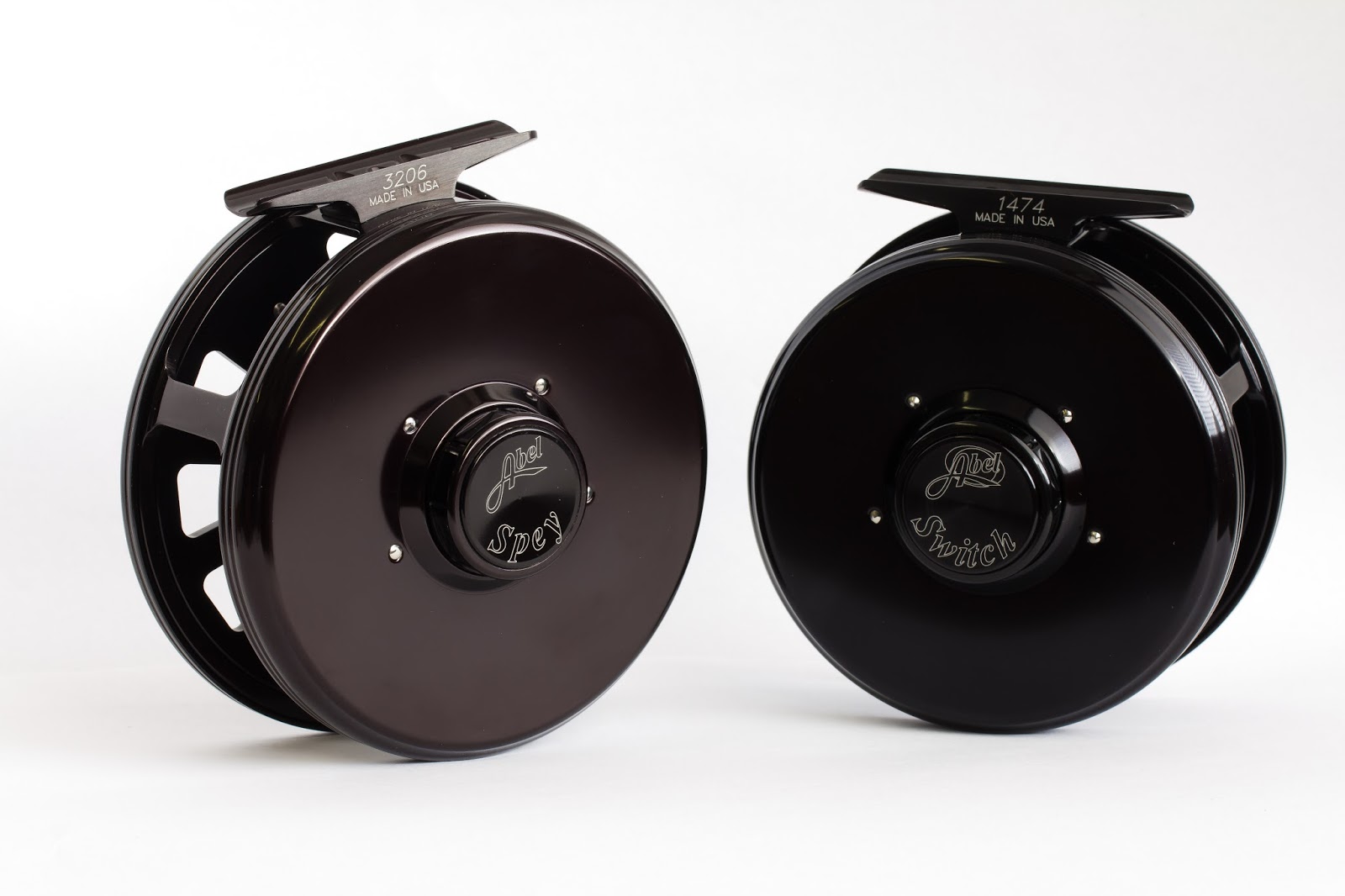
Hardy is not the only game in town when it comes to click pawl reels, even if they are by far the top dog on the street.  Abel has been building their TR trout models since the mid 1990s, and their Classic, Spey and Switch reels since 2012.  The cool thing about Abel reels is the multitude of color and porting options to choose from.  You can customize your reel to the last detail while still getting that classic click pawl experience and the finest craftsmanship, perfect machining and unparalleled attention to detail. 
Abel Classic Spey and Switch Series

Yes, it’s true, click pawl reels are not just for steelhead fishermen, although that is where the majority of our sales go.  As mentioned earlier, Hardy has been making their lightweight series trout reels since the 1930s, with four models to fit any of your trout rods. And Abel’s TR models are beautiful reels with a classic design; but there are more options out there. 

 
Pflueger Medalist mounted to a Fenwick Fenglass
Most seasoned anglers have owned a Pflueger Medalist at some point, or at least have seen them at a garage sale.  I have two old Medalists; one of them is from the 1940s and still works just as smooth as it did on the day it left the factory in Akron, Ohio.  The original Medalists used a drum brake system, which was one basic engineering move above a click pawl, but far less complex than any type of disc brakes that we see today.  Pflueger, which is owned by Pure Fishing, the same parent company as Hardy, re-introduced the Medalist this past year, and the new model incorporates a click pawl system instead of the old drum brake.  This is the most affordable click pawl reel in the store and comes in trout sizes too, plus they look pretty darn cool on the new fiberglass rods.

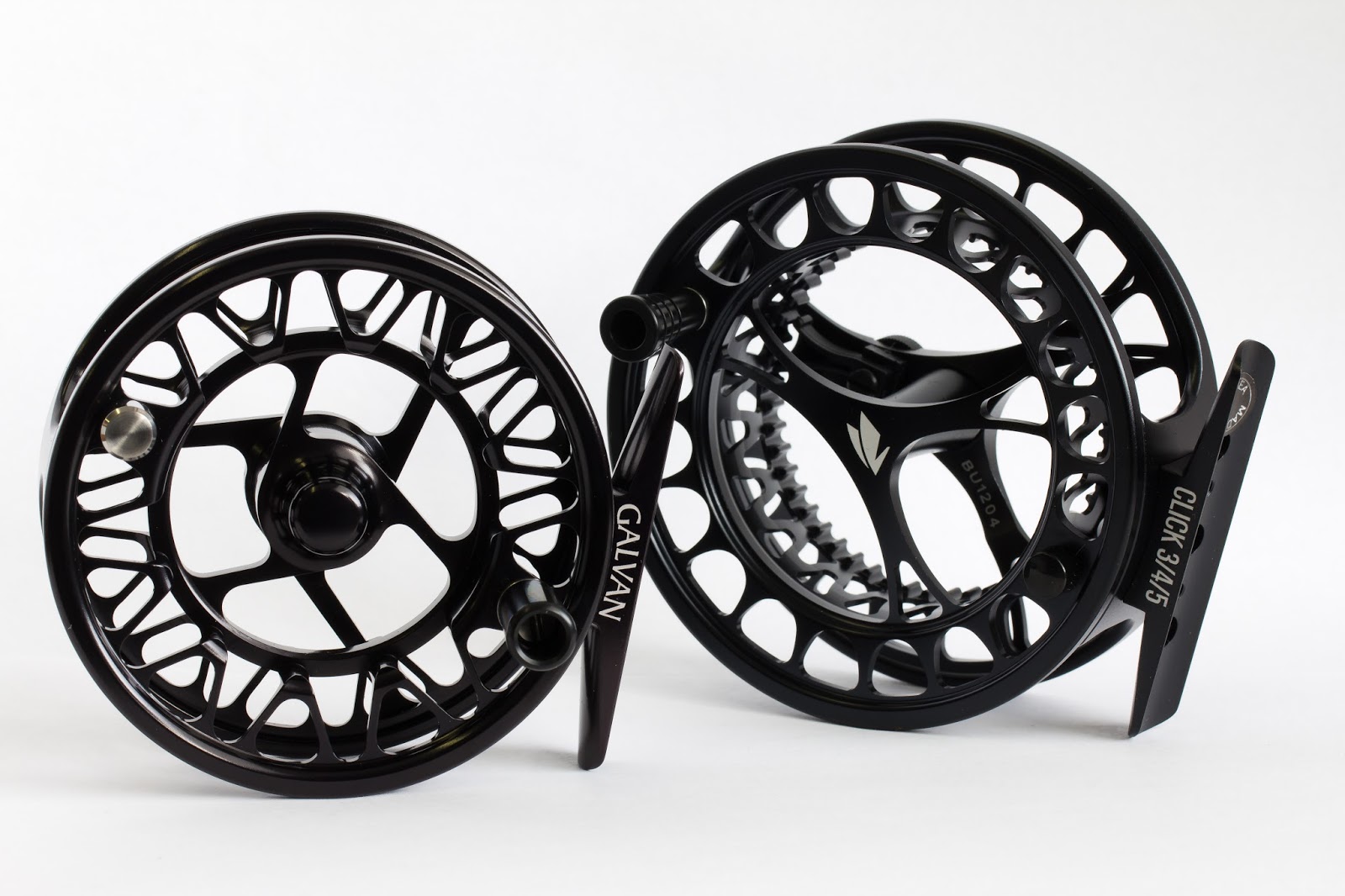
Galvan Brookie on left and Sage Click on right

Other companies offer a modern hybrid version of a click pawl reel.  Sage’s new Click series reels feature a composite pawl that is quieter, yet just as smooth and efficient as a traditional reel but with large arbor design and modern looks.  Galvan’s Brookie reel features a Click-Ball system that is similar to a click pawl design but with modern bearings, smooth operation and a similar, modern, large arbor design.  Both of these reels are top-end alternatives to the traditional click pawl reel but with even smoother function and a quieter click. 
Hardy Marquis

I have heard concerns from anglers about using click pawl reels for trout.  They are afraid that delicate tippets will break easily because of the “startup inertia” required to move the pawls.  A couple of thoughts on this:  In the past one hundred years, tippet strengths have increased dramatically while engineering abilities have improved substantially.  Anglers back then caught plenty of fish on poorly machined reels bought at local drug stores using the weakest of tippets.  Abel, Hardy, Sage and Galvan are big names in reels today.  Many of their best small stream trout reels are click pawl (or similar) designs.  This should give you a little comfort in knowing that these systems have been designed by the best reel manufacturers in the world and after more than a hundred years, they are still the go-to reels for some of the best anglers on earth.

The only thing that has really changed that would hurt an angler fishing light tippet for big trout is a fast, stiff rod.  If you prefer a fast rod for sneaky trout fishing, I would suggest reading Ryan’s article on Soft Rods and Light Lines There is a lot to be said for the capabilities of soft rods when it comes to casting at, hooking and playing big fish on light tippet.  His article is definitely worth the read. 

Maybe a click pawl reel isn’t for everyone and I am ok with that.  I still own plenty of reels from names like Ross, Bauer and Lamson and I will continue to collect reels like my girlfriend collects shoes.  But when I am looking to find that reel that I will never sell to put on the one rod that I will own until I die, there is only one thing for me to do, and that is to go old school.   


The Gorge Fly Shop Team

541.386.6977


"Fly Fish the World with Us"

Jan 4, 2016

What are we fishing? Winter Steelhead Gear

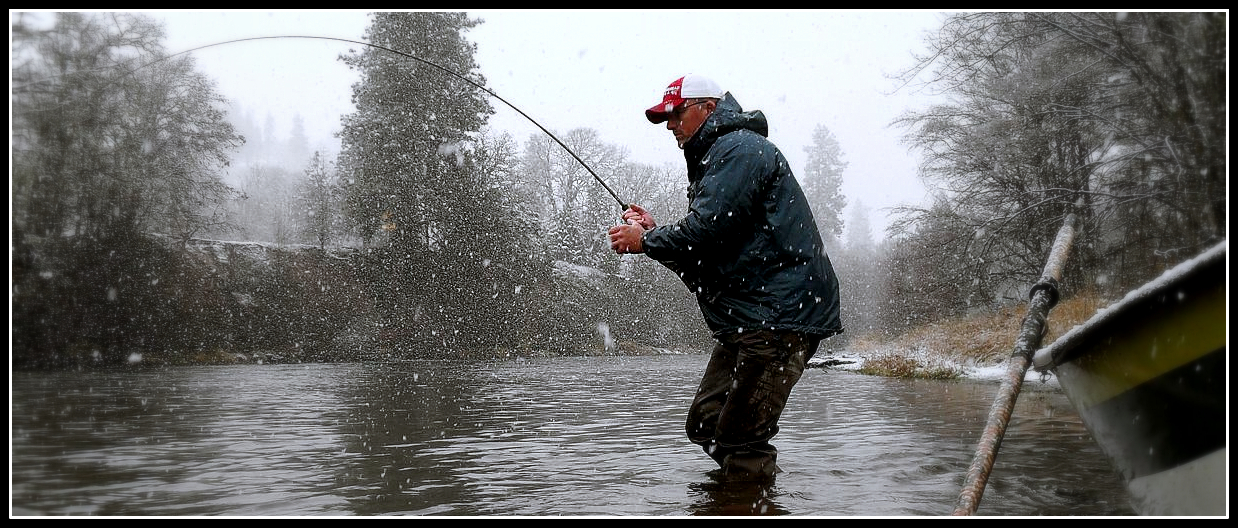
John fighting a Chrome winter Steelhead while the snow falls

We get asked a lot what gear we are personally using here in the shop. Well, it is winter steelhead season here, our favorite time of year to fish, and all of us at the shop are polishing up our rods and reels, collecting lines and sink tips, and tying flies like madmen. John, Ryan and I fish as much as anyone else out there and this is the gear that we are rocking for the winter.


John:

G. Loomis NRX 13’ 7/8
Galvan Torque T-10

G. Loomis NRX
The G. Loomis NRX 13’0” 7/8wt is one of the sweetest rods out there. It is light in hand, and the grain window is huge, but it fishes best with lighter lines than most 7 weight rods, and likely all 8wt rods. Most 7 weights fish well with a 500-550 grain Skagit head, but this rod is dialed in with a 475 grain Skagit, yet it still has plenty of backbone to land those big winter hogs that John gets into.

It is really easy to cast, even though it is a fast rod. Most fast rods are difficult to stay dialed in with. Once an angler starts to get tired after a few hours, their casting stroke falls apart. With faster rods, casts can get ugly quicker than with slow rods, but with the NRX, the balance between the flex in the tip and the stiffness in the butt end gives this rod some room for error and recovery when casting. There is also tremendous power behind this rod even with how light it is and how light the grain window is.
The thing that really drives John to love this rod is that it is comfortable in hand. The cork is high end, thin and very easy to hang onto and fish all day.

John likes this reel for several reasons. The price is right, it looks cool and has a sweet sound. Those are the superficial reasons, which often seem to be more important to consumers than the solid construction, the easily adjustable drag and smooth overall function. This reel is light in hand, but balances the lightweight NRX perfectly. Galvan makes “spey weights” for adding weight to a reel in order to counterbalance heavier spey rods, but this is unnecessary with the NRX. Another reason that John likes the Torque is that in all of the years that we have been selling reels, Galvans rarely, if ever, come in for repair work, less than any other reel per unit sold. We’re not saying that they are maintenance-free, but they are definitely very reliable and low-maintenance.

The RIO Skagit Max lines are smooth and easy to cast. Rods shorter than 12’6” are best served with a Skagit Max Short, while rods between 12’6” and 14’0” take the Skagit Max perfectly. Long rods over 14’0” will take the new RIO Skagit Max Long. We have had a few guys tell us how they tried the Max Long on a shorter rod and didn’t like it all that much.

John likes the Rio Skagit Max because of the bright orange back end and the subtle blue color that still shows up well in low light. It casts well too, but mostly John likes it because when matched with 50# RIO Slickshooter and chartreuse backing, it creates a nice Seahawks colored theme on his reel.

Ryan and I couldn’t choose one set-up each. We both take two rods/reels to the river, so you get to hear about both of them.


Ryan's Winter Setups

Ryan:

Sage ONE 7116 Switch
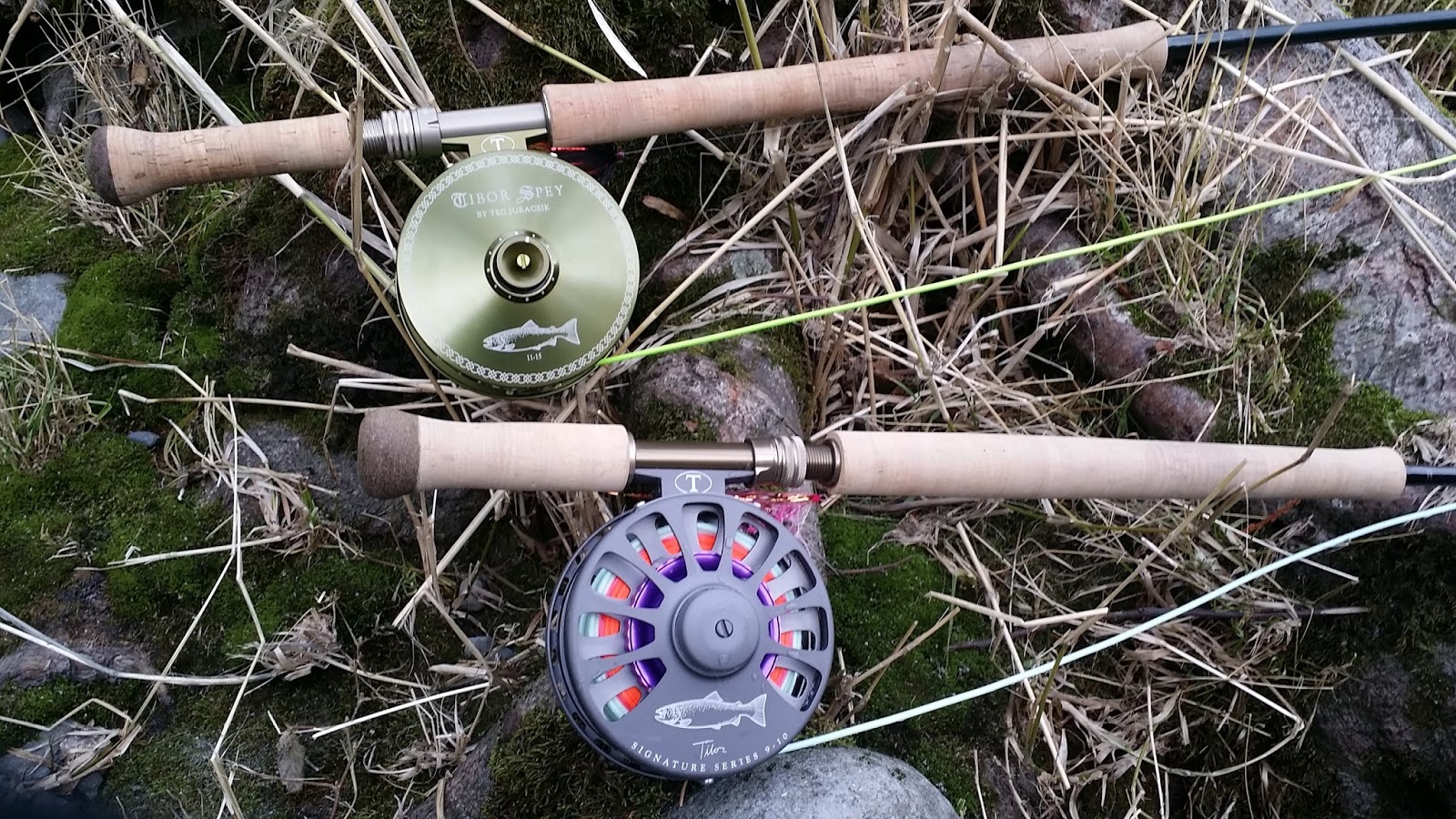
Tibor Signature 9/10

Winston Boron III TH 7133-4
Tibor Riptide

Ryan has been a big Winston fan (like me) for years now. The new Boron III – TH 7133-4 is another beautiful, powerful, smooth rod from Winston, and it is the star of the Winston Spey lineup. The 13’3” 7wt is the go-to year-round steelhead rod for the Northwest. It has a deep load and a smooth, powerful release. Coupled with a great finish, good grip and excellent components, Ryan loves this rod for all of the reasons mentioned above, but there is one thing that drives him to. Winstons are smooth and it’s hard to describe until you have cast one, but there is no “smoother” rod out there.

Another reason that Ryan is high on Winston is that the boron in the butt holds a
“reserve” of power for when you need to turn a fish or push that cast a few more feet. It is what they call the “Boron Advantage”.

The Winston is loaded up with the new Airflo Skagit Compact G2 540 grain head, and it matches perfectly. The 540 grain is a great match that allows an angler to throw larger flies, and as a Midwestern Muskie fisherman, Ryan sure likes his big flies. The G2 Skagit Compact line is just about perfect. Ryan likes it because the two tone color scheme is pleasing on the eyes and the length is just right for 12’6” – 14’0” rods. He knows that it does everything that you could ask of a Skagit Head.

Ryan also picked up a Sage ONE 7116-4 earlier this year. Switch rods are not the go-to rods around here, but having one in the arsenal is a must if you are a steelhead junkie which Ryan has become (especially because of the lack of muskie). He picked this rod up because it is very lightweight, and easy to cast. The Sage ONE is fast, but not too fast and it is the easiest switch rod to learn on. Matched up with a RIO Skagit Max Short 475, this 7116-4 will huck big flies and heavy sink tips, yet it will maintain tight loops at long distances. He picked this up primarily to fish Rock Creek in Stevenson where he lives, but switch rods are the preferred method to fish big boulder gardens on large rivers, and to rule the small coastal rivers like the Wilson and the Trask.

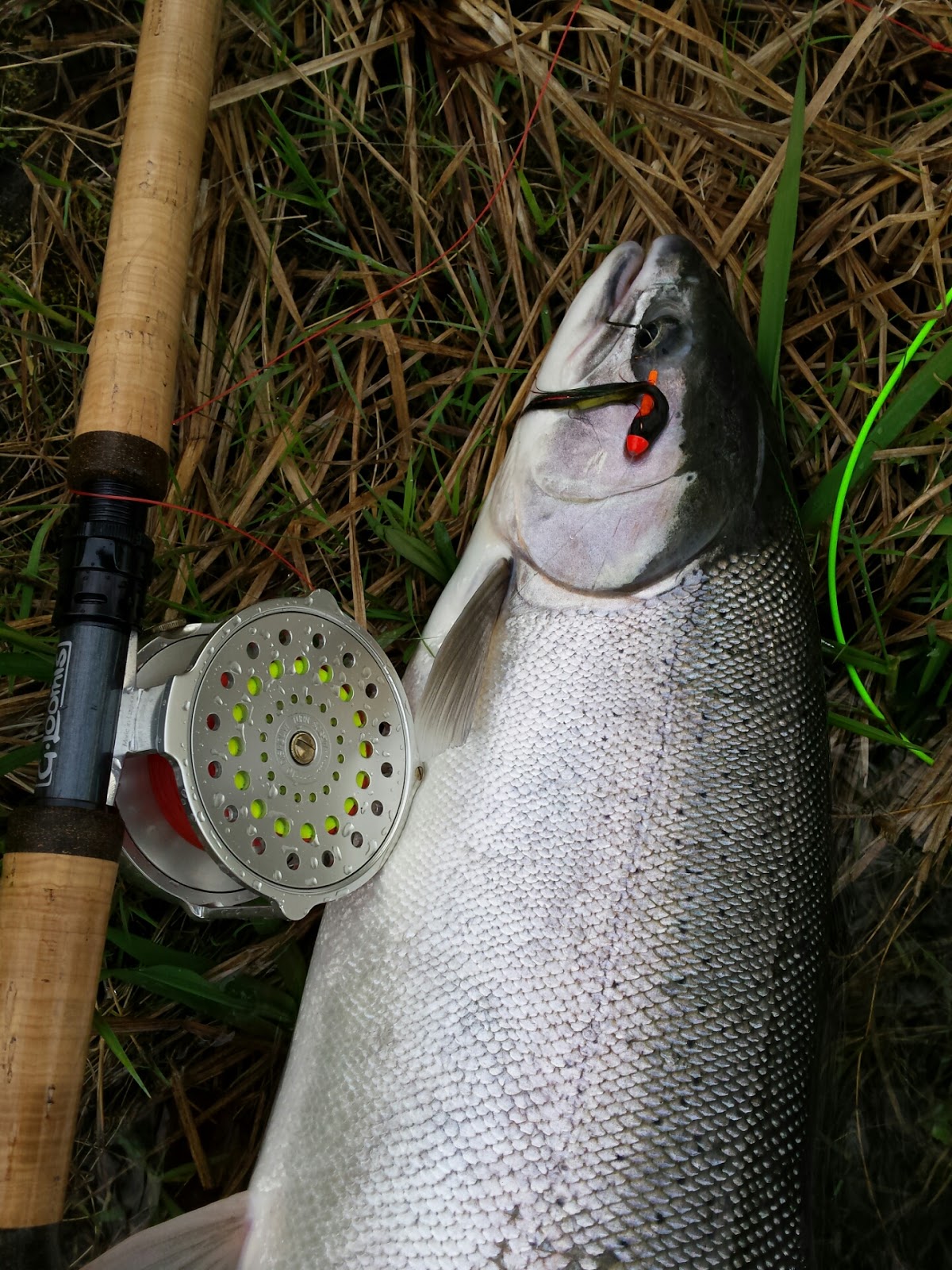
Now Ryan loves his Tibor Reels. I have never seen him fishing anything else. He loves them because they are rock solid in fresh or saltwater, but the biggest reason he loves them is reliability. Much like why John loves his Galvan. After years of abuse, dropping, kicking, and scratching these reels all up and down, he has never had a problem with any of his Tibor reels. In fact, he just ordered the new Signature 9/10 to put on his switch rod. He does like to remind me that there have been more world record fish caught on Tibors than any other reel.

Andrew:


Burkheimer 7134-4
Lamson ARX 3.5+

Echo Glass 7110-4
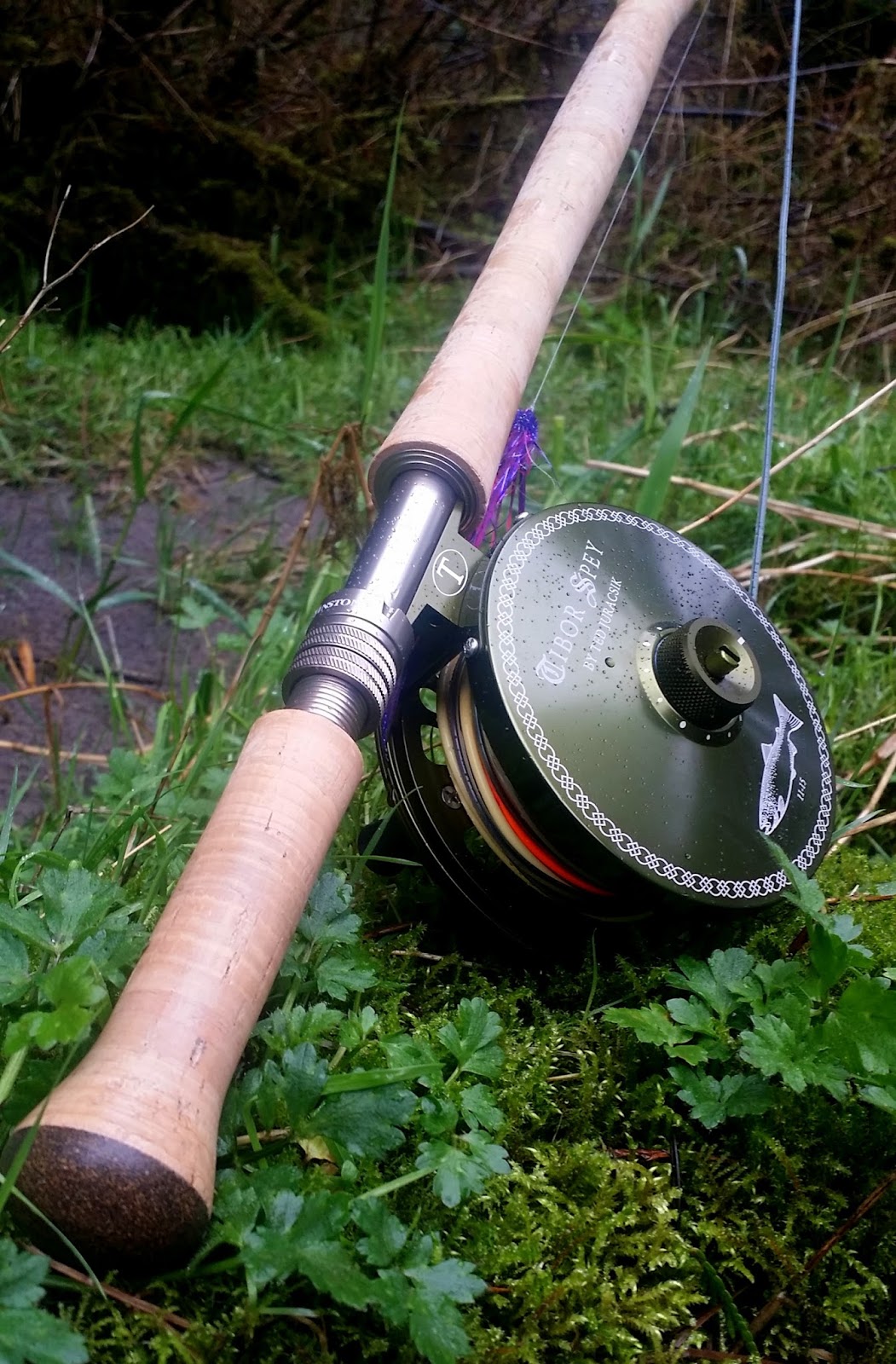
Hardy Salmon Marquis #1

I love my Burk! If you follow the blog, you may have noticed. I can go on for days about the quality of the rod from the cork to the guides to the finish, but in the end, it is very easy to hold all day, it casts like a dream and I love the way it handles fish. I have a more complete write-up in Why I Love my Burkheimer. This rod loves the Airflo Skagit Compact G2 540 grain head, but I have been fishing the S/A Third Coast Skagit 520 grain head on it recently.

The new Scientific Anglers Third Coast Skagit a very good, very overlooked line in the spey world. Scientific Anglers, in general, does not get much love in the spey world, but this new line casts just as well as any RIO or Airflo head. The Third Coast has a good color scheme, and it turns over big flies and tips with ease. I have been very impressed with it so far and would recommend it to anyone that is looking for a Skagit line.

Echo Glass 7129 Rod Review

I recently picked up the Glass Switch 11’0” 7wt and I am in love! This rod is converting me into a switch rod believer. I was already a believer in the slower action of fiberglass due to the incredible power behind it. I no longer own any spey rods that I would consider to be fast action. Glass is great for guys that get lazy with their cast after a few hours. A lazy cast on a glass rod still goes the distance with ease, while many faster rods get frustrating about five hours into a long day of fishing.


Echo Glass

I matched the Echo Glass Switch 7110-4 up with an OPST Commando 350 grain head and it is an absolute joy to fish. There will be a full article on OPST heads shortly, but just know that the OPST heads run at 75-100 grains lighter than their Airflo Skagit Switch and RIO Skagit Max Short counterparts. We’ll get into why in that other article, but if one were to fish the Airflo Skagit Switch or Rio Max Short in a 420-450 range on this rod, they would be very happy. The OPST head is amazing in the fact that my casting time and stroke is shorter, so I am spending less time in between casts and more time with my fly in the water.

Now I am a Lamson guy, much like Ryan is a Tibor guy. I have a ton of Lamson reels and the reason is that I bought a couple of them when I first started fishing and I liked them enough that I bought another, and another, and here we are. In the thirteen years of owning Lamson Reels, I have had zero problems with any of them that I did not cause myself. (I bent a spool when I sat on it, and I failed to rinse one out after fishing in saltwater and the bearing rusted).

I love the ARX (Lamson ARX 4+ Spey Reel review) for a couple of reasons. The first reason is the Heavy Duty caged frame. Monofilament running lines (like the OPST Lazar Line) tend to sneak through the gap between the frame and spool, but the Heavy Duty frame makes that impossible. The HD frame also adds integrity, making it more difficult to bend the spool or frame. There is still plenty of surface area to palm the reel, and the drag is just as smooth as any other Lamson reel. It balances well with the Burkie and it looks cool too.

I will soon be getting a Hardy Salmon Marquis #1 to put on this new Echo Glass Switch 7110-4. Right now, I am fishing an older Lamson Velocity 3.5. The Echo Glass has a classic look with classic, old-school materials. I want to match it with a reel that has that same classic look and feel to it. The Hardy Salmon Marquis #1 is a good fit. It has a click-pawl drag system, the same system that has been used for over 100 years for good reason. It is the AK-47 of drag systems. It is nearly foolproof and will work no matter what you do to it. There isn’t much stopping power to a click-pawl reel, but it does have the most classic sound that has ever been produced by a reel. It also has a heavy-duty frame to prevent mono from slipping, extra reinforcement for accidents, and the #1 a good size for the Glass Switch, plus the price is right.

You may have noticed a trend here. We love reels that are reliable, especially reels that tend to have a long history of solid performance across the industry, as well as with us personally. Each of us likes a reel that is cool looking, but for the most part, we look for a reel that is unlikely to fail.

We prefer rods that are easy to hold onto for a day of fishing, as well as rods that are forgiving and easy to cast. We all have different casting styles with different tempos, but for all three of us, the most important thing is a comfortable grip that is fun to cast all day.

As far as lines go: Winter time is Skagit time. If you are fishing a spey or switch rod, but not fishing a Skagit head, then you are missing out on fish and making things harder than they need to be. RIO, Scientific Anglers and Airflo all make equally impressive lines, and any angler should be happy with any of them, but the most important thing is to match the right length and grain weight to the rod. The OPST head is a bit different, but amazing in its own way. Again, we’ll get to that later.

Well, that is what we are fishing here at the shop this winter. Now it’s just a matter of putting these fine products on the water and getting into a fish or two.


Andrew Perrault
Gorge Fly Shop | Product Specialist
541.386.6977


"Fly Fish the World with Us"


Dec 16, 2015

Why I Love my Burkheimer

C.F. Burkheimer 6128-4 ~ In Stock but won't be for long!

Spey fishing is a craft. It is alive and evolving, just as art, music and even yoga. 

Like many North-westerners, I started out fly fishing for trout and rather quickly evolved from single hand casting to spey casting. As the progression moves on, we evolve from learning to cast to learning to cast effortlessly. At the same time, we strive to find the best rod, reel and line to fit our personal casting style. Many of us go from fast rods to slower rods, cheap rods to expensive rods, many rods to just a few cherished rods. I feel that if this evolution happens over a long enough time frame that many steelheaders will land with a Burkheimer as the centerpiece of their collection. Some guys just pick a rod and then use it forever, but I am a gear junky, and my current position at a fly shop allows me to push it to the limit if I choose. I am constantly striving to improve; improve my cast, my rods, reels, lines, flies, presentations, gear, attitude and the quality of my fishing time.

C.F. Burkheimer 7134-4
This past summer, I began to feel that I had been spey fishing long enough that it I could finally get a Burkheimer. I wouldn’t say that I deserved a Burkheimer or that I had earned a Burkheimer, but the time has come for me to get one. I have now, over thirteen years of spey fishing, owned, or at least fished rods from every rod manufacturer out there. It now occurs to me that they were all just practice rods, learning tools so that when the time came, I could wield the Burkie with the respect that it deserves. I mean, you don’t just give a teenager a new car. Not only does the teen have to learn to drive it properly, he needs to learn how to care for, maintain, and most importantly, respect it before being given the keys.

My friend E bought his first Burkie last winter. I got to cast it just for one run and was absolutely in love with it. The 7119-4 is a beautiful switch rod, perfect for the Hood River in the winter. E fished it for a few months and then one day I noticed he was fishing his Echo again. I asked why he would sell the nicest rod he had ever cast and he said that it was partly because he was afraid that he would break it, but mostly that the rod was too nice for him. He felt that he was not worthy of having such a beautiful stick. At least he recognized it early on, and the time will come for him to buy another some day.

C.F. Burkheimer makes many different models to choose from. I chose the 7134-4. The 13’4” 7wt is a great year-round stick that has a deeper load than the 7127-4 (my second choice). This rod is perfect for Skagit casting and winter steelhead. Not that the 7127-4 isn’t great, but I prefer the deeper load and slower action of this rod compared to the quicker action of the 7127-4. I fished a few different Scandi style lines on the Deschutes, including an Airflo Rage Comapact 450, a RIO Scandi Versitip #7 and a Scientific Anglers UST Scandi 480. All of those lines were a good match to the rod and made casting nearly effortless.

While I thoroughly enjoyed fishing the Scandi lines, I am ready for the winter chrome. My rod is now loaded up with the new Airflo Skagit Compact G2, 540 grain Skagit Head and it is money! Nice, easy, steady strokes result in long, tight loops with minimal effort. Matching this line and rod makes this one of the nicest casting setups I have ever touched.

One of the nicest you ask? I thought that the Burkheimer was the end-all be-all rod, the one rod to rule them all? Well, the Sage ONE 7136-4 is an amazing rod that casts like a dream, so are the Winston BIII TH 7133-4 and the G. Loomis NRX 13’ 7/8. There is a lot of power loaded into this Burkheimer, but it takes a slow, steady stroke to unleash it, and I am still months from pushing the rod to its limits to find the perfect stroke, and then reigning in that cast to perfection. While I would give the edge in pure ease of casting to the ONE (it’s also lighter in weight), the Burkie wins in my book as the best overall rod. It’s the attention to detail, the finish work, the paint job, the hardware, and of course, the mystique that all push the Burkie into a solid first place finish.

The Burkheimer 7134-4 has a similar cast and load to the Winston BIII-TH 7133-4 in my opinion. It has a deep load that responds quickly when power is applied to the forward stroke. While the rod is very forgiving, it still lets you know when you’ve done it right. I believe this rod has a little more flex in the bottom end and has more power in the forward stroke, but it’s pretty darn similar in my opinion. The ONE and the NRX are both faster and a little bit lighter, but the overall weight is not noticeable to me when standing knee deep in the river.

The one place that I really do notice a difference is in the cork. I like a thin grip that is comfortable in hand and beautiful to look at. Burkies have the nicest cork on the market, both in the quality of the cork and the shape of the handle. This goes a long ways for me, as holding onto a rod for 8 hours a day is uncomfortable with some cork handles on the market. This one is easy to hold and helps to create a very relaxed grip. A relaxed grip leads to a relaxed cast, which is what I am searching for in a good rod.

Am I putting my Burkheimer up on a pedestal? It is just a fishing rod. It’s probably much like any other rod from an outsider’s perspective. I know this, but I feel that if any piece of gear in the fly fishing world should be put on a pedestal, it should be a Burkheimer spey rod.

About buying a Burkheimer: C.F. Burkheimer Fly Rods. Build your custom rod in our store

We forward order and Stock a few select Burkheimers: Check for in-stock Burkheimers


The Gorge Fly Shop Team

541.386.6977


"Fly Fish the World with Us"


"Fly Fish the World with Us"


Dec 12, 2015

Umpqua Introduces "Zero Sweep" Packs and Bags

The new, highly anticipated Umpqua Zero Sweep Packs are now in stock at the Gorge Fly Shop and www.gorgeflyshop.com

We have been looking forward to seeing these new packs since our illustrious Umpqua Sales Rep Eric brought them in last spring. Each of these packs are sleek, good looking and solidly built to perform well after taking all the abuse that we can throw at them.

Since they are new, we have not had a chance to put them through a season of rigorous field testing, which for us is the only way to form a solid opinion on them. These are our initial impressions, and they are definitely impressive at first glance.

Zero Sweep

Zero Sweep technology is what drives the lineup. All of these packs use a set of features that Umpqua is calling Zero Sweep. The basic idea is that there is little to nothing to tangle up your line on the outside of this pack, yet keeping tools easily accessible. Most tools fit snuggly within the recesses of the pack. With plenty of places to stash all of your tools without snagging your line, this system should equate to more fishing time and less time frustratingly untangling line from your pack. All of these packs have a foam fly patch or two to keep a few flies easily accessible without having to get into the pack.

All of these packs have good padding, strong straps and buckles as well as solid stitching and 420 Denier Cordura fabric, which is very strong and durable. Nothing flimsy about any of these packs; I would feel confident putting these through a season or two of Northwest Steelhead abuse (often considered in the industry as the worst type of gear abuse).

Rock Creek ZS Chest Pack
Rock Creek ZS

The smallest pack in the lineup at 200 cubic inches, it is perfect for the minimalist fisherman. It is just big enough to store a fly box, tippets, nippers, hook file, hemostats, a bottle of water and maybe a small camera or a granola bar, but not much else. As I spend years going back and forth between “take everything to the river” and “take nothing to the river”, this seems like a good solution for the guy that doesn’t want to be bogged down by unnecessary items in a pack.

The strap system is comfortable at first impression. I believe that I could easily fish all day without anything getting in my way as with some other packs. This pack is also modular with the ability to attach to the Surveyor Pack which adds extra utility.

Bandolier ZS Sling
Bandolier ZS

Another minimalist pack, this mini sling looks comfortable and functional. With 300 cubic inches, this has a little more room than the Rock Creek, and is my personal favorite in the smaller packs after looking over the lineup. There is one larger pocket that easily opens across the top, with the same Zero Sweep features that help minimalize line tangles while keeping tools easy to access. The main compartment holds two medium fly boxes just fine. The sling can be worn over either shoulder as well as on the waist without any major adjustments. I really like the easily adjustable straps, although they are not all that thick or padded. The minimal weight looks like it would be easy to wear day in and day out.

Ambi-Sling ZS
Ambi-Sling ZS

The Ambi-Sling is another sling pack in the lineup, and probably the most intriguing. Sling packs are making waves across the industry and Umpqua has three different sling packs that should make life easy for anglers everywhere.

One complaint about some slings is that they are built to go over one shoulder or the other. If you like to put any other sling pack over your left shoulder instead of your right, it was not plausible. This pack has fully adjustable, comfortably padded shoulder strap that can be easily flipped from right to left shoulder.

At 1100 cubic inches, this pack is much larger than the Bandolier and the Rock Creek, and there are more options for adding tools to the Zero Sweep recessed pockets. This pack also includes two foam fly patches, five tool pockets/retractors, two hemostat pockets, and quite a few big pockets to stash all of your gear.

I think you could stash a nice camera, rain jacket, food, water and all of your fishing gear in this pack and still have everything easily accessible. This would be a great pack for a long day of walking and fishing. I am thinking of the Salmonberry River, where a minimum of 8 miles of walking per day of fishing is the norm.

Steamboat Sling ZS
Steamboat Sling ZS

This is the new and improved version of the sling pack that started it all. This holds more gear in less compartments than the Ambi-Sling, and in a simpler layout. Designed to go over the right shoulder only, it easily swings around to the front of the angler where all of the pockets open across the top (as it sits sideways in front of you). You can easily stuff a rain jacket, camera, food/water and all of your fishing gear inside and still have access to your gear with minimal shuffling. At 1200 cubic inches, this holds enough for a full day of hiking and fishing while remaining comfortable on the shoulder.

Compared with the Ambi-Sling, the Steamboat is going to be easier to get into while standing in the river, as all of the pockets face up while it is in front of you. The Ambi-Sling has a bit tighter organization, so you can more easily divide and conquer the pockets that you need to get into and leave alone the stuff that you won’t need often. The biggest difference is that the Ambi-Sling has the adjustable shoulder strap for guys that want to put it on their left shoulder. Most people fish with the sling on the shoulder that they cast on, but not everyone dances to that drumbeat. The shoulder strap on the Ambi-Sling also has more padding and looks like it would be more comfortable over the long-run, but without rigorous field testing I am just speculating.

Ledges 500 ZS Waist Pack
Ledges 500 ZS

If I had to choose one adjective to describe the Ledges 500 ZS, it would be ‘beefy”. This thing has big, comfortable straps as well as a molded ABS frame that provides ridged structure plus ventilation. The frame helps keep it from collapsing on itself so that it remains easy to get into. There is one major compartment that has dividers and pockets, as well as a mini top pocket to stash a few small items like tippets or a small fly box. It features recessed ports and pockets like the other Zero Sweep packs. I could see this as more of a trout pack than a steelhead pack as the internally divided pocket would be more ideal for smaller fly boxes, but maybe not the big mamas that we like to use for steelheading.

This is not the lightest weight pack out there, but the weight has been sacrificed for comfort, and that is a good sacrifice to make. There is nothing worse than a pack with straps that dig into your waist or shoulders. The large, comfy padding should alleviate any concerns in that department.

Ledges 650 ZS
This pack does have a removable shoulder strap to help to keep it from slipping down on your waist. This is a recurring problem with waist packs, especially ones that are stuffed full, although it doesn’t look as if this shoulder strap is more comfortable than any other. There are two water bottle holders on the waist straps. At 500 cubic inches, this is a great little trout pack that is fairly minimalist, yet very comfortable. I would have a hard time stuffing a rain jacket and some food in there and still be able to find the gear I need, but a handful of trout boxes, tippet, floatant, indicators and all of the small stuff you need is easily organized in this pack.

Ledges 650 ZS Waist Pack

We have not seen any of these yet, but with an extra 150 cubic inches, this would allow you to throw in a bit of extra gear or maybe a light rain jacket.

Surveyor 2000 ZS Backpack
Surveyor 2000 ZS

This is the ultimate fishing backpack. Cold, wintry days hiking around on the Oregon coast are no longer a problem with this pack, as one could easily fit a spare jacket, thermos full of coffee and a flask full of whiskey inside and still have access to all of the necessary fishing gear.

I would fish with a backpack more if I could more easily get in and out of it without having to go to the shore, take it off, and then take everything out of it in order to get that one thing I needed at the bottom of the pack. This pack looks like it can help with that problem. It does not eliminate the issue, but makes it easier to deal with.

The Surveyor has a full “clamshell” type of opening on the main compartment, which makes it easier to get to any specific area in the pack as well as accessing/organizing the entire thing. The injection molded frame should make this very comfortable to wear all day, while the Zero Sweep features allow you to access tools while diminishing any excess corners or buckles to catch your line on. The external pockets are easy to access and look like they have good volume to stash your basic fishing gear.
The Surveyor is 2000 cubic inches, which is plenty of room to take everything you would need for a weekend or more of fishing. Another cool feature about this pack is that it is modular. The Overlook Chest Pack and the Rock Creek Chest Pack both strap right onto the front of the surveyor, meaning that you can stuff the backpack full of all that extra gear that you won’t need to get at regularly, like coffee, whiskey food, and extra clothes while keeping all of your fishing gear accessible in the front

Yet to arrive is the New Swiftwater Tech Pack and the Overlook 500 Chest Pack. Stay tuned!


Andrew Perrault
Gorge Fly Shop | Product Specialist
541.386.6977


"Fly Fish the World with Us"


  © 'and' Steelhead.com Mike Prine 2009-2014

Back to TOP