Showing posts with label Tormented angler. Show all posts

Aug 10, 2017

Haunted by "The One"


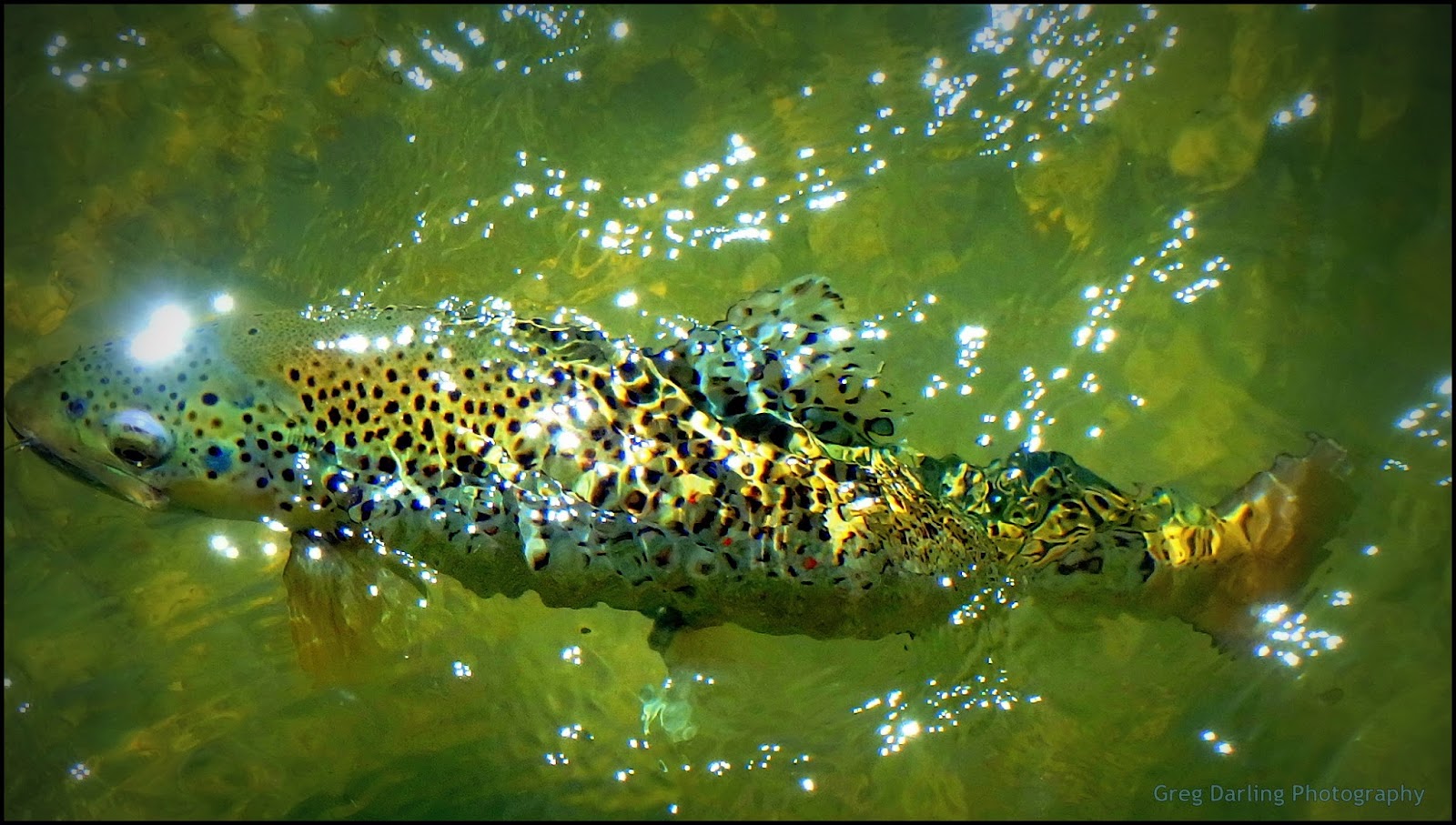
Yeah...You know what I'm talking about. The One! Or Many! The fish that makes you lose sleep at night! The fish that haunts you!

I can't remember a year go by that I didn't suffer defeat from a piscatorial kind. I can recall three within this very year and the most recent was just last week. I don't know what's worst, not knowing what the loss really was or trying to figure out how it could have been prevented. Regardless the experience is haunting me.

This years first account came early in the winter swinging flies in an icy cold stream. To add insult to this injury the location of the loss has defeated me in the past as well. It's a high percentage micro seam that when you get your fly to swing just right, hold on! On this day the take was so solid it felt like I snagged into the rocky bottom. Holding steady pressure something started to give and in the next second the explosion of a solid rainbow came leaping into the air and out came my fly. Only a glimpse still burns in my memory.
Over and over, what could I have done different!? I don't want to talk about it.

Another frame etched in memory occurred just a couple months ago on a warm water reservoir. I was enjoying a day of fly rod fishing for bass with great success I might add. Dropping a streamer into the depths of a boulder field I detected a tell tale tick. Upon hook-set, I knew right away I hooked into a good fish but it wasn't until I saw his bronze tiger striped flank that he was well above average. I held tight to him but he dove for the depths and somehow in that rocky underworld he managed to escape.
Like Houdini...How did he do it!? I checked my tippet and fly was still intact. Although I was happy he didn't get free only to deal with a hook in his mouth but at the same time mad knowing my system did not fail. Must of been me! But what could I have done different?

This most recent event was even witnessed. The setting, a pristine trout stream nowhere in Wyoming. Fishing a hopper and having a great day. Casting was good, fish where happy and looking up. A seam with a bubble line appeared up ahead and I stretched a cast to ride a downstream drift. Shortly into the drift the big brown appeared, as my guide put it, like the scene straight out of the movie Jaws. Almost in shock, I still remembered to set the hook but it was not meant to be. We briefly connected but it wasn't this brown's first rodeo. Back-stepping while stripping, I could never keep a tight line on him as he shot downstream and escaped my hook. What could I have done different!?

Is it skill or lack of. Is it luck. Is it fate. Although I never want to see a failed piece of the puzzle it's almost easier to accept knowing that there is something to blame. In all three of my accounts there was not an equipment failure.

Although scared for my next failure I must let passion drive me forward and not fear whatever the outcome is to be. Try and try again and success should be assured. Or will it! This is what haunts me!
The Tormented Angler


Gorge Fly Shop 

"Fly Fish the World with Us"

Jun 27, 2016

There goes Tokyo - Go Go Sculpzilla

Hard to find a leach pattern fly better than Sculpzilla. The #8 Size is a staple for stripping or swinging flies to trout with two hand rods. I like the Olive color but all of them can be producers. Fish it on a floating line and leader for slow water and shallow water or swing it on a sink tip to get it down in fast currents and tail-outs. Also great for streamer stripping from a boat. 


I believe what makes this little leach so effective is it really gets down. It's not too over-weighted but the slim size seems to help it sink and it will get heavier as the rabbit zonker gets wet. I tie most of my own flies I use today but I still have a selection of Sculpzilla's with me at all times and sometimes he's just the ticket to get a strike when nothing else seems to work. If you're a streamer junkie like I am then put a selection of these in your fly box. When the day comes you will be rewarded!


BassProGreg


Gorge Fly Shop Internet Sales Manager | Product Specialist


"Fly Fish the World with Us"

May 12, 2016

Scientific Anglers Sonar Series Lines - 2016


Let me start this article with the one most important piece of knowledge you need to know...

All Scientific Anglers Premium Sinking fly lines from hover to full sink are now identified by the title Sonar. 

This includes hover, intermediate, sink tip or full sinking lines. So if your looking for your old Streamer Express, they're here, looking for your Lake Line, they're here too. New in the Sonar Series is a whole lineup of powerful Titan Taper Textured sinking lines. These new Titan's are already having a huge impact in the sinking line game.

Sonar Titan


The sinking Titans have arrived!
Several options here that I want to spend some time on. First understand that all Sonar Titan lines have the Mastery Textured surface. This alone clearly separates them from the other Sonar Series lines which have a smooth surface. Personally I think the next 3 lines I describe have a significant place in the future of sinking lines due to the popular taper design and the benefit of the textured surface.


Sonar Titan Clear Tip
Think powerful clear streamer tip!
Sonar Titan Clear Tip is a weight bumped, powerful taper for easy turnover of big flies, three color for easy length determination, textured for easy pick up and long distance shooting ability and formulated to suit most temperate environments.

Sonar Titan Intermediate
Many Streamer Anglers are discovering the benefit of going all in with full intermediate lines. Getting the running line under the surface improves your connection to the fly and allows for truer swimming action of streamers.

Sonar Titan Int/Sink 3/Sink 5
Triple Density Sinking fly line?! I am already hearing major buzz following this line. It starts with an intermediate running line section that seamlessly transforms into a type 3 sinking mid section that flows into a type 5 sinking Titan tapered head. Triple Density, full sinking, powerful Titan taper, braided core, made for temperate environments and textured for reduced friction allowing for easier pickups and longer cast. Streamer anglers even if you're not a textured line fan you might ought pay attention to this one. We could easily be looking at a game changer!
Triple Density

Non-Textured Sonar Lines

Sonar Sink 25 Cold - replaces Mastery Wet Tip Express
A 25' extra fast sinking tip with floating running line. The running line incorporates a large diameter handling section for better mending and line control. With a braided multi-filament core and Shooting Technology Plus the Sonar Sink 25 provides an excellent low tangle design which increases shooting distance. An excellent streamer line for trout. Measured in grains and formulated for cold-water.

Sonar Sink 30 Warm and Sonar Sink 30 Clear Tip - replaces Mastery Streamer Express
Two version of this popular sinking line. First the Sink 30 Clear is a 30 foot clear intermediate tip with a colored intermediate running line. The Sink 30 Warm is a fast sinking 30' tip with a colored intermediate running line. Formulated for warmer climates and ideal for big streamer fishing. Both lines feature different colors in running lines between various sizes to make identification easy. Sink 30 Warm uses a braided multi-filament core to aid in better sinking and strike detection while the Sink 30 Clear uses a Mono-filament core for clear tip stealth.

Sonar Sink Tip
Sonar Sink Tip
Exactly as the names implies. Sinking Tip, Floating body and comes in 3 different sinking densities, Type 3, Type 4 and Type 5. On this Sonar Series line actual sink tip length increases with line size. It makes sense to me that length of tip would be dictated by rod weight. The bigger more powerful rod can handle more sinking tip and larger flies. The benefit to the angler is you can now set up multi rods to better handle different fishing situations and remain with comfortable casting conditions.

Editors note: 

Too often I see anglers use the biggest sinking tip line they can get on smaller weight rods. We tend to always assume that we match our rods to our quarry. An approach that I have found that works better for me is to match my rod to the type of line and size of fly I wish to fish. An example is I will use up to an 8 weight rod for bass fishing. Most anglers I talk to think 8 weight is too big for bass angling but what an 8 weight can do for me is allow me to fish bigger flies and/or sinking tip lines all the while making casting much easier and less tiring and allowing me to reach further distances to provide more opportunity. Sure if a particular fisheries average size is 12" than an 8 weight is certainly overkill but in that type of fishery I am probably not going to be fishing as large of a fly or have the need to get down as deep. It's something to think about when choosing a rod for a particular species, also consider fly size, fly weight. fly wind resistance and type of line needed.

Sonar Specialty Lines

Sonar Titan Big Water Taper (Slow Sink and Max Sink versions) - This big water Textured line is created to be the strongest of its kind. With a 100lb tropical formulated monofilament core and the strong turnover power of Titan taper the Big Water is designed for species such as Giant Trevally, Arapaima and all Blue Water species. Two formats, Slow Sink and Max Sink

Sonar Saltwater Intermediate - Clear head for stealthy presentations

Sonar Stillwater - Full clear intermediate sink line ideal for lake angling

Sonar Hover (Freshwater and Saltwater versions) - When you just want to get your line under the surface chop. Both versions are built with hover tips and floating running lines.

Sonar Uniform Sink - A graduated sinking line to get a straighter connection to your fly designed for lake and stillwater applications

Sonar Custom Tip - Lets and angler customize a heaving sinking tip line to their own personal needs.


A lot of changes with Scientific Anglers for 2016 and while many changes also bring some confusion I can easily say after learning all the changes, today's Scientific Anglers is much easier to understand and has much more to offer. S/A has always built high quality durable fly fishing lines and continues this tradition and commitment into the future.

Please don't hesitate to shoot us an email or give us a call with fly line questions. Remember this, the right fly line matched to your rod will bring out it's best qualities! The wrong line on the best rod will make you question your ability as a fly angler.

BassProGreg
Gorge Fly Shop Internet Sales Manager | Product Specialist


"Fly Fish the World with Us"


Apr 9, 2016

Winston Microspey vs Sage Trout Spey

Maybe Trout Spey isn't new! 

But there's a new trout angler reaching out for new two hand trout rods and lines and defining a new passion for today's trout angling.

It wasn't long after my first trout spey catch to realize that I had a lot to learn about two hand trout spey. With much time spent researching I came to realized there wasn't much out there to help my new found interest. Basically the forefront of trout spey was and to some extent still is an open chapter in the bigger picture of modern trout fishing today.

I've had the privilege to spend some time with the best new rod offerings available from Winston and Sage. The most recent is the Sage ONE 3110 Trout Spey. I want to emphasize "spend time with" because I'm not just writing a review from an experience in a casting pond or one day on the water. I actually have these rods and spend most all of my winter and spring chasing trout with them.

Attacked my Streamer on the swing

Winner? Microspey or Trout Spey

It's not that easy. Even after countless days on the water with several models of both makes I still don't have a clear choice of which is my favorite. As we speak I am trying to pick another new rod between two choices to add to my quiver while day after day I go back and forth tormented over which one to purchase next.


Review the facts

Sage One 4116-4

I started fishing trout spey in fall of 2013 with the Sage ONE 4116. At that time it was Sage's smallest offering. If you follow my Trout Spey Chronicles then you're aware that I'm quite the fan of the 4116. After all, it was the rod that provided my first trout spey catch and since I'm opening up personal firsts then I must also admit the 4116 provided my first ever brown trout catch. Not just spey brown trout but actual brown trout catch. And since I am in the mood to admit personal feats I must confess I was not really a trout enthusiast until I discovered trout spey and the Sage 4116. So right away it's hard for me to not be a little biased toward the Sage. Aside from all that, I have always felt a little over-gunned with the 4116 for much of the trout water I wade.
Favorite Line matches
RIO Scandi Short Versitip 320gr
Airflo Switch Streamer 330gr

When deciding on what size trout spey to own one should really consider the primary use. Is this rod intended to chase giant Alaskan Rainbows with mouse patterns or will it fish a local tailwater with bunny streamers. Will chunky streamers be your go to or do you plan on swinging small streamers and soft hackle rigs?

Along comes Microspey

Winston BIII MS 4110-4

R.L.Winston BIII MS 4110-4


Having fished the ONE for a year when I first picked up the 4110 Microspey it felt a bit slower than what I had become use to thus far. Not bad, just different. But the Winston is very intuitive; so much so that after a day of fishing I had tuned to its feel and learned to really appreciate the deep loading which turned out to be a better skagit casting tool for me. 
Favorite Line Matches - 

Winston BIII MS 5116-4

R.L.Winston BIII MS 5116-4
Cannon! Wow! I have to be honest and say this is a rod for big water and big trout, maybe even small hatchery steelhead. What's cool about this rod is that it has the same trout spey size grips as the other microspeys which gives it a nice tight casting box but equipped with deep load power one would expect from a bigger rod. I don't have as many hours clocked on this rod simply because most of the water I fish on a regular basis doesn't need this much rod. Just like the 4110 though the 5116 is just as intuitive making it easy to pickup and cast like a champ anytime. 
Favorite Line Matches

Winston BIII MS 3106-4

Couldn't resist Sculpzilla
This is one that I wish to add to my arsenal. I don't own one but had the pleasure to borrow Travis' for a good while. It's easy to look at this rod and think that it is for the light work like swinging soft hackles and yes it is too sweet for this purpose. But as I started to push the limits of this rod I got surprised with what it was capable of. At the time there were no appropriate sized skagit heads for it so I fished it with a RIO Scandi Short 270gr and later started to experiment with franken skagits in that same approx grain weight range. I quickly realized we had a rod before we had a production line to work with it. Keep your Scandi handy for light work and load OPST 275gr skagit for sink tip streamer swinging and stripping. This little rod is incredible with todays ultra short skagits. I've heard the Airflo Switch Float is great on this rod too but I have not had a chance to give it a swing.
Favorite Line Matches

Enter Sage ONE Trout Spey

Sage ONE 3110

Coming down to size is what the 3110 is all about for me. The Sage ONE 4116 is quite at home skating mice for Alaskan rainbows and more than capable of tackling large western rivers but it does give you a sense of too much for many of the smaller streams that so many trout anglers call home. I wanted a lightened up version to tackle the more average size trout water. Sage must have read my mind or more likely someone from the inside felt the same as I did.
What's different besides size? For one, the handle a bit shorter than its big brother and it should be. Smaller rod, shorter handle! Of course it's also a little lighter. The 3110 feels like a smaller lighter version of the 4116 but there is a twist. I've always felt the 4116 was a bit fast for my skagit-ability. The twist in the 3110 is the skagit feel. This little rod loves the skagit lines, especially the OPST Commando heads. I found it favors the 275 grains. I paired that with a RIO Gripshooter and quickly found mojo with this setup.

Ice on rod guides and a Hot January Rainbow
The ONE Trout Spey feels right at home with all kinds of tactics. It's a super fun streamer rod and continues to surprise me with the ease at which it casts them. I also find it very sensitive when fishing small wet flies and of course it is magic with soft hackles.
Favorite Line Matches
OPST Commando 275gr
RIO Skagit Trout Max 275gr

Note: I like to load a little heavy. This rod did just fine with 250gr heads but I prefer 275 grain.

Sage ONE Trout Spey 2109

This is the other rod I wish to add to my arsenal. I have not fished it yet but I hear it's a sleeper. Ryan got behind it at George Cook's Spey Day and here are a few words he said about it..."Light in hand, crisp, casts good distance for its size and feels like you could cast for a week and never get tired. One sweet little rod." Ryan believes George had it lined with a RIO Skagit Max Short in 225gr. And Ryan and I both believe it would be a perfect candidate for a OPST Commando 225gr head.

Pros and Cons

Side by side - Sage ONE Trout Spey & Winston BIII MicroSpey
Hard to find any Cons but here's what I like. I like the Sage grip. It just fits me perfect and feels right. This is true for all Sage rods including single hand models. In the Winston I like the finish. That classic Winston green with attention to little details like a nickel silver winding check just gives these rods class.

Conclusion

There is no loser here. If you like Winston rods you will like the Microspey and likewise with the Sage. You can help me end my torment and tell me which one you want me to review next.

Click to respond:  Winston 3106 or Sage 2109?

While trout spey isn't new we are very fortunate to be living in a time when the equipment is starting to match the sport. Awesome time it is for the New Trout Spey Angler!

BassProGreg


Gorge Fly Shop Internet Sales Manager | Product Specialist


Mar 19, 2013

Spring Bassin'

April 12  - Low and Clear

Are you waiting for summer to get here? Me too! But I’m not waiting till summer to go Bass fishing...Best time for spring Bassin’ is coming along right quick. So let’s get ready to go kick some Bass!


Spring Bassin’ for fisherman can vary greatly across the nation due to the wide range of waters where they live, and the fact that they can be found in all the continental states.  However, for the purpose of this article, I will be referencing the NW waters of the Columbia River where Micropterusdolomieu (The Wiley Smallmouth) has found a home.

The Big Question

When do I start fishing for Bass? Is May too early? How about June? Not too many years ago my answer would have been when the water temps reach 50 – 55, and oh how I got funny looks from unbelieving fisherman. What if I told you that you can be catching Bass right now! No Kidding, I have caught many fish right down to the 40 degree water temp mark. Do you believe me? I understand if you don't, because not too many years ago, I wouldn’t have believed me either.
Fact is fish need to eat and they will. The trick is to be there when they show up for dinner.
So forget about water temp and focus on conditions that will determine how we fish for Bass.

First up is water clarity; low and clear or high and stained. Chances are, early in the season, you will find low and clear and as spring progresses, the high and stained will become the norm for some time while snow melts and spring rains cascade from mountain rivers.

I like to get started fishing while the water is low and clear. It’s amazing what new structures you’ll spot in these conditions, so take note of every rock, log, drop off and any little subtle difference in the underwater landscape. This will be useful knowledge when the high and stained conditions arrive. Bass are structure oriented fish. They like to be near something and be able to retreat to deeper water if needed. In low clear water stealth must be your game. Smallmouth Bass are alert creatures so shadows and noises can turn them off or drive them away easily. Clear water calls for long casts and quiet approaches. Patience is required for this early spring fishing.

Strip, Strip, Pause!

Normally I would tell you to fish with some pretty heavy flies on bottom for these big river Smallies, but not for low and clear conditions. I look to the suspending or slow sinking bait fish patterns. Flies like Zonkers, Sea Habits, light Clousers and a couple of no name patterns I like to tie. Bass can see quite well in clear water and you need to give them some time to come look at what you're offering. If the bass come looking for dinner in clear shallow water then they will most likely be feeding up....it’s really easy to fish underneath them in the early spring. Cast long and allow your fly to simmer in its landing location. Keep your line tight without moving your fly and be very observant to any motion in your line. Proceed with a strip, strip and pause retrieve.....Strip...Strip....Paaaaaause....Vary your pauses and watch your line for any movement. Now listen carefully to what I’m about to tell you: If you witness any twitch...even the slightest twitch, do not hesitate...set the hook and set it hard. Big Bass don’t nibble and they also don’t peck at food. A twitch in your line means he just inhaled the fly and the next twitch you see will be him spitting it out. I have witnessed angler after angler make this fatal mistake and they all say these words, “I was waiting for him to really hit it”. Sure there are days they’ll yank the rod out of your hands but more often than not the strike is very subtle especially in the early season. This might be my favorite technique but it demands calm clear water and bit of afternoon sun can go a long ways.

A few flies I like for these conditions: Sea Habit, Zonker and Lite Clousers

Let the wind blow! 

And it will and we will curse it over and over again, but I have learned to embrace the wind to some extent and realize that, while it has its challenges, it also has some benefits. If it has been windy for some time this will stir the water and start to add color, and with spring winds, usually comes the rain. Combine wind and spring runoff and now you have high and stained or even muddy water at times. I know many anglers that will refuse to fish muddy water. I’m going to let you in on a little secret, high and muddy water makes bass location predictable. So, awhile back I said to pay attention to every rock, log, drop off and any little difference in the landscape when the water is low and clear. Hopefully you remembered some of those locations. High muddy water will move bass in shallow and put them right on those structures and with some wind chop and stained or muddy water, we can move in close to these locations without fear of spooking fish away.

Now you want to fish a fly with some weight to it. Exposed lead eyes or bead head flies work great here. Cast your fly right into those structure locations and make contact with something solid...a stump, log or even just a rocky bottom. Bass are classified as site feeders but their other senses are not to be underestimated. I am quite certain that bass will move in on sounds that may resemble a crayfish working in the rocky bottom or an injured baitfish. Sounds of a fly banging against rocks can draw fish to your fly, and when he gets close enough, his vision will spot the meal. Warning...If you want to catch fish you're going to have to cast flies into places where they may not return from. Don’t spend an hour tying the best-ever bass fly because you're going to get pretty frustrated after losing a couple. In muddy/stained water a bead head black wooly bugger can be quite effective and a little chartreuse in the mix can go a long way to getting that strike. So plan on losing some flies but in time you’ll learn to dance them over the laydowns and bounce them though the rocks.

A few of my favorites for bottom-contact fishing:  Creek Crawler, Clouser, Action Crab, and an articulated steelhead pattern that we'll just call "The Calvin" named after its tyer

I have had many great days Bassin’ in early spring, some of my best days actually. The best advice I can give is to not pay attention to water temperature but instead fish the conditions that exist at the time you can get on the water. If I could pick my most favorite early season conditions it would be low and clear with light wind and sunny skies. Those days are few and far between so just go fish when you can, determine the conditions, fish accordingly and rarely will you be disappointed...

~Rambling Thoughts of the Tormented Angler

March 27th... 1 out of about 10 caught that day... Low and Clear
May 17th... 1 out of about 15 this day.  My client cancelled his trip with me on this day because he said the water was too high and muddy to catch fish... He missed out!

Gear Selection:
Sage Bass Series Smallmouth Bass Rod – This is my “go to” gun for those heavy bottom flies…It has power to spare plus the backbone needed to pull though the nastiest of snags.

Rio Outbound Short - Full Intermediate – Shoots great…I use an Airflo sinking polyleader to reach the final depth I wish to achieve.

Nautilus FWX 7/8 Fly Reel - Handles both the line and fish.

G.Loomis NRX 9’ 7wt Rod – Distance with ease for the large, light-suspending flies.

S/A Textured Titan Taper Fly Line – Carries these large flies and the high flotation of the line makes for easy pickup. The orange color also makes it easy to see.

Lamson Speedster Fly Reels - Balances this rod so perfectly that I can cast all day with total comfort.

Flies – Use your imagination when it comes to flies. You can see I use an assortment of Bass, Saltwater and Steelhead flies.

BassProGreg


Gorge Fly Shop Internet Sales Manager | Product Specialist


"Fly Fish the World with Us"



Visit our Relaunched Steelhead Only Site

Shop Gorge Fly Shop & SteelheadBum.com

  © 'and' Steelhead.com Mike Prine 2009-2014

Back to TOP