Showing posts with label BassProGreg. Show all posts

May 4, 2018

On the Hunt - Detect the Strike

photo credit Steve Dally
Spring is here! I am getting all fired up. I dream all winter long of topwater strikes and stripping big streamers for predators.

Often in this largemouth and smallmouth bass species world it's easy to be clouded into thinking that all strikes are violent and unmistakable. I find it virtually impossible to convince many fly anglers that a bass can inhale a popper as delicately as a rainbow sipping a caddis. Or what about when the streamer you're stripping suddenly disappears out of site. Where'd it go? I didn't see a fish eat it. Now take a look at slow deep water presentations with weighted flies. This is a place I see many anglers get completely lost and miss strike after strike.

I wish to expose some of the behavior of these predators and share some insights to my success that I've learned over my many years of chasing bronze donks and ditch pickles.

Topwater Strikes
Be attentive! Don't assume every topwater strike is going to be explosive. Yeah, most of the time they are easily discernible but I've witnessed flies pulled under without so much as a gulp, swirl, slurp or water ring. On calm, silent days, I've glanced away for a moment only to look back and not be able to locate my fly. Within moments I've watched as the fly resurfaced from the depths after the predator let go realizing it wasn't actually food, meanwhile not so much as a disturbance was created in the process. I've witnessed this too many times and have learned the hard way to remain completely attentive in watching for any activity in the area of my fly.

Besides an explosion, watch for any water movement including pushes and swirls. Depending on your view you might see a shadow appear behind your fly. In whisper quiet settings listen for a slurp or gulp. If you get a swipe and refusal change your fly. Believe, every well placed cast will lead to a strike, keep your eyes focused on the fly and your success will improve.

Streamer Strikes
I like to fish a streamer I can see. More often than not my streamer choice will be white and flashy and includes flies such as clousers, feather game changers, deceivers, and most anything articulated. Detecting streamer strikes is either by site or by feel. I prefer to have visual site on my streamer and see the take. Bass can approach in various ways. Watch for follows, watch for swipes, watch for them to missile up from the depths but most of all watch for your streamer to just disappear. Many times I never see the fish but know I've been struck because my streamer that was just in sight suddenly disappeared. Just like topwater, streamer fishing for predators requires you to remain completely attentive.

Keys to success... Keep your rod tip low and pointed toward the fly. Remain connected to your fly with a taunt line even if you are pausing your strip. Always use a strip hook set. Stick to these techniques even if you can't see your streamer. Strikes can be detected by site, line movement and/or the feel of your line coming tight.

Greg's Tip of the Day... Hook sets are free, all day long! It's much easier to accept setting a hook into nothing than the feeling of not setting the hook when you realize your doubt was a real strike.

Mouthful of Swinging D
Deep Water Strikes
While topwater and shallow streamer strikes are mostly visual let's take a minute and talk about deeper water fishing for the bass species. Detecting deep water strikes comes with a whole other set of rules. If you're not tuned into this type of fishing, strikes may be going unnoticed.

Generally deep water bass strikes are non-violent. Much of the time a strike can only be detected by a slight tick in your line and/or maybe your line moves off in a direction different than your retrieve. It's very important to keep the slack out and try to maintain contact with your fly. From a boat I forgo the sink tip lines and instead use floating line with long leader. I believe a weighted fly sinks faster on a tapered leader and the floating line gives me a sighter. Adding a small sighter/indicator can really help in strike detection. An indicator should not restrict a fly from sinking and only serve as a sighter. Besides providing strike detection it should also serve as a depth finder. In this type of fishing most strikes occur when your fly is on bottom, let this be what you are trying to achieve.

When fishing this technique the flies I like are weighted clousers, crawfish patterns like Creek Crawler and heavy bunny style patterns like Dali Lama. Be less concerned about fly animation and more concerned with the fly reaching bottom. Fish close and keep your cast close. Think vertical presentation.
Bass, especially smallmouth, don't like direct sunlight. When the sun is high they will retreat to the shady bottom side of boulders, banks, logs and any other light relief structure they can find. Get a fly in those shady depths and you will find predators.

Connect... Learn to achieve contact with your fly without moving the fly. Maintaining a tight line is key to detecting these deep water strikes

The more I understand the nature of predator strikes the more I find success. I hope these tips will help you get connected to your predator instincts and translate into success.

More "On The Hunt" Series Articles
> Never Sit Down
> Stand Ready
> Strip Like You Mean It
> Zero Bass Thirty - Froggin'

I'll see you on the water...But you probably won't see me!


Greg Darling 


"Passion For Fishing Is A Lifelong Pursuit Of Discovery"

Jul 20, 2017

On The Hunt - Zero Bass Thirty - Froggin`


Operation Froggin`


If I have learned only one thing over decades of bass angling is that the only assumption one should make is to never assume! In order to avoid the aforementioned condition, I've come up with some guidelines for froggin` on a summer day @ zero bass thirty.

When is Zero Bass Thirty

Summer Bassin` is for morning people. Just arrive at any boat ramp before dawn and you'll witness a real bass angler. He is likely launching his boat before daylight. His rods are rigged and ready. He's already had his coffee and he has a plan. His day of fishing is done before most ever arrive at the water.

So what is his plan

In Summer conditions I generally kick off a day with topwater. Anytime before sun is on the water is a good time to call up bass to the surface. Bass really don't like sun all that much and will avoid it during mid summer days. On cloudy overcast days the topwater action may continue through noon and maybe even the entire day. Never assume that topwater is only effective in mornings and evenings.

Gear

My gear for topwater is simple. Eight weight frog rod. A large deer hair frog can catch fish coast to coast but it's not a lot of fun to cast. My froggin` brothers agree, if you want to fish the frog effectively, bring out the eight weights.

Reasons for an eight weight


  1. The deer hair frog has a lot of wind resistance to overcome. Don't wear yourself out with a six weight. 
  2. Throw caution to the wind and throw deep into heavy shoreline cover. Popular saying is "if your not getting snagged then you are not getting close enough". 
  3. Once hooked up you will need power to pull a bucketmouth from heavy cover. This is no time to be thinking about line on reel or trout sets. You've got to strip set bury the hook and immediately get pressure on that fish before he takes you to the rock garden or bush pile you just coaxed him from.

My Rod Choice

I have two sticks I use for varying situations. If casting short distances, like river drift boat floats I reach for my Sage Bass II Largemouth Rod. The 7'11" stick provides a lot of control and this fly rod has the backbone to pull fish from heavy cover. When longer cast are key and fishing bigger lake type water I reach for my Sage Method 890-4. It casts shooting head lines and big frogs with authority and provides ample power for lifting and pulling fly for one shot backcast and re-cast. The ability to place your frog back on location in a one shot cast is very important for getting a second or third opportunity of a jacked up bass.

Topwater presentation is most fickle

What does that mean you ask? My point is not all bass respond to one presentation...some like fast...some like gentle radiating rings of water movement while others need to hear the kaplump noise made by a short hard strip and yet other fish won't strike it until it has sat motionless for a minute. Refer back to first paragraph regarding assumptions.

Until the fish tell me different, my approach loosely involves this pattern. Once landed allow the water rings to fully dissipate before moving your fly. Once dissipated follow up with a single small twitch and wait as long as you can stand before making another move. If no reaction has taken place at this point you can now experiment any way you like. Try a hard diving strip. Try a hard short kaplump strip. try several small twitchy strips. Make a cast to a new location and repeat.

While we anticipate an extreme surface ruckus on the strike don't assume that will always be the case. I've seen big bass slurp bugs under like a trout sipping a caddis. Always remain vigilant for any and all signs. Watch for a swirl or push of water. These are signs that a bass has come to investigate. Be very aware if a shadow appears under your fly.

Fly rod Froggin` is some of the best warm water action one can experience with a fly!

This is part of the hunt! Don't miss it! Be the Frog!


More "On The Hunt" Series Articles
> Never Sit Down
> Stand Ready
> Strip Like You Mean It!

Watch for my next article "Detect The Strike"


Greg Darling 


"My Passion For Fishing Is A Lifelong Pursuit Of Discovery"

Jun 26, 2017

On The Hunt - Strip Like You Mean it

He's on it...Strip! Strip! Strip!

Continuing the "On The Hunt" Series, in this article I wish to address your fly stripping.


I recently read a friends blog post that really hit home on the subject of fly stripping. Basically he indicates the difference between an average angler and a streamer guru is how they strip their fly. He gives a example of how a fly should be stripped similar to the beat of the opening of a old popular rap song that we've all heard. Check out the first 20-30 seconds of Tone Loc's "Wild Thing". Is this how you strip your fly?

Stuck in RRBD

Are you stuck in Repetitive Rhythmic Boredom Disorder, (RRBD)?
If you wish to maximize the effectiveness of your streamers you'll going to have to break out of your repetitive strip. I see this type of retrieve everywhere I go. I wonder if this issue isn't part reason why so many fly anglers have no confidence in streamers.

If you want a streamers to work for you with any measure of success beyond the random catch you're going to have to carefully scrutinize your retrieve. I know those are pretty harsh words to hear but take note, I am looking at myself in the mirror while I preach it to you. I need to hear it too.

Don't feel like you have to subject your memory to this song in order to become a better streamer angler. Just take it in for a few minutes and compare the beat of this song to how you are stripping your streamers. Are you coming up with anything even close!?

While we would all probably benefit with adopting the "Wild Thing" retrieve. personally I think proper strips has more to do with avoiding rhythms and paying close attention to what the fish tell you on the current day, or even current hour as fish attitude can change during the cycle of the day.

When the fly hits the water

At this point we need to decide if a response will come from a pause or instant action. Sometimes a pause is in order to allow the fly to dive subsurface, others flies dive so fast that one must get on the retrieve quickly. Either way pay attention to what the fish tell you.

Get the rod tip to the water

When stripping streamers you rod tip should be right at water level and in some cases for extra depth even plant your rod tip under the surface. Holding a rod tip far above water surface will put a bow in the line and your strips become drags. Avoid the drags!

Observe your fly's action

Watch the movements of your fly and compare with your strips. Some of today's big streamers can swim really well with side to side movements. Some need a stop and go retrieve while others perform darting action with slight rod tip jerks. More often then not I'm matching my fly to the action the fish want. Such as for slow pulsing action the fly Bad Hair Day works great, Feather Game Changers have a awesome swimming action which favors clearer water, and Swinging D's throw a lot of side to side action with aggressive strips. All these flies have their time and place for the streamer angler.

Protect Stripping Finger

If your not burning you finger stripping line through it then you aren't stripping aggressive enough. You've got to have a stripping glove or protective finger guards unless you have leather for skin. Simms Sun Gloves have a built in patch on the stripper finger...they work great for me. Get some RIO Line Cleaning Clothes. When you experience friction while casting or stripping, pull one out and run you line through it. You can also wrap it around your finger while fishing and really get your line operating smoothly. I have some other tricks regarding line slickness but they wouldn't be fly industry approved. If you wish to know more I suggest you reach out to me privately.

Be perceptive to every strike you identify and take note of what you and your fly was doing at time of strike. Was it paused, jerking, sinking, swimming, darting. All these conditions are pieces of the puzzle. Total success comes when all the pieces fit together. You don't have to get every piece right in order to catch fish but when you do fit all the pieces correctly it becomes next to impossible to not catch fish.
That should be your goal!

Reference: Ozark Fly Fisher Journal "Do It Tone Loc Style"

More "On The Hunt" Series Articles
> Never Sit Down
> Stand Ready

Watch for my next article "Detect The Strike"

I'll see you on the water...But you probably won't see me!


Greg Darling 


"My Passion For Fishing Is A Lifelong Pursuit Of Discovery"

Jun 5, 2017

Spring Time Bassin - Ozark Style

Smalljaws!
Enough of Trout Spey! It's Bass Time...

If you follow my articles you know I'm into trout spey, but here is what some of you might not know. My real passion is bass. Warmwater is what I grew up with and bass is what I chase.

I know many anglers don't understand. I also know many have never experienced bass the way I do. Anyone can catch bass but I don't want just random average fish. I hunt big bass! I hunt the biggest in the pool. It takes years for bass to get big and only the smart ones make it into "big" class. Of course "big" is relative according to watershed. Tell a Lake Erie angler you've caught a 5lb smallie and he'll grin and tell you he caught three 5 pounders before lunch.

I have been bass fishing all my life and just in the last few years fly rod bassin has taken big leaps forward. Rods and lines have improved greatly but today's flies are what is really fueling the movement. Flies such as Boogle Bug poppers, Swinging D's, Game Changers, CJ's Slug Go's and my own personal pattern that for now, will remain unnamed.


I got a late start bassin this year due to a long winter boat project which involved several repairs, modifications and carpet replacement. My intentions was to be on the water over a month ago but the project ran long with some unforeseen repairs that put me behind schedule. Thanks to some great friends who volunteered their time my boat is now completed and looks better then ever.

Can't tell from this picture but that rod box on the left now can hold up to eight 9 foot fly rods assembled

Meanwhile this winter I had booked some days in the Ozarks. Originally a three day float trip on the Buffalo River but a spring flood and other complications put that one back in bucket list status. Since the time was already set aside I chose to go to the Ozark's anyway. This region has many possibilities including the infamous White River Trout fishery. I would find opportunity to fish somewhere when those dates arrive.

I drove in on some solid rain and the next two days where to be spotty clouds and more rain. Plenty of water in the rivers with smaller streams up and off color, but not blown. Could you get better bass conditions?

So many anglers I talk to have this idea that high, off color water is not good conditions. I have such a different view. Sure I don't want blown out conditions but personally I find high off color water to be great fishing. I think the key is knowing where to hunt them. This is not a random game. One needs to be able to identify and cast into holding / feeding bass habitat to find success.


Still too cool for any topwater action so streamer ripping and bottom dredging would be the program.

By third day sun was shining and stream was clearing and receding. Sounds great right? Not really, by that afternoon in the high sun the big girls retreated to their boulder basements. To coax them out you've got to slide your fly in to that small basement window and even then it better wiggle just right.

In recent times I've heard multiple accounts of a bass streams that no one knew they held big fish until an angler with the correct understanding went in and extracted them. I know of one such stream. Do you have a piece of water like this in your back yard?


Three days of solid fishing racked up some great stats. Four bass came to hand that went over 17" with one that topped 18". Four bass species in all including many of the native Ozark bass which can only be found in the White River watershed. The Largemouth pictured was only 16.5 but what a chunk! Various species of sunfish kept you alert at all times. Shamefully I let a Crappie get away without a picture. It could have easily gone 15". Total catch count...no clue! Too many to count and I don't waste time counting anyway.

(left) Spotted Bass - (right) Ozark Bass

Big Thanks to Steve and the guys at Dally's Ozark Fly Fishers. Also big thanks to Gabe Levin, Ben Levin and Chad Johnson for guiding these great days on the water and sharing their passion. Hopefully next year we'll meet again and get that Buffalo River trip checked off the old bucket list.

More bassin' articles...

Greg Darling 


"My Passion For Fishing Is A Lifelong Pursuit Of Discovery"

Jan 26, 2017

Winston Nexus - USA Built Under $500

Winston Nexus

USA Built Under $500 - Article 1262017

This article series is intended to review Fly Fishing Rods and Reels under $500. The criteria for these reviews is that the actual product is tested in real world fishing conditions. They are not just wiggled in the showroom or cast in parking lot or show pond.

In doing some research I realized there are a few rods that demand our attention. They fit a budget, provide fish-able actions and are made in USA by top well known manufactures such as Sage, Scott and Winston. My goal is to fish a few of these rods and report what I find. In this article I will review the...

Winston Nexus 890-4 

$495 (Scale Weight 3.7 oz) (Published Weight 3.25 oz)
I liked this rod the first time I cast it at IFTD 2014 and I still like it today. It just feels like what I think a good graphite fly rod should feel like. The feel of this rod recalls me to a time when we never questioned if graphite was the material of choice for best fly rods of the day. It's light, it's responsive and does not feel complicated. The Nexus can be as easy as you want it to be and yet progressively it adds power as needed and/or requested.
Hard to turn down a Swinging D

Considered to be fast action but I like to rate the Nexus as a mod-fast action rod. Just relax a little and the Nexus really shows its positive attributes. While not designated as a saltwater fly rod it could certainly pull duty as one and might even be a great choice for intermediate level casters.

With the Nexus one can back off of the over-weighted two bump shooting head lines and get back to a more versatile comfortable fly line taper. I go as far to say that of these three most recent rods I've tested including Sage Motive and Scott Tidal, the Nexus probably holds the most true to line weight of any of them. My preferred line for this rod and the testing I did with it was the S/A Wavelength Titan series BUT,  I downsized it by one size to a 7wt line. Since Titan is a two bump line by downsizing one size I bought it to a one bump level. The Nexus actually cast the same line in a 6wt size very well also but it wasn't enough line to easily turn over the big bass flies I like to fish with such as Feather Game Changers and Spun Deer Frogs. For average use the Nexus lines up great with a S/A Amplitude MPX or one of the new Winston Energy Fly Lines.

Bass Bug Box
I found the sweet spot of the Nexus is fishing normal. Dry lines and moderate flies like top water poppers, terrestrials and unweighted streamers is where this Winston really excels. It's light, comfortable in hand and easy to get in tune with your cast.

What! It's not Winston Green? While the Nexus is a deep black color rod blank it still has all the incredible finish qualities every Winston Rod is known for. It comes with a black powdered coated aluminum rod tube and cloth sock and of course Winston's Lifetime Warranty.

Final Thoughts

The Winston Nexus has an easy progressive taper making it comfortable for a wide range of uses. I guess the question you want an answer to is: Would I own this rod? Yes, but for the right reasons. I would buy the Nexus for the build quality and because it holds closely to line weight. I would buy it for it's relaxed action and comfortable casting stroke. I wouldn't buy it to be an all out big bug chuckin power stick but for average size streamers, salt flies, nymph rigs and dry lines the Nexus is a great stick and an absolute great value for the price!

BassProGreg


Gorge Fly Shop Internet Sales Manager | Product Specialist


"Fly Fish the World with Us"


Read more of Greg's Post

Jan 12, 2017

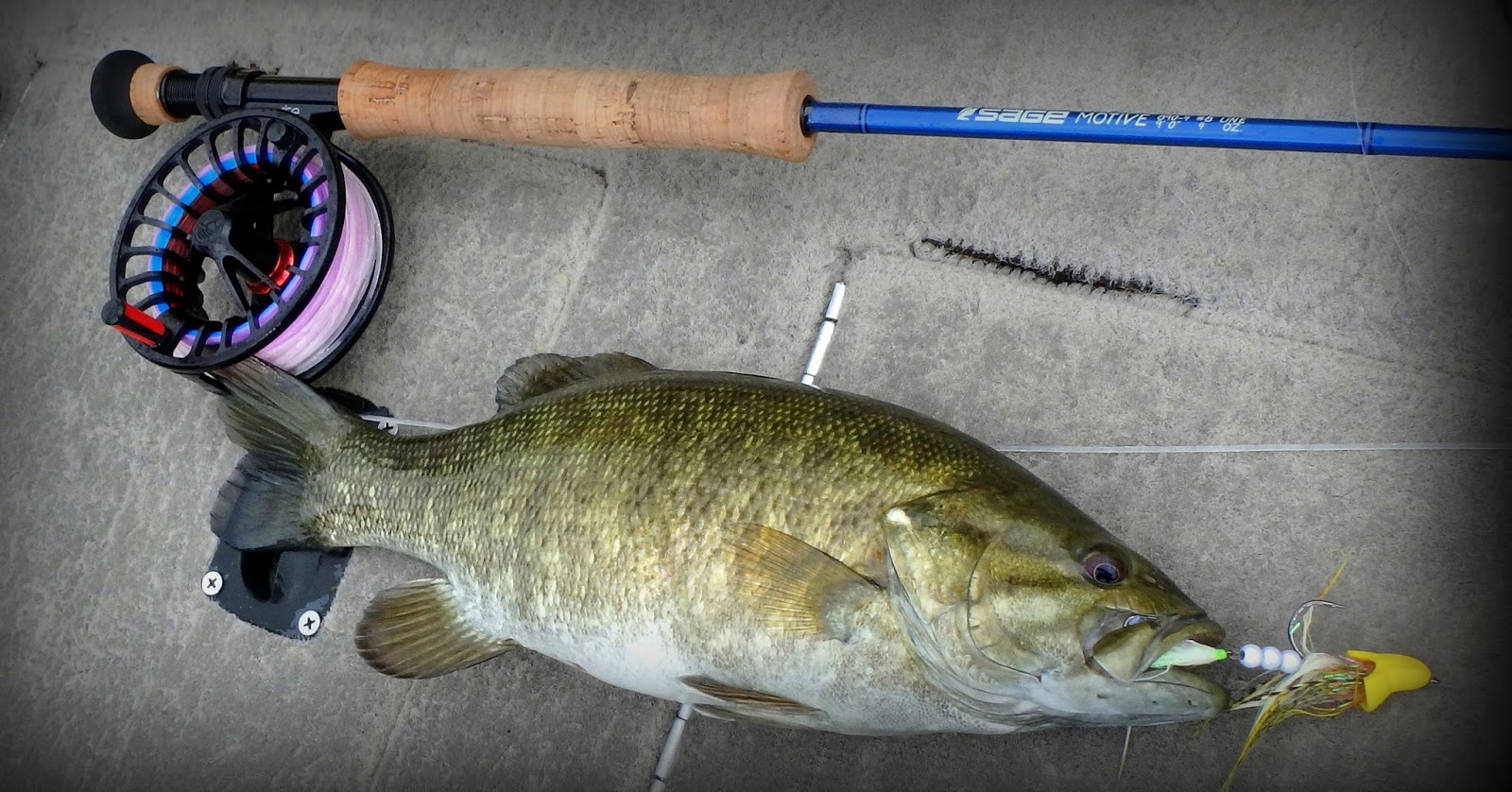
Sage Motive - USA Built Under $500

Booyah!


USA Built Under $500 - Article 1122017

This article series is intended to review Fly Fishing Rods and Reels under $500. The criteria for these reviews is that the actual product is tested in real world fishing conditions. They are not just wiggled in the showroom or cast in parking lot / show pond setting.

In doing some research I realized there are a few rods that demand our attention. They fit a budget, provide fish-able actions and are made in USA by top well known manufactures such as Sage, Scott and Winston. My goal is to fish a few of these rods and report what I find. In this article I will review the...

Sage Motive 890-4

Tamed with Motive
$450 (Scale Weight 3.8 oz) (Published Weight 4 oz)
There is no doubt this is a saltwater stick. Sage publishes this rod as Fast in their description and Medium-Fast in the rods features. I consider it fast. If you have the skills to extract the power it will surely prove its worthiness with tight loops on the salt flats. The Motive is a serious saltwater fly rod and should be treated as such.

I didn't get the opportunity to give this stick a workout on the salt flats but let me assure you I put it through some demanding fishing situations.

Mouth full of Swinging D
I fished this rod for Pike and Bass with both a S/A Wavelength Titan WF8F and a RIO Coastal Quickshooter WF8i fly lines. From my boat deck I was throwing fast tight loops with weighted Clousers and Swinging D's. I really liked the Motive with the intermediate Coastal Quickshooter and sub-surface flies. It's action allowed me good hook sets at a distance and also provided a lot of feedback through the grip which can be so critical to success while fishing blind sub-surface.

The Cool Blue Motive handles magnum short headed lines such as the RIO Outbound Shorts and the New RIO Coastal Quickshooter with relative ease. It performs with a little more line speed using tapers like RIO Bonefish and RIO Summer Redfish. In the right hands the Motive could certainly be a parking lot champion.

I wouldn't call the Motive easy to get in tune casting but I wouldn't call it difficult either. It rides tight on the middle ground providing good saltwater speed/power and yet retains intuitive fish-ability. It greatly reminds me of the Sage Xi2 of days past. We respected the Xi2 for its deep strong flats power while retaining enough feel that it could be mastered by many.

One of the great attributes the Motive has going for it is it can adapt to various types of fly lines giving an angler ability to adapt it for various situations. An example of this would be load it with a RIO Winter Redfish line which is short headed and extra weight in the front and the Motive will load easy and short which is so important for those Louisiana Big Bull Reds. Then switch to a RIO Bonefish Taper and and gain some line speed and distance for longer casts and softer presentations needed for Bahamas Bonefishing.

Feather Game Changers

Final Thoughts

Just a couple years ago we would have paid premium for a stick this good. It's a great combination of power and grace and looks incredible with the blue blank color and black accents. While it is a saltwater destined rod I believe the action can carry over well into freshwater fishing including big streamer and big topwater fishing.

When strong winds, double hauls, tight loops and sensitivity are all in a days fishing this is a stick that will get the job done. It's USA built, powerful, modern, includes a Sage Ballistic Nylon divided rod tube and Sage's lifetime warranty.


BassProGreg


Gorge Fly Shop Internet Sales Manager | Product Specialist


"Fly Fish the World with Us"


Read more of Greg's Post

Dec 26, 2016

Scott Tidal Fly Rods - USA Built Under $500

Boogle Bug Bassin'

USA Built Under $500 - Article 12262016
This article series is intended to review Fly Fishing Rods and Reels under $500. The criteria for these reviews is that the actual product is tested in real world fishing conditions. They are not just wiggled in the showroom or cast in parking lot / show pond setting.

In doing some research I realized there are a few rods that demand our attention. They fit a budget, provide fish-able actions and are made in USA by top well known manufactures such as Sage, Scott and Winston. My goal is to fish a few of these rods and report what I find. In this article I will review the...

Scott Tidal 890-4

$495 (Scale Weight 4.2 oz) (Weight not published)
Handcrafted in Montrose, Colorado
While designated a saltwater stick I found these rods to have tons of soul. I call the action mod-fast. Yes I know it is listed as "Fast" on Scott's website. Now before you go and correct me let me just say I tend to rate rod actions lower then what the industry considers them. You see for me I didn't learn on rod actions that require a nap between strokes. So what the industry today calls moderate (yawn) I personally find to be painfully slow. I consider a mod-fast action rod to load rather deep and provide quite a bit of feel but still respond with quite a bit of power. I feel a mod-fast action as "wait for it" but no time for a nap!

This statement describes the Scott Tidal. I had to slow my stroke a little and "wait for it" but it recovers strong and delivers the goods with authority. I feel this rod action is ideal for situations such as winter redfishing, bass bugging and large streamers. It loads progressively deep while providing the angler with ample feedback to adjust one's stroke to match the required cast. The same action is super friendly with a short cast so often associated with winter redfishing. I would consider the Tidal to be a great rod for less experienced casters but not at all disappointing to a seasoned parking lot champion.

Deer Hair & Toothy Critters
I could cast this rod all day and never tire and I did just that on a couple of occasions this past summer while throwing bass bugs from the deck of my boat. Eight or nine hours straight of non-stop power casting and I never tired. I favored the S/A Wavelength Titan WF8F line for the Tidal. This double bump line does further slow the Tidal down but the key to the combo was the Tidal's power found down deep in the rod blank. This rod/line combo was really easy and effective for turning big wind resistant bass bugs like the frog in the picture.

Is the Tidal a 100 foot tight loop pro casting stick? No! If that's what you want/need then get the Scott Meridian. The Tidal is a rod that will let you relax, breathe and take in the scenery and don't fret over making "the cast". Just reach for it and let it happen. It probably is a stick that fits more anglers than most anglers are willing to admit.

Feather Game Changers
Finished in the natural look Scott Fly Rods has become known for the Tidal includes a cordura rod tube and Scott's lifetime warranty.

A bit about line choices


For the upcoming 2017 year you are going to see many new articles from us on this subject of line choices. No longer is it as easy as just buying the weight line that matches the rod. Most lines today are bumped in size, some as much as 2 line sizes and I even know of one line that is bumped 3 sizes. It's not all a bad thing. Modern high modulus graphite rods work over a wider grain range than ever and we as anglers further push the limits of fly size that places greater demands from rods and lines.

I'll write more about this subject in the near future but for now I challenge you to try something. If you have a few rods and line choices in similar sizes I want you to take a 7 weight line and try it on an eight weight and vice versa. Or a 5 on a 6 weight or a 6 on a 5 weight. Whatever you have to test this out with. You might be amazed at the results. You might find a new personality in your favorite rod or you may find a love with a rod you previously couldn't connect with.

Ditch the Yarn...

Aluminum Tube
When it is necessary to parking lot / yard test fly rods I use actual flies that I would be fishing with. I use old half worn out flies and cut the hooks off. Make it as true as possible to the conditions you will be using the rod for. Most times casting yarn does not provide accurate results unless you're buying a rod for dry fly work.

1.23.2017 - Correction

I had indicated that the Scott Tidal Comes in a Cordura Rod Tube. That is incorrect. It Comes in a Aluminum Tube and Cloth Rod Sock.

Wrap it up! I'll take one!

Seriously, I'm adding an 890-4 Tidal to my boat quiver as a big fly bass/pike rod this year. The Tidal is a super fun easy rod. It has a ton of soul and also exhibits a ton of crossover. It can easy be tuned with different fly lines to match anglers casting preferences and fishing conditions. It's got the great qualities all Scott Fly Rods are known for including the lifetime warranty and hand built in the USA.

BassProGreg


Gorge Fly Shop Internet Sales Manager | Product Specialist


"Fly Fish the World with Us"


Read more of Greg's Post

May 12, 2016

Scientific Anglers Sonar Series Lines - 2016


Let me start this article with the one most important piece of knowledge you need to know...

All Scientific Anglers Premium Sinking fly lines from hover to full sink are now identified by the title Sonar. 

This includes hover, intermediate, sink tip or full sinking lines. So if your looking for your old Streamer Express, they're here, looking for your Lake Line, they're here too. New in the Sonar Series is a whole lineup of powerful Titan Taper Textured sinking lines. These new Titan's are already having a huge impact in the sinking line game.

Sonar Titan


The sinking Titans have arrived!
Several options here that I want to spend some time on. First understand that all Sonar Titan lines have the Mastery Textured surface. This alone clearly separates them from the other Sonar Series lines which have a smooth surface. Personally I think the next 3 lines I describe have a significant place in the future of sinking lines due to the popular taper design and the benefit of the textured surface.


Sonar Titan Clear Tip
Think powerful clear streamer tip!
Sonar Titan Clear Tip is a weight bumped, powerful taper for easy turnover of big flies, three color for easy length determination, textured for easy pick up and long distance shooting ability and formulated to suit most temperate environments.

Sonar Titan Intermediate
Many Streamer Anglers are discovering the benefit of going all in with full intermediate lines. Getting the running line under the surface improves your connection to the fly and allows for truer swimming action of streamers.

Sonar Titan Int/Sink 3/Sink 5
Triple Density Sinking fly line?! I am already hearing major buzz following this line. It starts with an intermediate running line section that seamlessly transforms into a type 3 sinking mid section that flows into a type 5 sinking Titan tapered head. Triple Density, full sinking, powerful Titan taper, braided core, made for temperate environments and textured for reduced friction allowing for easier pickups and longer cast. Streamer anglers even if you're not a textured line fan you might ought pay attention to this one. We could easily be looking at a game changer!
Triple Density

Non-Textured Sonar Lines

Sonar Sink 25 Cold - replaces Mastery Wet Tip Express
A 25' extra fast sinking tip with floating running line. The running line incorporates a large diameter handling section for better mending and line control. With a braided multi-filament core and Shooting Technology Plus the Sonar Sink 25 provides an excellent low tangle design which increases shooting distance. An excellent streamer line for trout. Measured in grains and formulated for cold-water.

Sonar Sink 30 Warm and Sonar Sink 30 Clear Tip - replaces Mastery Streamer Express
Two version of this popular sinking line. First the Sink 30 Clear is a 30 foot clear intermediate tip with a colored intermediate running line. The Sink 30 Warm is a fast sinking 30' tip with a colored intermediate running line. Formulated for warmer climates and ideal for big streamer fishing. Both lines feature different colors in running lines between various sizes to make identification easy. Sink 30 Warm uses a braided multi-filament core to aid in better sinking and strike detection while the Sink 30 Clear uses a Mono-filament core for clear tip stealth.

Sonar Sink Tip
Sonar Sink Tip
Exactly as the names implies. Sinking Tip, Floating body and comes in 3 different sinking densities, Type 3, Type 4 and Type 5. On this Sonar Series line actual sink tip length increases with line size. It makes sense to me that length of tip would be dictated by rod weight. The bigger more powerful rod can handle more sinking tip and larger flies. The benefit to the angler is you can now set up multi rods to better handle different fishing situations and remain with comfortable casting conditions.

Editors note: 

Too often I see anglers use the biggest sinking tip line they can get on smaller weight rods. We tend to always assume that we match our rods to our quarry. An approach that I have found that works better for me is to match my rod to the type of line and size of fly I wish to fish. An example is I will use up to an 8 weight rod for bass fishing. Most anglers I talk to think 8 weight is too big for bass angling but what an 8 weight can do for me is allow me to fish bigger flies and/or sinking tip lines all the while making casting much easier and less tiring and allowing me to reach further distances to provide more opportunity. Sure if a particular fisheries average size is 12" than an 8 weight is certainly overkill but in that type of fishery I am probably not going to be fishing as large of a fly or have the need to get down as deep. It's something to think about when choosing a rod for a particular species, also consider fly size, fly weight. fly wind resistance and type of line needed.

Sonar Specialty Lines

Sonar Titan Big Water Taper (Slow Sink and Max Sink versions) - This big water Textured line is created to be the strongest of its kind. With a 100lb tropical formulated monofilament core and the strong turnover power of Titan taper the Big Water is designed for species such as Giant Trevally, Arapaima and all Blue Water species. Two formats, Slow Sink and Max Sink

Sonar Saltwater Intermediate - Clear head for stealthy presentations

Sonar Stillwater - Full clear intermediate sink line ideal for lake angling

Sonar Hover (Freshwater and Saltwater versions) - When you just want to get your line under the surface chop. Both versions are built with hover tips and floating running lines.

Sonar Uniform Sink - A graduated sinking line to get a straighter connection to your fly designed for lake and stillwater applications

Sonar Custom Tip - Lets and angler customize a heaving sinking tip line to their own personal needs.


A lot of changes with Scientific Anglers for 2016 and while many changes also bring some confusion I can easily say after learning all the changes, today's Scientific Anglers is much easier to understand and has much more to offer. S/A has always built high quality durable fly fishing lines and continues this tradition and commitment into the future.

Please don't hesitate to shoot us an email or give us a call with fly line questions. Remember this, the right fly line matched to your rod will bring out it's best qualities! The wrong line on the best rod will make you question your ability as a fly angler.

BassProGreg
Gorge Fly Shop Internet Sales Manager | Product Specialist


"Fly Fish the World with Us"


Jun 30, 2015

Fishing in the U.P.

Carp'n on the Flats of Lake Michigan

Although my trip was centered around smallmouth bass on the fly, when in Rome, (Michigan) one must spend some quality time pursuing freshwater bonefish, (Carp).

Back to Bassin'

If you know anything about me you know I chase Bass! I've spent half a lifetime pursuing these freshwater pugnacious species in any body of water from farm ponds to great lakes, from creeks to rivers and every puddle in between. It's in my blood and I make no apologies for it!

In the last few years while living in trout country I've slowly slipped away from the bronze family. Trout angling has been good for me. It has broadened my skills and allowed me to build a solid respect for the coldwater species.

On a cold winter day while sifting through the hundreds of Columbia River bass photos obtained throughout the years of guiding and fishing the big water an overwhelming need to get back to the bronze kind had finally surfaced. I felt this day coming long ago. It was just a matter of time until the right opportunity surfaced.

Good Company, Good Times
I found that opportunity in an email. Schultz Outfitters' newsletter hit my inbox and while scanning the highlights there it was, the SO annual Upper Peninsula (U.P.)  Smallmouth trip and by the time I called Schultzy there was one spot remaining. You know that spot was meant for me!

I've always wanted to fish in the U.P. I don't know why I never did. I've fished all around it into Ontario and the great lakes but for some reason the U.P. was never a destination. I think the reason is, in that region, there is so much water that it takes a lifetime to explore.


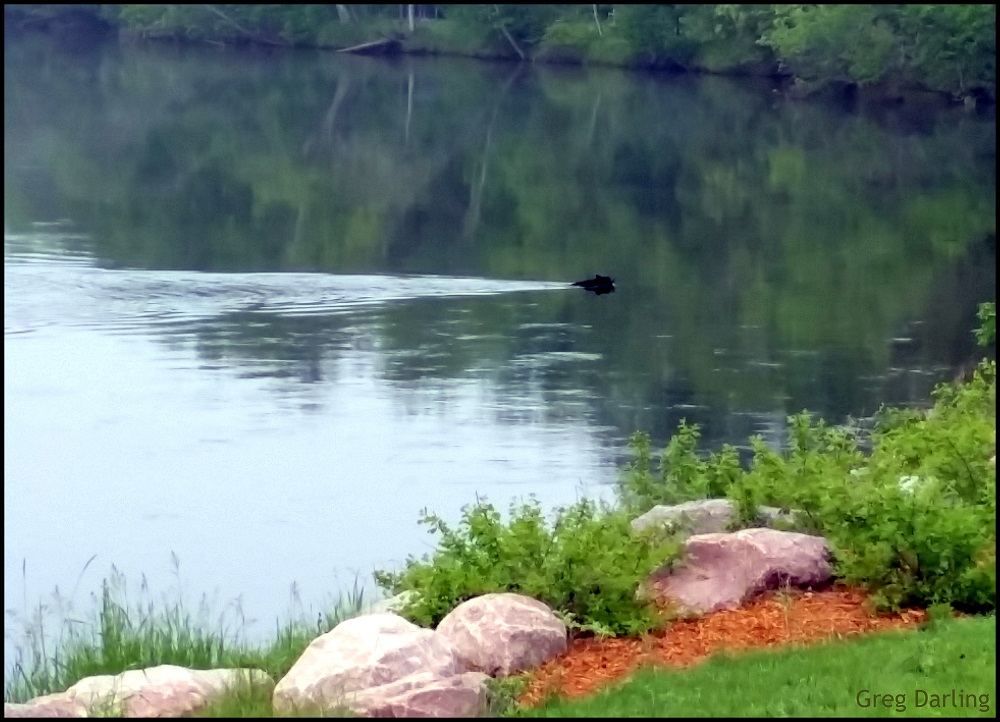
The trip was everything you look for in a group event. Great fishing, scenery, lodging, guides, friends and food. Plenty of everything and best of all plenty of smallmouth. Early one morning I watched a black bear swim across the river right outside the lodge that overlooks the river. Plenty of wildlife and of course plenty of mosquitoes too! Bring your deet!

Like Topwater?

About 99% of the fishing is topwater divers, poppers and assorted foam bugs fished from drift boats with non stop casting to every undercut, tree root, boulder and grass line looking for that classic bass attack. I've got to tell you there is nothing that stirs the adrenaline like watching the water move when your bug hits the surface.

No shortage of quality fish

Equipment

20" Brute

James Cook  20" Smallie
My Sage Bass II Series of rods did the bulk of the work for me. The Largemouth size handles the big hair bugs with ease and the shorter length really helps the accuracy of putting those big bugs under the trees. My Smallmouth size was pure magic with the popping bugs and foam critters. I also used a Sage Method 890-4 for some of the subsurface minnow work. This rod can really deliver the distance. Reels are not a huge deal in this game. Once hooked up you need to be concerned with pulling the fish away from entanglement and not worry about getting it on the reel. The line of choice throughout the group is the S/A Mastery Textured Titan Taper. The Titan has a powerful head for big bug delivery and also has a long rear taper to make easy work of picking up a lot of line for a the next cast. To explain better, most presentations involve hitting a target and after settling, making 1-2 moves before recasting to a new spot. The long taper of this line all but eliminates the need to strip back to a casting point common with short head lines.


The fish here are quality. Sure you could find more trophies in the big lakes but they couldn't match the experience of these river dwellers. A 20" or over here will get strong recognition. I was fortunate to catch one of the two caught this week. Too many to count 19's" came to hand and I didn't hear a single complaint about too many dinks.

About that Carp photo at the start of this article...

Release!
As if a great week of smallie fishing with a great crew of anglers and guides in a great lodge with great food and drink and yada, yada, yada wasn't enough...the next stop just a couple hours away is the flats of lake Michigan. I've always wanted to wade in this great lake and hunt these submarine size monsters. It was everything I'd ever dreamed about. The first thing I kept marveling over is the fact that I am wading in Lake Michigan with miles of flats one can walk with crystal clear water all around. Next was learning to spot the fish which is in fact the easy part. Just look for giant dark shadows that are moving. Bring out your best cast, these critters are smart. I had many refusals before I played it cool enough to have one commit. Be sure to have a good disc drag reel. My old Nautilus FW (which I can proudly say has caught more fish than most fly reels will ever see) was just fine for the bass we were hauling in but I was a bit concerned when I locked the drag down as tight as it would go and this fish was still running deep into backing until I only had maybe 20 yards to spare when I finally got it to turn. It is my advice that if you find yourself in the great lakes region don't pass up this opportunity and if you have it penciled in on your bucket list go ahead and ink it. You won't be disappointed.

A Giant THANK YOU goes out to my friends out Schultz Outfitters. These guys eat sleep and live all the great fly fishing in this area of the country. Also want to thank the guides from Tight Lines Fly Fishing Company. These guys know their water, know their fish and work hard to ensure you a great day of fishing. And a special Thanks to Schultzy for sharing a little bit of his Great Lakes carp wisdom.

This trip won't be forgotten anytime soon and I hope to have the opportunity to do it again.


BassProGreg


Gorge Fly Shop Internet Sales Manager | Product Specialist

Review: Sage Bass II Series Rods


Oct 22, 2014

Winston MicroSpey takes on the Mighty Missouri

As we drive up I-15 through Idaho on our way to Montana it's clear that fall has arrived in these parts of the country. Leaves are turning, the days are growing short and fall smell is in the air. We are on our way to conjoin the Missouri River equipped with the new Winston Boron BIII TH-MS (MicroSpey).

Montana: Missouri River - Fly Fishing
Big Water, Big Sky

I booked this trip way back in January. Little did I know I would have a brand new Trout two hander in my possession. You see on this very river just a year ago I landed my first two hand caught trout swinging a pair of soft hackle flies. From that point forward only one thing was certain about my future of trout fishing. It would be with a Two Hand Rod!

The package arrived about a week before the trip. I didn't even get a chance to go hit water for some line tuning. I just went with my gut and gave myself a plan B if needed. The Winston MicroSpey comes in 3 sizes, 3106-4, 4110-4 and 5116-4. My new rod is the 4110-4

There is a way different vibe at Winston and I like it!


From my first cast I knew something was very different about this rod. A little slower than what I was use to so I had to take some casting time to make some adjustments in my stroke. Once I tuned in to the action a feeling of harmony came over me. 
On the Swing

The MicroSpey has a compact lightweight feel much more like a good single hand rod. I think the compact feel comes from the grip. The grip on this rod keeps your casting box in a tight formation. It's so lightweight in hand and balances beautifully. 

Montana: Missouri River - Fly Fishing - Wild Life
I believe that is a Golden Eagle Not sure...I know fish better than birds!

The Boron Responds

For the past year I have been fishing the Sage ONE 4116-4. The Rio Scandi Short has been a perfect marriage with this rod. The faster tip of the ONE really favors this line. I like this line because it gives me the versatility to make a variety of spey casts and also performs overhead and roll casts to perfection. I feel that these casts are an important element to the trout two hand angler for versatility.

For the purpose of comparison and fish-ability I lined the MicroSpey with this Rio line. While I knew the MicroSpey has a slower action what I didn't expect was how the Boron in the butt section would load and respond with such authority. Casts were effortless and as I fine tuned into a relaxed stroke I found myself overcasting my targets. I should also mention that when I say "tuning into the relaxed stoke", doing so took about half dozen casts. The MicroSpey (like its single hand and full size spey siblings) are remarkably intuitive!

Montana: Missouri River - Greg Darling - MicroSpey
So Sweeet!

Battle for lines

For lines I fished a Rio Scandi Short VersiTip in the 320 Grain. That grain weight is nearing the top end of the suggested grain weight window for this rod. I usually like to feel a rod load deep so being at the top end of the scale comes as no surprise to me. I fished this set up with a Lamson Litespeed #3, a Rio ConnectCore 0.026 Shooting line. For soft hackle fishing I used the intermediate and type 3 tips and for streamer fishing I used the type 3 or type 6 tips. If there was one thing I could change with the Rio Scandi Short is I would like to see it fully integrated into a shooting line. Often times I find myself stripping a streamer inside the head loop and this gets really annoying dragging the loop back and forth through the guides. This is not a problem when I'm flat out swinging flies but I want to refer back to versatility. Today's two hand rods are so versatile and the only holding them back is lines.

The race for great switch lines is on and great progress is being made. I want to be quite clear that there will never be one perfect line to do everything. Example; My Rio Scandi Short VersiTip does a lot of things really good but it has a limit to fly size and sink tip size. Bigger and deeper is better suited for a skagit type of line. Nymph/Indicator fisherman could be looking at the best new rod ever for these techniques but you will need to line it out with a indicator line that has a heavy head to casts the cargo and a long rear taper to make the mends

Winston Boron III MicroSpey Specifications -
Line(Grain Window)LengthTop GripBottom GripWeight (oz)
3wt.(190-270 grains)10'6"11"3'6"4
4wt.(240-330 grains)11'11"3'6"4 5/8
5wt.(300-390 grains)11'6"11"3'6"5

New lines are expected soon from Airflo. Winston Ambassador Tom Larimer worked closely with Airflo to produce lines specifically for the MicroSpey and should breath some new life into your existing switch rods. Airflo Switch Streamer and Airflo Switch Float. Both Airflo lines will feature fully integrated running lines and are designed to be used with polyleaders and T-Series sink tip material.

Montana: Missouri River - Fly Fishing with MicroSpey - Greg Darling
Bobo!

I get the most satisfaction from new discovery. Discovery comes in many different forms. This stretch of the Missouri river is heavily fished every day for about 9 months of the year. Most are dry fly, indicator or streamer fishing and much of that is done from drift boat. If feels very different to me when I’m swinging flies and wading in a stretch of water others have ignored. I feel like I am presenting something new. The fish respond and I am rewarded with good catches. There are many fishermen on the river but none are doing what I’m doing. While I certainly did not discover the latest greatest new fishery I have in fact still made a discovery.

My conclusion is simple. I'm taking the MicroSpey on tour this year. Rainbows, Browns, Bass, Walleye and anything that swims in front of my fly beware! I have a new tool and I can't remember when I have been this excited!


BassProGreg - Greg Darling - Gorge Fly Shop
Catch the story of my first Trout on the Swing in - 
Rio Fishing Trip - Missouri River, Montana


Gorge Fly Shop Internet Sales Manager | Product Specialist


"Fly Fish the World with Us"


Visit our Relaunched Steelhead Only Site

Shop Gorge Fly Shop & SteelheadBum.com

  © 'and' Steelhead.com Mike Prine 2009-2014

Back to TOP