Showing posts with label rio spey lines. Show all posts

Nov 14, 2025

Charlie’s Gift Guide: 5 Picks I Actually Fish (2025/2026)

These aren’t catalog blurbs—I’ve fished or lived in this gear. If you’re shopping for someone who swings flies, hikes banks, or sneaks trout after work, start here. — Charlie

1) Winston AIR 2 TH (Spey Rods)

“Spectacular feel, feather-light, huge range”

“Winston has been knocking it out of the park the last few years. They have the best lineup of rods they've ever built, and the addition of Air 2 TH is a HUGE cherry on top. I've had the pleasure of fishing these rods a ton this fall and they are absolutely spectacular! Ultralight with unparalleled hand-to-line feel. Slim grips. Great size run to cover everything from smaller one salt steelhead on up to chinook. This may very well end up being one of the best series of Spey rods ever built.”

Why it’s gift-worthy:

  • Modern Winston feel with true two-hand finesse.

  • Sizes to cover summer steelhead up to Chinook.

  • Light swing weight = less fatigue, more fishing.

Who it’s for: Spey anglers who appreciate feel and feedback (not broomsticks).

Charlie’s quick tip: Match with a balanced Scandi for summer, Skagit + T-11/T-14 for winter.


2) Grundéns Boundary Zip Stockingfoot Waders 

“Articulate better than anything”

“I've been running these waders hard for a few years now and love 'em! I'm not a Deschutes wet wader as I like something protecting my legs out in the ledges and walking through the blackberries. These waders manage to keep me as cool as possible in the summer heat. Plus, they articulate better than anything on the market making climbing out of boats and over logs a breeze.”

Why it’s gift-worthy:

  • Front zip = easy on/off and quick ‘nature break’.

  • Great articulation for step-overs and steep banks.

  • Cool enough for summer, tough enough for brush.

Who it’s for: Boat hoppers, bank scramblers, and anyone who values a zip front.

Charlie’s quick tip: Size for girth/boot first; length is forgiving.


Purchase Now


3) Fishpond Thunderhead Chest Pack (Eco Shale) 

“Finally the right size”

“Sometimes you need something small to carry the bare essentials. Historically speaking, I've had a love/hate relationship with chest packs. They were either too small to hold anything or so big they're always in the way. The Thunderhead Chest Pack is the ideal size to carry what you need yet stay out of the way when casting. This is a great option on the flats when you jump out of a boat to wade a spot for an hour or two and want to have enough spare flies and terminal tackle. Also good for all types of road fishing when your rig is never too far away.”

Why it’s gift-worthy:

  • Submersible main pocket keeps essentials dry.

  • Minimal bulk; still fits a couple boxes + leaders.

  • Crosses over from trout to flats.

Who it’s for: Wade-light anglers and travel/road-fishing folks.

Charlie’s quick tip: Add Fishpond’s bottle holder or rod holder to the lash points for a tidy kit.


Purchase Now


4) Scientific Anglers Amplitude Smooth Infinity 

“My personal favorite”

“You can't keep a good line down! S.A.'s Amplitude Smooth Infinity is right at the top of the list for the best all-around trout line and happens to be my personal favorite. A shiny new line always makes the angler in your life smile!”

Why it’s gift-worthy:

  • Half-size heavy taper loads fast, carries long.

  • Real “one line does most things” for trout.

  • New line = instant rod upgrade.

Who it’s for: Any trout angler with a 4–6 wt who fishes a bit of everything.

Charlie’s quick tip: Pair with a 9–12 ft 4X–6X leader; wipe the line clean every few trips for max slickness.


Purchase Now


5) RIO Elite Skagit Pickpocket 

“Slow that swing to a crawl”

“I love these heads for winter Steelhead. At 20', they cast very well on shorter rods and really slow your swing down to a crawl. And do not be afraid of the Sink 3/Sink 5/Sink 7 dredger. When you really need to get down and stay down, this head does the job. It casts surprisingly well for how heavy it is.....just don't let your anchor settle too long before you go!”

Why it’s gift-worthy:

  • Compact 20' head = easy load on modern, shorter speys.

  • Multi-density options keep flies down and in the lane.

  • Winter steelhead confidence booster.

Who it’s for: Two-hand anglers facing cold flows, ledges, and pushy seams.

Charlie’s quick tip: Don’t let the anchor marinate—lift and go; start with 10' T-11 and adjust.


Purchase Now


Need sizing or line pairing?

Call us at (541) 386-6977 or email—tell us the rod, water, and flies, and we’ll rig it right. We can even spool backing/line and ship ready to fish! 


https://www.gorgeflyshop.com/store/pc/Sale-Closeouts-c38.htm

"The Gorge"

Gorge Fly Shop Team - 541.386.6977


"Fly Fish the World with Us"

Aug 13, 2025

Fall 2025 Launch - New From RIO Products


Our friends at RIO Products have some exciting new gear that just launched!  Here's the rundown of the new products available 8/12/25.  

Elite Scandi Body


RIO's original Scandi Body has a long-standing cult following among Spey enthusiasts.  It was particularly unique in that you could fish it on a shorter rod with a shorter 10' leader or light tip or add a longer tip to fish it on a longer rod.  This still holds true in the new Elite Series Scandi Body, but they made a few distinct changes.  This series comes with the current core and coating tech found in other Elite Series lines.  From a fishing perspective, the head length now varies more with the corresponding grain weight.  The heavier versions are a bit longer to better accommodate commonly used Spey rods in 8-10 weight.  

Elite Scandi MDC Kit


These kits are replacing the Scandi Short Versitip and Scandi Versitip.  Kit includes an Elite Scandi Body shooting head, spool of RIO Slickshooter, four new MDC Sink Tips and a Sink Tip Wallet.  This system allows anglers to cover most depths with small-medium sized flies.  With a short and longer offering, the RIO Elite Scandi MDC Kit has all bases covered for Spey rods of any length imaginable.  

Ambassador Series - Skagit Timberline
The RIO Ambassador Series Gray Struznik Skagit Timberline is an 18-foot shooting head that brings effortless performance to your coastal steelhead program. The compact design makes shorter two-handed rods sing when casting space is limited. Because of its heavily rear-loaded and progressively tapering design, it easily handles the heaviest T-tips, while still delivering a full range of marabous and modern steelhead flies with controlled loop precision.

MDC Versitip


The VersiTip gets an upgrade for 2025.  This Alaska favorite now comes with the tech advantages of the Elite Series core and coating.  Similar to RIO's other line kits, the RIO Elite MDC VersiTip Fly Line comes with the line, four new MDC Sink Tips and a Leader Wallet.  

MDC Sink Tips


After all this "MDC" talk, what the heck does "MDC" mean!?  It stands for Multi-Density Control.  Beyond the full floater tip, all other tips in this series are dual or triple density with the terminal end being the most dense.  The idea here is to facilitate positive turnover and hold your fly at depth.  The MDC Sink Tips are available in 12' 75, 90 and 100 grain and in 18' 130 and 150 grains.  

Classic Sink Tip


By the popular demand of B.C. anglers in particular, RIO launched this new line of 15 footers in the Classic Sink Tips Series.  Available in five different densities at 95, 110 and 125 grains, these tips will be right at home on any big river with gravel bar runs.  

Micro Leader Material


Euro Nymphers rejoice!  There's a new leader material!  RIO's Micro Leader Material is made of a unique nylon polymer that knots easily and firmly and is also incredibly sensitive.  Available in brown, pink and white to allow for endless customization of tight-line leaders.    


https://www.gorgeflyshop.com/store/pc/Sale-Closeouts-c38.htm

"The Gorge"

Gorge Fly Shop Team - 541.386.6977


"Fly Fish the World with Us"

Dec 14, 2024

BUYER'S GUIDE to MODERN SKAGIT HEADS:

Introduced in 2024, RIO'S Multi-Density Skagit Pickpocket. (photo by Callum Brock)
"Skagit lines were born out of necessity. In the late 90's, a few elite Northwest anglers realized the effectiveness or presenting very large flies on heavy sink tips for steelhead." - Tom Larimer, Hatch Magazines "Skagit Heads Explained" Jan 12th, 2015.
Reflecting on how far Skagit casting and the designs of Skagit lines has come, I immediately think of those who helped start it all.  Skagit guru's such as: Ed Ward, Mike McCune, Scott O'Donnell, Scott Howell, Jerry French, George Cook, Tom Larimer, to name a few.

Through their innovative thinking, they've literally changed the way folks approach steelhead and salmon fly fishing today with a two handed rod.  How popular has it become? So much so, that it dominates shop conversations with customers and it's the go to technique on the banks of favorite steelhead and salmon rivers everywhere.  I can honestly say that I rarely have a conversation with a customer who is seeking single hand fly rod advice for steelhead or salmon anymore.

I also rarely ever see someone fishing a single handed fly rod for steelhead or salmon anymore with the exception of nymph fishing, particularly when wade fishing.  Most folks fishing indicators and nymphs, especially from a boat, will fish the pocket water in-between the swing runs.  Even in the trout fly fishing world we are seeing more and more folks fishing with two handed "Trout Spey" rods and for good reason.  With this popularity, the demand for shorter compact Skagit heads has grown.  

I also reflect to the first time I saw a fly fisherman fishing a two handed spey rod on my home river.  He was waist deep in the run using a 15' 9 or10wt rod, beautifully and smoothly casting it across the entire run with little to no effort.  He knew what he was doing.  As I approached him in my drift boat, curiously, I asked what rod he was using.  He was gracious enough to spend a short time giving me the low down, the rod and the technique even though I was interrupting his groove.  It's been long enough that I don't remember the details of his rod and all, but I do remember the length of the rod and the line he was using.  He even let me hold the rod for reference.  It was long, heavy, and to me, awkward to say the least.  I'd never held a two handed spey rod before.

Being honest, I thought he was out of his mind crazy for using such a massive, heavy rod for a mere 6 to 12 pound steelhead.  To me it was way overkill and I thought to myself ..."you'll never catch me fishing with one of these for the average steelhead we catch around here."  In addition to that, the length of rod and the line he was using, a long belly line, severely restricted the water he could fish.  The amount of space he needed to create the "D" loop and cast that long rod with the long belly line was significant.

On the other hand, he was literally fishing the entire run and reaching water that a single hand fly rod fisherman simply couldn't reach.  You would never use that rod in a tight quarters situation.  Well, how the times have changed and here we are. Today, I can nearly fish anywhere with a two handed rod. Shorter lighter rods paired with shorter heads allow us to fish even the tightest of spots.  Basically, it's the way I fish 99.9% of the time now for steelhead and more and more for trout with today's "Trout Spey" rods.

MODERN SKAGIT HEADS:

Modern Skagit heads of today are more specialized and versatile than ever.  Like an assortment of golf clubs in your bag, so is the assortment of Skagit heads that I carry in my gear bag.  Every Spey or Switch rod that I own, has it's own labeled gallon sized Ziploc bag or head wallet that will hold all the different heads for that particular rod.  I will carry this Ziploc bag or wallet in the chest of my waders and this allows me to change heads in a few of minutes and be back to fishing. It's awesome!  What's more awesome is that an assortment of Skagit heads for any given rod allows me to fish runs more effectively than ever before.
Full Length Floating Skagit Heads:  SA Skagit, Airflo Driver,
RIO Elite Skagit Max Launch.

FULL LENGTH FULL FLOATERS:

Back when Skagit heads were being introduced , traditionally they were about 22' to 26' depending on their grain weight.  Today they have become a bit shorter and now average 23' to 25' in length.  

Links to the most popular full length Skagit Floating heads (not necessarily in order):


Short Floating Skagit Heads:  Airflo Skagit Scout, RIO Elite Skagit Max Power,
SA Skagit Short, OPST Commando

SHORT FULL FLOATERS:

With the development of "Switch" rods (basically anything 12' or less) came the need for shorter Skagit heads In addition to the traditional Skagit Heads, when the first "Switch" or "Short Skagit" heads were developed, they had an average length of 19'6" to 20'6" in length. Today these "Short" Skagit heads are as short as 12' like the ever popular OPST Commando 150 grain, head and typically are no longer than 20'.

These Shorter Skagit heads are ideal for shorter single hand or two handed switch rods.  That doesn't mean you can use them on a longer 13' or 13'6" rod because you can.  You just have to be careful when fishing a shorter head on a longer rod because the opportunity to blow your anchor increases if you don't slow your stroke down and chill a bit.

Links to the most popular SHORT Skagit Floating heads (not necessarily in order):


INTERMEDIATE SKAGIT:

The first Intermediate Skagit Heads, that I know of, were created by Tom Larimer and Steve Rajeff out of the idea of having a Skagit head that could get below surface currents and slow the swing way down.  To this day, I still use the Skagit Compact Intermediate heads that I got when they first came out. They have since been discontinued, paving the way for the newer Airflo Skagit F.I.S.T. heads.
"A few years ago, I came up with the idea of building an intermediate sinking Skagit head after fishing with my old guide friends in the Great Lakes. Because of the complex surface currents in some of the larger "Third Coast" rivers, a traditional floating Skagit would get surfed around, not allowing for a smooth swing. In addition to tricky currents, Great Lakes rivers can be extremely cold from late October through February -- prime time for swinging flies. A slow, deep swing is often necessary to coax a steelhead to the fly. Airflo distributor Tim Rajeff and I developed a number of prototypes that my Midwest friends helped us test and which eventually became the Airflo Skagit Compact Intermediate." - Tom Larimer, from Hatch Magazines "Skagit Heads Explained" Jan 12th, 2015
That first Skagit Compact Int. head I used, was and still is, a staple for me when it comes to those runs where I just can't get the swing right.  It truly does get you below the conflicting surface currents and slows your swing down considerably.  You can really feel the connection to the fly.  These original Skagit Compact Int. heads are no longer available since they have been discontinued.

Today, most Skagit sinking heads have graduated from just an intermediate to now what is called 
Multi-Density which basically means there is a seamless blend of three different densities ensuring a smooth transition of energy while turning over level or tapered sinking tips all the while giving you great control for depth during your swing.  It's a beautiful thing!

MULTI DENSITY:

There has been a generous amount of time dedicated to taking that idea and making it even better with now the Multi-Density heads.  Because of that, I would say this area of Skagit heads has had the most development in recent years.  Now with all thee different Skagit heads, it seems like things are getting more confusing and difficult to choose from, BUT, how sweet is the versatility to pretty much fish any run you come across with confidence in knowing that you fished it well.  

Airflo Skagit Compact F.I.S.T. 450-720gr:
20.5' to 23.5' depending on grain weight.
  • F/I/S.T - Floating, Intermediate, Sink 3ips Tip

RIO Elite Gamechanger Body, 400-725gr  - 23' to 25' depending on grain weight:
  • F/H/I - Floating, Hover, Intermediate
  • F/I/S3 - Floating, Intermediate, Sink 3ips
  • F/S3/S5 - Floating, Sink 3ips, Sink 5ips
  • I/S2/S3 - Intermediate, Sink 2ips, Sink 3ips
  • S3/S5/S7 - Sink 3ips, Sink 5ips, Sink 7ips

RIO Elite Skagit Pickpocket, 475-600gr - Short Skagit head 20' no matter the grain weight:
  • F/I/S3 - Floating, Intermediate, Sink 3ips
  • S3/S5/S7 - Sink 3ips, Sink 5ips, Sink 7ips

FINAL THOUGHTS:

Generally speaking, the Skagit head that I choose to use can be determined by the length of the rod I'm using, but absolutely not limited to it.  In other words for example, if I were to fish a 13'6" 8wt rod, I normally would go for a full length Skagit head. The length of the rod accommodates the length of the skagit head very well.  Conversely, if I were to fish an 11' 7wt, I would most often choose a shorter Skagit head, which accommodates the shorter lengths of these rods.  If I were to fish with a 9' 7wt single handed rod, I would most likely go for a really short skagit such as the OPST Commando heads.

That being said, this doesn't mean I can't use a Commando head on a 13' rod, I know folks that do it and it works very well for them.  They are accomplished casters and understand that the shorter your head is the more compact your casting stroke should be.  So, visualize a 13' or even a 13'6" with a very short skagit head of 400gr which is only 16.5' long, you could see how your casting stroke would need to be very tight and pretty slow to prevent blowing the anchor.

To be less confusing when matching a Skagit Head to your rod (generally speaking):
  • On rods greater than 12'6"- I typically would fish the full length Skagit heads. (i.e...Skagit Driver, Skagit Max Launch)
  • On rods 12'6" to 11' - I will use the shorter Skagit heads. (i.e...Skagit Scout, Skagit Max Power)
  • On rods 11'6" or less - Short Skagit heads like listed above or the even shorter Skagit heads like the OPST Commando heads work really well.
Technique Tip: While fishing with sinking Skagit Heads when you come to the end of your swing and are in the "hang down" phase, you will want to perform a roll cast directly down stream to free the tension of your sinking Skagit head and the sinktip from the water.  Once the roll cast is complete you can then go into your next cast.  This roll cast brings your sinking Skagit and sink tip to the surface and releases the tension so your next cast can effortlessly be made.  If you don't perform the roll cast first before going into the next cast, the tension of the sinking Skagit head and the sink tip will cause you to use way more effort to complete your next cast.  At the end of the day you will be tired.  I have had numerous conversations with customers who have experienced this and state that they hate the line.  They love how it fishes but hate how it casts.  Once they realize the roll cast is needed, all is good again.

Thanks for reading.

GFS Team
John G.


https://www.gorgeflyshop.com/store/pc/Sale-Closeouts-c38.htm

"The Gorge"

Gorge Fly Shop Team - 541.386.6977


"Fly Fish the World with Us"

Feb 1, 2024

New Spey Line Kits Offered by Gorge Fly Shop


So you got a new spey rod and it's now time to put lines on it. It won't take much searching to realize some solid advice could save you hundreds of dollars not to mention the hassles of finding out the lines your buddy suggested to you don't work well with your new rod. 

To save everyone a bunch of headaches we pre-assembled these RIO Spey Line Kits to help get you going in the right direction. Everything assembled is tested and proven by our staff. These are solid choices. 

Our kits are designed to get you into a scandi type dry line game as well as skagit sink tip game. No matter what conditions you encounter you can be sure to have the basics of what you need to find success. 


https://www.gorgeflyshop.com/store/pc/Sale-Closeouts-c38.htm

"The Gorge"

Gorge Fly Shop Team - 541.386.6977


"Fly Fish the World with Us"

Dec 27, 2023

Rio Skagit Max Gamechanger - Get your fly in front of the fish


Whether you’re looking to scrape up another late summer steelhead, or on the hunt for the first winter, slowing down your swing becomes increasingly important as the water cools. Rio’s Skagit Max Gamechanger heads are some of our favorite tools for swinging in cold water. Available in three different multi-density configurations,  the Gamechangers get your fly down and slow the swing to a crawl. 

https://www.gorgeflyshop.com/store/pc/Sale-Closeouts-c38.htm

"The Gorge"

Gorge Fly Shop Team - 541.386.6977


"Fly Fish the World with Us"
Aug 29, 2023

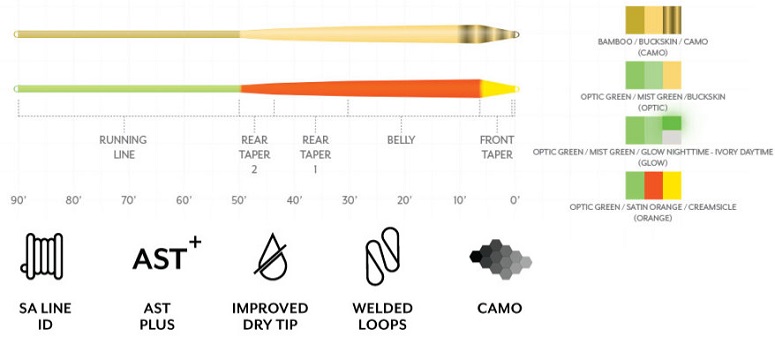
RIO Elite Scandi Launch - NEW for 2023


The Scandi Launch is an all new series of high performance shooting heads designed to maximize the fun of fishing small flies on floating lines. Each size has been meticulously tuned for two criteria. First, a unique series of steps in the taper concentrates weight at the back of the head, putting more weight in the D loop and making it easy to load the rod. Second, the front taper and tip diameters of each head have been selected to turn over delicately for the most graceful presentations. Whether fishing a tapered nylon leader or a slightly heavier VersiLeader, the Scandi Launch delivers flies quietly and efficiently. Fishing “fine and far off” has been the aspiration of two-handed anglers for decades and the Scandi Launch makes it more fun than ever.


https://www.gorgeflyshop.com/store/pc/Sale-Closeouts-c38.htm

"The Gorge"

Gorge Fly Shop Team - 541.386.6977


"Fly Fish the World with Us"

Jun 3, 2015

The Genius of RIO’s Skagit MOW and iMOW Tips

Originally brought forth by the “3 Speyketeers” as I call them, Mike McCune/Scott O’Donnell and Ed Ward (Hence the name MOW…McCune-O’Donnell-Ward). The MOW System is nothing short of brilliant!


Available in Light (T-8 format 7.0 ips), Medium (T-11, 8.0 ips), Heavy (T-14 format @9.0 ips) and Extra Heavy (T-17, 10.0 ips) .

Each MOW Family (Series) has 6 “Family Members” consisting of the following:
                10’ Floating Tip
10’ Sinking Tip
12.5” Sinking Tip
THEN….the 3 MOW’s…..7.5 x 2.5 (7.5 Floating integrated into 2.5 of given make up say medium as an example in T-11). 2nd MOW is a 5 x 5 (5’ of Floating integrated into 5’ on sinking).MOW #3 is a 2.5 x 7.5 (2.5 of Floating Integrated into 7.5 of sinking).

MOW Tip Kits
There are two ways to get these 6 family members, either individually or in a MOW Kit (Say, a MOW Medium Kit as an example).


Practical Usages as prescribed below….

10’ Floating Tip : The MOW system is built for use with Skagit Style Spey Lines . Regardless of Skagit “Type” (RIO formula’s include Skagit Max Short, Skagit Max & Skagit Max Long) the MOW’s are formulated to play in the Skagit line theater. The 10’ Floating Tip is a quick way to “Ala Carte” your Skagit Line into a Full Floating use line.

10’ and 12.5’ Sink Tips: Available throughout the MOW Range (Light/Medium/Heavy/EX Heavy), these practical length sink tips play incredibly well with a wide range of Spey and switch rods making them a wonderful addition to the standard “Traditional” 15’ sink tips (Intermediate/Type 3, 6 and Type 8). These 2 sink tips will provide the Angler with sink rates from 7.0 ips (Light T-8) all the way to 10.0 ips (EX Heavy T-17)that will cover a wide range of use from Alaskan Kings to Tierra Del Fuego Sea Run Browns as well as the full gamut of Steelhead application.

The 3 True MOW’s

Here is where the absolute Genius of the MOW boys shines brightest !  Given that any “Cut” sink tip under 9’ is likely going to basically become a boomerang/tumbler within the cast that will prove to be ugly at best and ultra frustrating at worst. The “Integration Format” that McCune/Scotty O and Ed brought to the table from their “Chop Shop” artistry days providing the stability/cast-ability of a 10’ common denominator in overall length coupled with the desirable “Baby Tips” making for one of the all time great innovations.

7.5 x 2.5 (2.5 being the Sinking Portion): True “Rock Garden/Tail Out Probe Tool”. One could think of a 15’ Type 3 in this instance but the beauty of the MOW idea/format is that the mere 2.5 sinking portion is simply unrivaled when it comes to sliding around and thru such haunts. The traditional 15’ sink tip or even the 10’ and 12.5” MOW Sink Tip family members are all prone to “Swing Drag Thru” often catching/hanging up and killing any real chance at a follow and/or GRAB.

5 x5 (5’ Floating with 5’ Sinking):  Again, another Rock Garden probe but long enough to provide quick drop for given slots particularly in ledge rock environments found in many Steelhead streams. The 5 x 5  MOW Heavy (T-14 Format) is a great one for such a task where the angler needs a quick drop into a slot where he’ll need to engage quickly in order to be in that zone/slot target area. Lots of Pacific Northwest watersheds feature just such places making the 5 x 5 MOW a handy tool.

2.5 x 7.5 (7.5 being the sinking portion): My personal favorite in both the standard MOW as well as IMOW (See Below). This “Baby Tip” if you will has tons of application for a host of fisheries most certainly including the trout game. Given water depth and speed considerations often play perfectly into the hands of the 2.5 x 7.5 MOW quite often in the MOW Medium (T-11) format. Incredibly versatile sliding thru the boulders and swinging “All The way In” giving both “The Long Followers and The Down Below You” Critters time and opportunity to run down or run into your swung offering.

iMOW Family

The innovation of the Intermediate style Skagit Heads necessitated the invention of the iMOW in order to accommodate MOW usage with such an Intermediate format head (Substituting Integrated Intermediate VS Floating as found in the original MOW format), this is the obvious use of an iMOW but certainly not limited to an iFlight/IMAX format line. I personally love the iMOW’s, as a general MOW use tool as they can, and do have their place covering a host of angling waters particularly where you know going in, that the bottom format is relatively clean but needing “Less” of a given sink tip. iMOW’s come in LIGHT/Medium and Heavy. Kits have 6 family members with the previously mentioned 10’ floating Tip subbed out for a 10’ Intermediate tip.

iMOW Family:
                10’ Intermediate Tip
10’ Sink Tip
12.5” Sinking Tip
       The 3 iMOW’s
7.5 x 2.5 (7.5 is intermediate integrated to 2.5 of given sink tip say iMOW Heavy T-14 as an example)
5 x 5 IMOW
2.5 x 7.5 IMOW

Al in all, the MOW Families have a lot to offer the Spey and Switch Rod enthusiast. I can tell you with absolute confidence that every angler out there has/knows places that are “Made To Order” for MOW use, in particular the 3 True MOW tips. The Spey community owes a lot to the genius of the “3 Speyketeers “ Mike Mc Cune, Scott O’Donnell and Ed Ward.


George Cook
Anglers Rendezvous
Northwest Representative
Sage, RIO, Redington


"Fly Fish the World with Us"

Mar 25, 2015

Spey Day 2015 | My Experience, Your Benefit | Bend, Oregon

Got the email from Erik of Angler's Rendezvous (our Sage, Redington and Rio reps) that our annual Farbank Mini Spey day was going down on March 22nd, 2015 in Bend, Oregon, a short three hours drive from my hometown of Hood River. I thought, what a great excuse to get away and spend six hours casting Spey and Switch rods until my hands had to be pried from the cork handles...Like a warrior who's held a sword for hours during battle and his hands won't let go.

Spey Day - Bend Oregon

Sage and Redington Spey & Switch rods
patiently wait their turn to perform.
If this years Spey day is anything like last years, I am going to thoroughly enjoy it. It's not too often that a guy has the chance to cast multiple Spey and switch rods side by side, for an instantaneous direct comparison. To really get a feel for the difference, casting different models, lengths and tapers side by side is by far the best method of telling the differences. Honestly, not only is it fun for me to spend the 6 hours casting all the rods but it translates into the confident conversations that I have on a daily basis with customers who call the shop or drop in looking for guidance in making their first spey rod purchase or their tenth.

From a customers standpoint, there is nothing like talking to someone on the phone that has actually cast or fished with the rod that they are interested in. From a shops standpoint there is nothing like having an employee who has actually cast or fished with the rod that the customer is interested in. First hand knowledge of equipment reeks through your conversation over the phone. I hate talking to someone that seems to be reading right out of the catalog trying to sell me something. It doesn't take too long to realize when this is happening.

Google or YouTube anything today and in a matter of milliseconds you have years of information and opinions at your fingertips. This is a good thing and it can be a bad thing. Good because you can do research without the pressure of a used car salesman breathing down your neck paid by commission. Bad because you can do your research...too much research...research overload, so much to the point you can't make a decision one way or another. You're now more confused than when you first started. If you're reading this and are thinking of making a Spey or Switch rod purchase, with all due respect, do some research, and pick just a couple of fly shops that actually fish with spey rods and you're confident with, give them a call and get dialed in. I have had numerous conversations with customers who have over researched and finally, out of desperation reach out to us. I once had a customer (if this is you, I didn't mention any names) straight up, within the first few seconds of our conversation confessed that he had been researching the equipment he was interested in for months and that he had literally called nearly every fly shop in the United States and now was so frustrated because he kept getting conflicting intel. I totally understood what he was saying and I respectfully said to him...that he had become so saturated with information he couldn't make a decision because most of the folks he talked to contradicted the previous guy he called. I politely said to him that he needed to take a breath and pick a couple of shops, who actually use spey rods, and start to trust somebody. He agreed with my statement and confessed that he was exhausted from all the research and he thanked me for being so honest with him. I could actually feel the tension in his voice subside as I told him this.


In short he'd become so overloaded with different personal preferences from so many shops that he couldn't choose. Shop employees where giving him advise on their casting preferences but neglecting to ask him about his. He was transitioning into the two handed world from single hand rod experience. So I was able to gather enough info from him and his background with a single hand rod that I could recommend a rod suitable to the casting style he was already used to, which made for a smoother transition for him. The equipment he was interested in was expensive and he wanted the confidence that he was making the right choice for his investment. He didn't have a local shop that he could test drive the equipment or talk to anyone who even used a spey rod.


Spey Rods and Reels stacked like chord wood!
OK, where do I start!
There are many reasons why you need to take a deep breath, sit back, relax a bit, and approach the spey/switch scene with a bit of trust. I say that assuming from this point on you will take my advice and use a shop that actually lives and breaths to spey fish and knows the equipment.

There are a number of variables that will help us get you dialed in. For instance, your casting style, are you on the aggressive side or are you a bit more laid back and patient, what size of a river you fish, what style or technique will you want to use and much more. I cannot give you a true diagnosis of the correct rod you should choose, by just considering my casting style. That would be like going to the doctor because you're ill and the Doctor diagnoses you with his symptoms. Doesn't make sense, does it? I need to gather as much information from you to help you make the right choice.


For example, I once set up a petite woman with a Sage One 7116-4 (11'6" 7 weight) Switch rod and a Rio Skagit Max Short head due to the fact that she was small, the shorter switch rod and head fit her perfectly. The standard, go to, introduction to Spey rods, Sage One 7136-4 (13'6" 7 weight) was too big for her. Once she took the Switch rod outfit to the river, it didn't take her long to fall in love with it. I try my best to get as much information from the customer and their casting style before recommending which rods would suit them. If they have no experience at all, either with a single hand rod or a two hander, my default recommendation is typically a fast action rod such as the Sage One. There's a reason for this. Typically a fast action rod is much more forgiving than an ultra-fast action rod, were your timing is somewhat critical, or a slow action rod because most people, honestly don't have the patience to wait for a deep flexing rod to load up before they start their forward stroke. When casting an ultra fast rod, such as the Sage Method, if your stroke is on its "A" game the rod will let you know how awesome you are by producing blistering line speed with little effort. BUT if you're having a "B" day, you're gonna struggle and you may not like the Method so much. The Sage One is the perfect go to rod for most folks. It's easy going for a somewhat laid back caster, super smooth and yet still has the power if you give it a little more umph on your bottom hand when you need to. Now there are other rods that have a fast action that would suit the needs of most folks, I'm just using the Sage One as an example, because in the Sage lineup of rods, it is my go to "comfort food" rod. It's an amazing tool. I wouldn't know these intimate details of the Sage One if I didn't have a personal relationship with the rod. The Method is an awesome rod, no joke, it's awesome...for the guy who loves an ultra fast rod...not so awesome for the guy who likes a more traditional full flex rod.


In the six hours I spent casting, I cast 4 weight switch rods to 15' 10 weight spey rods and everything in between. Spending considerable amounts of time on each. If you want to test your casting skills grab a 4 wt switch rod and immediately after casting that for 20 minutes grab the 15' 10 weight Sage Method, then go straight for the Sage Accel 7126-4 aka "Mr. Wiggles" and just see if it doesn't take some adjusting before you get your stroke back. This is why I go to these "Spey Days". To be able to grab rods and cast them side by side for an accurate instant comparison is priceless for the customer who doesn't have that opportunity or have a local shop that they can do so themselves. My experience equals your benefit. You, the consumer benefits from my personal time spent with each of these rods. Now, if you call the shop and ask me about a rod that I have never cast, I will tell you that I have never cast that one...yet. I will be honest with you and tell you that I haven't lined that rod up yet. I can still describe the action of the rod, maybe even talk to you about the taper, give you a great line recommendation but this conversation won't have the passion in it compared to the rod I have actually went out and spent time on the water with or even personally owned. You can tell when someone has a bit of passion about something.


I'll end with this. The "Spey Day" was on one of my days off...just sayin...

Low and Clear

This beautiful Steelhead was caught on a Sage One 6126-4 in low clear water conditions. When water is low and clear, lighter rods, lighter sink tips or no sink tips, and natural colored flies are a good choice to improve your odds in landing the prize...

Remember, if you can’t find it at the Gorge Fly Shop, you don’t need it!


Gorge Fly Shop
John Garrett | Product Specialist

541.386.6977

"Fly Fish the World with Us"

Jul 8, 2012

Sink Tips, Polyleaders, Versileaders - A Buyer's Guide

Find more info like this on our store page; Fly Fishing Buyers Guides

Sink Tips. Polyleaders. Versileaders Buyer's Guide

Sink Tips. Polyleaders. Versileaders.

So what’s up with all this talk about tips and sink tips and polyleaders and so on? Well, it can be complicated but we can work through it. Let’s first start by going over the major difference between a tip and a poly/versileader.

RIO Sink Tip Kit
Polyleaders and Versileaders are both words coined by their respective manufacturers. Polyleader – Airflo. Versileader – RIO. Ok, think of these as taking the place of a conventional, mono leader however unlike conventional leaders there is actually a polymer coating that surrounds the inner, mono core. These leaders come in various densities, lengths, strengths and sink rates. Just like your mono leaders, they loop onto the end of your fly line and they are tapered so as to eliminate “hinging” and encourage smooth turnover. They have more overall mass – starting thick at the loop and tapering down to just the mono core at the fly end. So think of these as a leader - A leader that attaches to your fly line the same way a conventional leader would.

A tip on the other hand...

is an extension, or meant to be a part of your fly line that is either fused or looped onto the fly line. Some fly lines are constructed to perform with the addition of a tip. A good example of this is the Rio VersiTip II Fly Line for single hand rods. This particular fly line comes complete with a range of interchangeable tips that match your needs for the situation. Lines that are built to cast tips are very versatile because you may fish it as a floating line or at different depths in the water column.

Visit our Relaunched Steelhead Only Site

Shop Gorge Fly Shop & SteelheadBum.com

  © 'and' Steelhead.com Mike Prine 2009-2014

Back to TOP