Showing posts with label Deschutes River Salmonfly. Show all posts

Apr 7, 2022

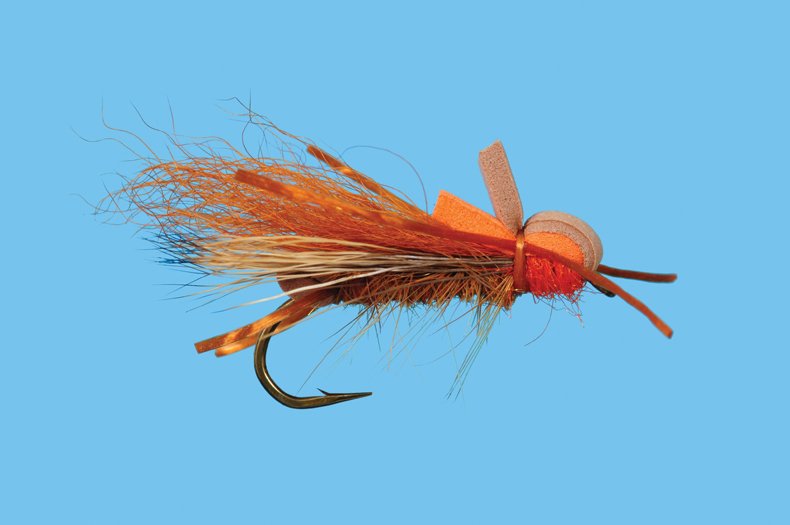
Friday's Feature Fly - Larimer's Golden Stone


With the upcoming salmon / stone fly hatch you will want a some of these in your fly box!


https://www.gorgeflyshop.com/store/pc/Sale-Closeouts-c38.htm

"The Gorge"

Gorge Fly Shop Team - 541.386.6977


"Fly Fish the World with Us"

May 7, 2021

Columbia Gorge Fishing Reports - 5.7.2021


Trout - Deschutes River:

Big bugs are here and trout are looking up in the lower sections of the Deschutes. There are salmon flies and golden stonefly adults all the way up to Maupin but with a cooler weather pattern this weekend, these bugs will not be as active taking flights and laying their eggs. Fishing with dries should still be productive though! Next week it is really going to take off with weather in the low 80’s predicted. We have a great assortment of salmonfly and golden stonefly patterns to choose from so give us a shout to get dialed up. Don’t forget about the smaller little yellow sally stoneflies, the Deschutes trout love eating these smaller stoneflies and will become more prevalent later in May and into the month of June. Tough to beat a purple chubby this time of year. 

Cheers to the start of what should be a fantastic month of dry fly fishing our favorite river.
Shop Trout Flies

Lake Fishing:

Coming soon!

Steelhead - 

Coming soon!
Shop Steelhead Flies

Oregon Coast Rockfish

Rockfish and lingcod fishing off the jetties has been really productive when the ocean lays down. Large clousers with dumbbell eyes and a full sinking line something in the 250-350 grain weight window is good. Go when the swell is predicted to be 3-5 feet or less. I like fishing an outgoing tide and into the low tide the best because you are able to get down lower to the water and fish the deep slots and troughs where the big lings hangout. Vary your strip speed but the technique that works best for me is a quick jerk of the rod tip then stripping in the slack slowly. Continuing that all the way back. This causes the fly to dance right off the bottom of the rocks.

Smallmouth Bass / Carp:

Smallmouth fishing has remained steady this spring. As weather and water temps continue to increase, the fish will become more responsive and less lethargic. Early spring, slow your presentation down significantly as the fish aren’t as aggressive. There are still some great smallies being caught now around the Columbia basin and should only get better. Slow stripping baitfish and small streamer patterns is an excellent strategy as is fishing a jig style fly under an indicator.


-Zach Parker

https://www.gorgeflyshop.com/store/pc/Sale-Closeouts-c38.htm

"The Gorge"

Gorge Fly Shop Team - 541.386.6977


"Fly Fish the World with Us"

Mar 13, 2021

Deschutes River Fishing Playbook

Salmonfly Hatch - Bucket list worthy

The Deschutes River Fishing Playbook: part one

The crown jewel of Oregon is arguably the Deschutes River. Earning Federal Wild and Scenic designation in 1988 the Deschutes is managed for recreation and continues to gain in popularity. The tailwater fishery is 100 miles long and runs north through an arid desert canyon until it meets the mighty Columbia River east of the Dalles Oregon. Along with beautiful scenery and all sorts of wildlife viewing opportunities are the fish. Wild populations of “redsides” or rainbow trout, mountain whitefish, bull trout, summer steelhead, spring Chinook and fall Chinook make the Deschutes a top fishing destination in the spring and fall.


The Deschutes is unique in a lot of ways, for one there is no fishing from a boat.  I get asked a lot where this came from and I have lots of answers but one thing's for sure, the Deschutes is a varsity level field for bank anglers.  Without a boat anglers will test their skill daily against a very sly opponent.  River level, clarity and temperature are very complimentary to a strong trout fishery.  Very few things will put the Deschutes out of shape and unfishable so it’s a fairly safe place to plan your next fishing get away.  The insect activity is heavy but the big hatches are very reliable (more on this later).  The Deschutes is truly an awesome river to fly fish with runs riffles and eddies all around.  River access is impressive as well and there is something for every type of angler and adventurer.


History

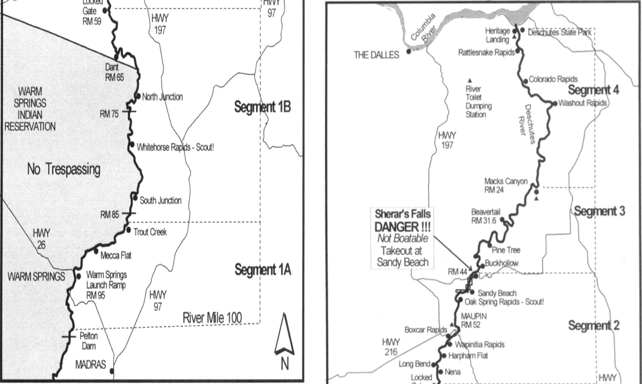
The first non-native visitors to the Deschutes occurred in 1805 when Lewis and Clark crossed at the mouth.  The name Deschutes means river of the falls for Celilo Falls located just downstream from the mouth.  Celilo Falls was a major hub for native peoples until 1952 when the Dalles Dam submerged it.  There are three dams on the Deschutes itself built from 1958 to 1964 and they are not without controversy today.  From it’s confluence with the Columbia River, a railroad runs most of the way up the Deschutes, on the west bank until it crosses the river at North Junction just short of river mile 75.  On the east bank there is an old railroad grade running parallel much of this distance.  Today it is a road, a dilapitated trail, then a road again.  There is a great book on the Deschutes Railroad Wars covering this period of time and is a great bring along book if you are floating the river.

Humans have had interaction with the Deschutes for a long time.  Even though it’s a “wild and scenic river”, there is good public access.  Prime time trout fishing starts in May and runs into the summer with the best month being May and the Stonefly hatch.  After the Stonefly hatch there are caddis and mayfly hatches well into summer.  The stonefly hatch is often referred to as the “salmonfly” hatch, but really they’re not alone as both golden stone and the smaller yellow stones are going off at the same time.  During this hatch it’s not uncommon to see blue winged olives, pale morning duns pale evening duns, caddis flies and once in a while the green drake hatch.   If you’ve got these bugs in your quiver then you are ready to come over and fish the Deschutes this spring.

Sam Sickles - Steelhead Outfitters - Deschutes River Guide
Bug hunter!
Salmonfly Hatch
The Salmonfly hatch is easily the most explosive dry fly fishing of the year.  These giant bugs live several years on the bottom of the river and then they make their way to the rocky shore, clumsily climbing out and molt from their nymph stage to adult.  The adults will congregate in the grass, bushes and trees until which time they breed then take flight.  The big slow flying bugs drop their eggs into the river then the cycle begins again.  In the middle of all this we have two or three weeks of great fishing, this is a bucket list trip.

Steelhead Outfitters - Deschutes River Guide
Know before you go.

If you point at a hundred miles of river and all the access point on the BLM guide (buy one), you might not start in the right place.  The “salmonfly hatch” moves up river with the water temperatures.  Ground zero is Maupin Oregon at river mile 52, one of three places the road crosses the river.  From Maupin the road goes south for a few miles until it reaches Locked Gate and north where it crosses the river and eventually leads to the Lower Deschutes access road.  Going north or south on this road gets the average guy plenty of spots to fish.  Maupin is well appointed with fly shops, a store, some restaurants and a hotel.
The first time the road crosses the river is at the Warm Springs Indian Reservation boundary, river mile 95.  There is river access on the east bank only.  The west side is tribal lands and a tribal guide is needed to access it.  There is a small exception from Dry Creek to Trout Creek and a tribal pass is required to access and fish this small section on the West bank.  Back to the east bank, the first public boat ramp is located on highway 26 on the east side just prior to the reservation boundary, it’s well marked and heavily used.  The next access point is Mecca Flats, a popular improved campground with a lightly used boat ramp.  A good trail runs north along the river to Trout Creek which also has an improved campground with a boat ramp.  The float from Warm Springs to Trout Creek is referred to as the day stretch although camping is allowed in designated sights only.  Camping from a boat on the lower Deschutes is regulated and requires a boater’s pass from The Bureau of Land Management.  The BLM is the primary manager of the river along with Oregon State Parks and the Confederated Tribes of Warm Springs.

Once you get to Trout Creek, RM 85, the next public access is Maupin, RM52 give or take.  Don’t miss this takeout when floating from Warm Springs to Trout Creek as the next boat ramp is just upriver from Maupin.  The section from Trout Creek to Maupin is the multi-day section, this trip can be done as an overnight but is best done in two night.  Multi-day float trips down the Deschutes are what the Deschutes is all about.  The reservation side of the river remains off limits until the boundary is reached, usually on day two below North Junction around RM65, there’s a great big sign you can’t miss it.  Look for wild horses near the reservation boundary.  I would be remiss in my duties if I didn’t point out a few hazards on this section, Trout creek Rapids, Four Chutes and Buckskin Mary are all legitimate rapids where experienced boatmen should be on the oars.  Whitehorse rapids should be attempted by only very experienced boatmen.  Whitehorse canyon is the most beautiful stretch on the Deschutes River but it claims several boats every year and people have lost their lives there.  Most people camp two nights, maybe an extra night on the same spot and take out near Maupin at Harpham Flats.

Sam Sickles - Steelhead Outfitters
Guide tested, client approved!

The Deschutes has a lot to offer every level of angler but if you are coming from afar or want to maximize your effort, hiring a local guide or outfitter is well worth the money.  Trips range from $500 for single day to $400-$500 per day per angler on multi day trips.  That said if you are just getting started and have the time for trial and error or you are a total do it "yourselfer", the Deschutes has your name written all over it.


Equipment needs:

Rods: 5 or 6 weight rods with weight forward tapers, the more aggressive the better.

Reels: Deschutes fish are big and strong and they can take all your line if you let them. I like a nice disc drag and a large arbor.

Leaders: Tapered 2x, 3x, 4x, and 5x. Same thing for the tippet. I fish as heavy as possible on the big bugs; I also like a 7.5 foot leader but carry 9 footers as well. Some times accuracy in the wind and into the bushes is aided by a short leader.

Gortex waders with felt and studded boots.

 
If you are over 16 years of age, bring a wading staff the Deschutes is tough wading. 

Come prepared for sunshine and for rain.

BLM guide to lower Deschutes, you can get this from the Gorge Fly Shop


Flies:
Bring lots of Salmonfly and Stonefly patterns, some Green Drakes, BWO’s, PMD’s, and PED’s. It’s not a bad idea to bring some nymphs of the same bugs just in case.


Shuttle Services:
Fishes (541) 475-3129

Fly Shops:
Gorge Fly Shop (541) 386-6976

Steelhead Outfitters (541) 400-0855
Silvey’s Fly-fishing (971) 219-2615
Bischoff's Fly-fishing (541) 977-2796

May 10, 2018

Deschutes River Stonefly / Salmonfly Selection


The Deschutes River Stonefly/Salmon fly hatch is quite possible one of the most famous hatches known to anglers everywhere. A True Fly Fisherman has been there for it or has it on their bucket list. For the Native Redside Trout this is Bonanza, Buffet, Banquet and biggest feast of the year all in one relatively short season. For GFS it’s located in our backyard. These Giants are found thoughout the northwest on Rivers such as the Yakima, Henry’s fork, Yellowstone and Big Hole. 

Selection Includes -
  • Chubby Chernobyl - Pteronarcys #6
  • Chubby Norman #8
  • Fluttering Salmonfly
  • Fluttering Golden Stone
  • Clarks Golden Stone
  • Clarks Salmonfly
Find More Great Fly Selections at "The Gorge"


"The Gorge"

Gorge Fly Shop Team - 541.386.6977
GorgeFlyShop.com Join our TeamContact Us


"Fly Fish the World with Us"

May 7, 2018

Plenty of Options - Deschutes Salmonfly Season


Well, word’s out

The big bugs are crawling around on the lower Deschutes River. That means 2 things, the river is going to be crowded with a bunch of people and a bunch of giant puffy dry flies. The average angler is going to see plenty of fish rising, but also see plenty of fish refuse their fly. In my opinion, when I think of the average guy fishing salmonflies, I picture someone who throws the same fly all darn day. Sure that will get you consistent fish, and you’ll be happy at the end of the day, (most of the time).

Now picture an angler that has 3 rods rigged up and 4 fly boxes full of every different bug in the river. This is a very dangerous man to have fishing in front of you, because he is going to be prepared to make 4 different presentations with lord knows how many different patterns in a stretch that the average man throws a few casts with the same fly in and leave. Here’s a few things that will help you pick up more fish behind the average guy on the water in these beginning weeks of the hatch.

Know your bugs

This doesn’t mean you have to know the scientific name of anything, it just means you should know the life cycle of a few bugs and what patterns to throw to replicate them in a few different stages of life.

Big Stoneflies

Lets start with the big boys, salmonflies and golden stones. It may not seem like it, but the lives of these 2 creatures are vastly different, with the exception that they hatch at nearly the same time. Larger stoneflies like salmonflies and skwalas, will take part in what we call behavioral drifts every few months or so, such as this month when they stage near the banks and shallow water preparing to hatch. During these drifts, the nymphs very easily become dislodged and end up bouncing off the rocks right into a hungry fish’s mouth. This is one of the reasons that we fish stonefly nymphs deep down on the bottom, because they have a very heavy body and will actually crawl out of the water to hatch unlike mayflies which are much lighter and can simply swim up to the surface.

Golden stones are a very different bug in their nymph stage. They are constantly moving around looking for smaller critters to munch on, which makes them a great year round pattern. Later in the hatch when the stoneflies have already emerged and mated, they begin dying off and their carcasses will end up back in the water to complete the circle of life, this is a great time of year to dead drift or swing adult stones under the surface of the water, because unlike most lighter insects that float upon being spent, dead stones are at the mercy of the current.

Mayflies

When it comes to mayflies in most rivers, there are 3 main behaviors throughout most species, clingers, swimmers and burrowers. If you flip a rock over and see a nymph crawling around, 90% of the time it’s a clinger mayfly. These nymphs are often anywhere from size 14 to all the way down to 24 with some species. Some mayflies such as blue winged olives hatch 12 months out of the year, so fishing a mayfly nymph can work 12 months out of the year, but, sometimes different species of mayflies are keyed in on more by trout than others. Say it’s mid afternoon on the Deschutes in summer, you saw some bwo’s on the water in the morning, so you tied a drab olive dry fly on and caught a few fish, but now the brunt of the bwo’s are done moving for the day. You might get on a few fish that are still keyed in on them, but a majority of fish will happen to begin to feed on different insects. You could fish to 10 different fish that are keyed in on 10 different species or stages of insects in a day on rivers like the Deschutes. This is why having so many different variations of flies and patterns is important. I’ve had instances in a 20 yard stretch of water where I’ve had to swap flies every time I hook a fish due to the vast variety of insects hatching at the time.

Emergers

Emergent mayflies are often very overlooked. We all seem to pay attention more to duns on the water that we can see more than emergers under the surface. Soft Hackles are a deadly weapon that I rarely see used. They are like streamers in the sense that you can play with and use a wide variety of retrieves and presentations. I see dry dropper rigs often used with hoppers or stoneflies with larger heavier nymphs, but a small parachute pattern with a weightless soft hackle as a trailer is one of the best combos to have on the river during smaller hatches. Soft hackles can also be used in the trout spey side of the world if you’re more particular to a swung fly presentation (see: ‘Trout spey chronicles’ for more reading on swinging soft hackles).

Caddis

Spring time caddis are the second largest forage for fish this time of year, and they are often seen throughout the day, though more prevalent in the evening hours. If you see a fish ignore a stonefly completely, and perform a splashy take moments later, chances are that fish is eating caddis. Fish are a tad more aggressive and opportunistic to caddis due to the fact that upon hatching, their wings are creating quite the commotion on the water unlike a mayfly who sits still while pumping fluid into their wings before flight. Caddis on the other hand are frantically attempting to get off the water as soon as they emerge from pupa form, which allows the beginner fly fisherman to be able to fish a little sloppy at first. Fish expect caddis to make movement on the water, so if you’re just starting out and you’re having a hard time with presenting a drag free drift, tie on a caddis. Dead caddis patterns later in the afternoon on a hot day prove very effective, these are often adult dry fly looking bugs with either beads attached or lead wrapped around the hook to break surface tension, another option would to be adding sinkant to a normal dry fly.

We have plenty of every pattern and a ton of components that you want to have if you want to be more effective than the next guy on the river. Learn about your bugs and when and where they hang out, and you’ll be meeting plenty more trout this season. For more questions or info on hatches, flies, or tactics, give us a call or an email at the shop.

Tight lines and happy hunting.


Jacob Noteboom | Product Specialist
541.386.6977
"Fly Fish the World with Us"

May 29, 2016

Columbia Gorge Fishing Reports (05/29/2016)

Columbia Gorge Fishing Reports (05/29/2016)

Hood River from the Washington side
Fishing is still great throughout the area.  Oregon trout streams are mostly open now as the general trout season started on Saturday, May 28.  This opens the East Fork of the Hood for trout only (it's never open for salmon or steelhead).  Eagle Creek near Bonneville Dam is another nice trout stream that is open near here now.  The West Fork of the Hood is always closed above punchbowl falls...
May and June are the best months to catch a nice brookie!

The Washington small streams are opening either June 1 or the first Saturday in June.  Check the WA regulations.  The Klickitat opens June 1 for trout and steelhead.  Trout Lake Creek is a small trout stream in Washington that is fun to fish and is absolutely gorgeous.  It opens Saturday June 4.


Most area lakes are open now.  Goose Lake, Lost Lake, Laurence Lake, Timothy Lake, Clear Lake and Trillium Lake are some of our local favorites and all are fishing very well right now for rainbow, brown and brook trout (and the occasional cutthroat trout)  There are countless other lakes in the area that are all fishing well now too but not as popular.  Get a map, do some research and get a rod in the water.  A lot of the lakes are inundated with flying ants right now and the fish are gorging on them.  An olive woolly bugger will produce fish all day, as well as Callibaetis nymphs & dries, and some lakes may be holding damselfly nymphs already.

The Deschutes River is still fishing very well for Redband Rainbow Trout.  Just because the salmonflies are done doesnt mean that fishing is any worse than it was when the salmonflies were thick.  It can be very, very good right now.  Anglers just have to change flies, locations and strategies a little more often and they can have just as productive of a day as any.  The strategy starts basically with PMD nymphs in the morning (often doubled with a caddis nymph or stonefly nymph), and the possibility of a hatch late morning in shallow riffles.  Trout are also eating stoneflies, both goldens and yellow sallies opportunistically throughout the day.  They are also eating caddis pupae in the afternoon through evening with a chance at catching fish on caddis dries in the late evening.

Bass fishing is phenomenal right now!
Steelhead fishing is fair to good on the Sandy and the Clackamas, as well as the Kalama.  The Washougal opens June 4 too, and it can be very productive in June.  The Klickitat opens June 1, but is typically not productive until later in the summer.  There are always early fish in all the local rivers, including the Deschutes, but the best strategy for steelhead is to go where the most fish are and right now, the bulk of the summer steelhead are in the lower Columbia tributaries for now.

Smallmouth Bass are biting topwater flies on the Columbia.  Many of the fish in the river spawned recently and are looking for food more than they normally are.  Big fish are still more likely to be caught near the bottom, but fishing is great nonetheless.  The John Day River is fishing well for bass too.  Topwater poppers all day long...

Spring Chinook fishing continues in the area.  The Klickitat, Wind and Hood Rivers are great places to go soak some roe for a fish or two.  Ryan Davey and I spent an hour fishing the other day and got one nice buck that went straight onto the bbq and it was much appreciated by all my neighbors and friends that came over that night.  I fish for salmon for food as it is far, far more productive to use roe than a fly, although fly anglers occasionally catch salmon on the fly around here.

Flows:  The USGS sites give us real-time flows, while the NOAA site shows us predictions based on weather patterns.  Both are invaluable tools.


Hood River:

Klickitat
USGS
NOAA

Clackamas:

Deschutes near Madras:

Deschutes at the mouth:

Columbia River
Bonneville Dam Water Temps
Columbia @ Hood River (The mouth of the Hood backs up at 75 feet)

As always, we are happy to talk fishing any time.  Give us a call if you have any specific questions on local rivers, gear, and tactics, or if you just want some encouragement to get out of the office.  541.386.6977


Andrew Perrault
Columbia Gorge Fishing Reports
Gorge Fly Shop | Product Specialist
541.386.6977


"Fly Fish the World with Us"

May 22, 2016

Columbia Gorge Fishing Report (05/22/2016)


May 22, 2016

It has been a great spring for fishing in the Gorge so far and the fishing outlook improves even more in the next week or two.  The Oregon general season trout opener for rivers and streams is next Saturday, so our favorite small streams like the East Fork Hood and Eagle Creek will be open on May 29.

Other streams in Washington open in the next few weeks too.  The Klickitat opens June 1, while other streams in WA like Trout Lake Creek open on the first Saturday in June (June 4).

Rainbow Trout fishing on the Deschutes continues to be good.  The best fishing has been around the Trout Creek area and upstream to Warm Springs, but good trout fishing can be found anywhere along the river now.  While fish are still eating bigger stonefly imitations, refusals are common with the big bugs.  Try smaller stoneflies like a Yellow Sallie on the surface.  Trout are certainly eating PMD nymphs during the day, as well as caddis pupa in the evenings while snacking on the occasional stonefly and maybe even some caddis surface action before dark.

Lost Lake is the closest place to catch a nice brown trout.

Trout fishing in the local lakes has been really good too.  The flying ant hatch is in full swing at Lost Lake among others, and the fish are happy.  Have some black ants, woolly buggers and parachute adams and you will be a happy fisherman too.

Early summer steelhead fishing has been occurring, but reports are spotty.  The Clackamas seems to be kicking out some fish as well as the Kalama, but there has been very little action reported in the Gorge as is typical for our area.  Summer steelhead wont arrive in numbers for a couple of months, but there are always a few hanging around if you can find them.  The Klickitat opens next Wednesday (June 1), so that will at least provide more options for local anglers looking to swing into an early chromer.

Spring Chinook fishing has been good throughout the area.  Many locals put down the spey rod and pick up a baitcaster this time of year, but it is possible to swing a fish or two.  The locals that hang around the mouth of the Hood River have been catching the occasional Springer lately.

Smallmouth bass fishing has been fantastic lately, although Ryan's trolling motor has been broken, so we haven't been getting on the bass this week.  Other anglers have been crushing 'em though.  The full moon really gets bass riled up.  There are a few spots along the Columbia that someone could get them from shore, but having a boat helps tremendously.

Flows:  The USGS sites give us real-time flows, while the NOAA site shows us predictions based on weather patterns.  Both are invaluable tools.


Hood River:

Klickitat
USGS
NOAA

Clackamas:

Deschutes near Madras:

Deschutes at the mouth:

Columbia River
Bonneville Dam Water Temps
Columbia @ Hood River (The mouth of the Hood backs up at 75 feet)

As always, we are happy to talk fishing any time.  Give us a call if you have any specific questions on local rivers, gear, and tactics, or if you just want some encouragement to get out of the office.  541.386.6977


Andrew Perrault
Columbia Gorge Fishing Reports
Gorge Fly Shop | Product Specialist
541.386.6977


"Fly Fish the World with Us"

May 15, 2016

Columbia Gorge Fishing Reports (05/15/2016)

What a sunset in the Deschutes River Canyon!  


Local fishing has been superb lately!  Rainbow Trout fishing is still the best bet for a day of great fishing in the area.  The Salmonfly/Stonefly hatch on the Deschutes is going strong from Maupin up to Pelton Dam.
Salmonflies are popping from Maupin to Madras
The bulk of the bugs were up around Trout Creek, but they were flying thick throughout the entire stretch.  I noticed many anglers fishing nymphs under bobbers during my float last week.  I am not sure how they were doing, but I fished a Clark's Stone for three days and had no issues getting fish to come to the surface.  I am heading back out to do Trout Creek to Harpam again this week and planning on fishing all dries again.  I am prepared to fish smaller yellow sallies as they are starting to pop too.  I saw a couple of green drakes, a pile of PMDs, and a huge caddis hatch also, but the fish were sure eager to eat a stonefly all day.  Camping upstream of North Junction on Thursday night, I have never seen so many stoneflies flying at once right before dark.  The sky was nearly black with bugs, birds and bats were happy.  It was definitely very impressive.

Wild Horses rule the Warm Springs Reservation!

Spring Chinook Salmon fishing is still moving along in the Gorge.  There is very little effort from the fly anglers towards salmon.  They are not the most aggressive fish, nor do they tend to sit in spots that are easily accessible for most fly anglers, but they are in the local rivers and plenty of anglers catch them given the time and energy.


Smallmouth Bass fishing has been great too!  The Hood River Marina is a great place to go catch a pile of fish on a lunch break.  Without a boat, bass fishing is a little more difficult, but there are plenty of places in the area to pull off the road and catch some smallies.  Fish are definitely in shallow water, looking to spawn during the full moon this next week.  They turn on to poppers more after the spawn.  I seem to do better right now stripping buggers slower near the bottom for big fish, but if you can find them, they will likely eat a variety of flies throughout the water column moving at various speeds.  

Golden Stones are everywhere on the Deschutes.
Local lakes have been fishing really well too.  Laurence, Lost and Kingsley have all been kicking out loads of fish on dries, nymphs and buggers.  I am sure other lakes are fishing really well too but we haven't heard much from them in the past week or two.  Most anglers are hitting the Deschutes while it is good.  

Shad are starting to pick up.  By the first of June, they should be in the Columbia in catchable numbers.  

Summer Steelhead are starting to trickle in.  There are always early fish in rivers like the Sandy, Clackamas and Kalama, but the big runs of fish in the Deschutes and Klickitat don't start moving in until late July or August.  Westside rivers get more early steelhead than the Eastside rivers. 

Flows:  The USGS sites give us real-time flows, while the NOAA site shows us predictions based on weather patterns.  Both are invaluable tools.


Hood River:

Klickitat
USGS
NOAA

Clackamas:

Deschutes near Madras:

Deschutes at the mouth:

Columbia River
Bonneville Dam Water Temps
Columbia @ Hood River (The mouth of the Hood backs up at 75 feet)

As always, we are happy to talk fishing any time.  Give us a call if you have any specific questions on local rivers, gear, and tactics, or if you just want some encouragement to get out of the office.  541.386.6977


Andrew Perrault
Columbia Gorge Fishing Reports
Gorge Fly Shop | Product Specialist
541.386.6977


"Fly Fish the World with Us"

May 2, 2012

The Deschutes River Salmon Fly Hatch

Deschutes Salmon Dry Fly Kit
On the bank by the river you kick your boot off and shake it upside down. Sweat drips into your eye; you have done it again: put on too many layers of clothing. A pebble drops out of your boot and into the grass. You draw your laces tight, secure the gravel guard in its rightful position and start to undress there beside the riffle. There are splotches of blue overhead and an upstream breeze cools the ring around your armpit. A flat chunk of basalt under your bum, an osprey peeps and the shadows crawl across the sage.

Sighing, you recall the words half spoken in the kitchen - Not loud but loud enough to ignite the broken dish in the sink and the yelling and the door slam. Weeds in the garden and crawling up the white fence post. You sat staring at the sunny sides on the plate for a long while before finding your fly rod where you had set it out with your gear bag the night before. Pesky words… Where were you when I needed you most? Hiding in my flybox?

Deep breath, you stare out to the river’s edge wondering of flamboyant hypes of hatches, of trout and the nature of chronic relationships. The surface of the river is dancing but there are no signs, no spotted snouts or flittering flies– just movement but you know it’s just a cover, like a face. A fine poker player - this river this day.

Visit our Relaunched Steelhead Only Site

Shop Gorge Fly Shop & SteelheadBum.com

  © 'and' Steelhead.com Mike Prine 2009-2014

Back to TOP