|
| meat eater |
Hi, my name is Ryan and I have a streamer problem.
Some would say I have an addiction.
Some would say it’s not “real” fly fishing.
Some would say you might as well fish with a spinning rod.
I would say bite me!
I have been a die-hard streamer guy for over a decade now and I will do my best to try to explain why and how I am setup for slinging big flies to monster trout.
There are 3 reasons I have become a streamer junkie:
- Streamer fishing is active fishing or what they would call power fishing in the tournament bass world. You are casting and moving a lot, and really looking for fish that want to play ball. It isn’t a finesse game, but it will work when you can’t move fish other ways.
- Streamer strikes are often vicious and jarring. Once you have felt a few big trout crush a sculpin pattern it is hard to go back to watching a bobber…
- Streamers will move the biggest fish in the system. If you want to catch big fish regularly, then you better learn how to feed them some meat!
 |
| Sculpin pattern |
There are some important things to think about when considering the whys, whens and hows of streamer fishing. If you think about a simple energy used to energy gained equation, it is easy to understand why a trout would eat a sculpin, dace, leech, or another trout. How many midge larvae does it take to equal the calories in one sculpin? A bunch, I would say. Another crucial aspect of streamer fishing is understanding territorial behavior and reaction strikes. Trout, particularly large trout, will defend their area even if they don’t eat what they attack. Large trout will also strike invaders for no other reason than instinct. If a big “thing” is suddenly slapped in front of them or jigs right through their field of vision, they will often strike with malicious intent.
There are many ways to fish a streamer, and I can’t possibly cover it all here, but there are a few major categories: slapping the bank, swinging, and jigging/twitching. As you dive into the streamer chucking realm you will find out when and where to use each of these, and often I will use all of them in the same day. Now don’t get me wrong, if there is a good steady hatch I will put the streamer rod down, but when the insects aren’t prolific, you will most likely see me with a
leech or
sculpin on my rig. And I can tell you that I have caught as many sporadically rising trout on a well placed streamer as any dry fly I have tried to present.
 |
| Meat Locker |
 |
| Rainbows on the Yakima River |
So let’s get down to brass tax; gearing up for the streamer game… Let me start by saying that you can fish streamers on any trout rod and line you already own, but a dedicated streamer rod will make your life easier, and give you the ability to fish effectively, especially with bigger flies. For me, a single hand trout streamer rod should be a 6 or 7 wt that isn’t too fast. Some of my favorites are the
Winston BIIIx,
Sage ONE, and
G Loomis NRX. I know these are top end rods, but trust me, you want a rod that performs well and is light enough to cast all day when you are throwing big flies. The fly line is equally as important as the rod. For most western rivers you will need a sink tip line. My favorites are the
RIO InTouch Outbound Short full floater (WF6) and intermediate/type 6 sink tip (WF6I/S6), the
RIO InTouch Streamer Tip intermediate and type 6 and the
RIO InTouch 15ft Sink Tip type 6. Of these the 15ft sink tip is the most versatile and the outbound short is easiest to cast. I prefer the type 6 tips for all of these because I rarely if ever wish my flies would sink less, but often wish I could get deeper.
 |
| Winter Brownie |
Now let me tell you that not all streamer fishing has to be aggressive and with big flies. Fishing a streamer in smaller water or quiet pools requires some finesse and working the fly in a seductive manner. For smaller water, i.e. spring creeks, small freestones and slower tailwaters, etc. you will like a shorter rod in a 5wt as it will really help your accuracy and will load quickly. There aren’t as many choices in short 5wt rods these days, but a few I can recommend are the
Loomis Shorestalker 8ft 5wt, the
Scott G2 8’4” 5wt and the
Winston 8’6” 5wt BIIIx. If you are in really small water or fishing for smaller fish don’t hesitate to throw small streamers on your 7’6” - 8’ 3 or 4wt too! You will also not typically need a sink tip line for small water, but a good all purpose line should get the job done.
Microspey, trout spey, small ball, whatever you call it, trout sized spey/switch rods have changed the streamer chucker’s game for good. How I would have killed for one of these rods 10 years ago. The ability to make long casts with big flies and sink tips across a river and into that deep slot has always been the bane of a streamer nut, but we did it anyway. Now we have rods and lines that can do it with nary a thought. If you find yourself deep in the throes of streamer addiction, grab a trout spey rod from Winston, Sage, Loomis or Echo, put an
Airflo Streamer Switch or
OPST Commando head in the appropriate size and a T-8 through T-11 tip and huck meat!
 |
| Sculpins |
Reels for the streamer game need not be too complicated, but having a good piece of equipment that won’t fail you when you hook a monster, is wise. Some of my favorites are the
Tibor Back Country Wide,
Lamson Litespeed,
Ross Evolution and
Galvan Torque in the appropriate sizes. I try to avoid very heavy reels as it is a bear to cast with those all day. Just make sure you have something that is dependable.
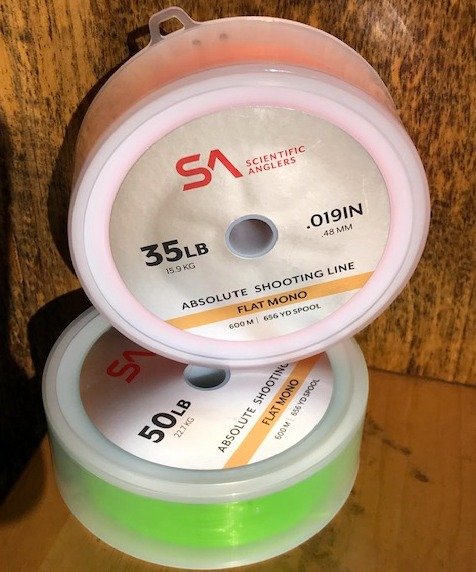
Leader and tippet should be fairly short and strong. I rarely use anything less than 8# or 3x for streamers and mostly 2x or 1x. I am a big fan of fluorocarbon tippet, but for the most part good mono is just fine. Leaders on your sink tip setup should only be 3-6ft long with a heavy butt section to help turn over your flies. I like to build my own with Maxima or heavy Rio shock or saltwater tippet in 30-50# and then double uni knot to my tippet off of that.

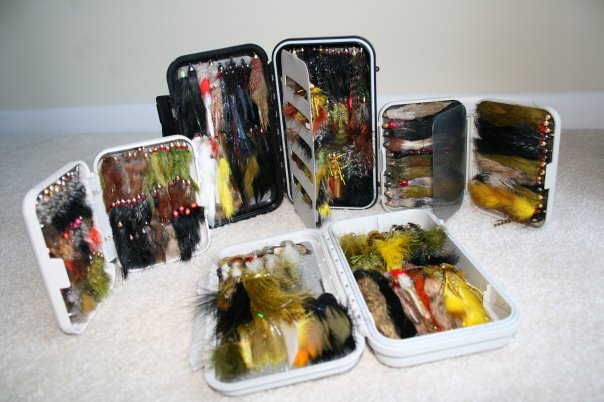
Streamers are as varied as the anglers that fish them, but my most successful flies have been heavily weighted rubber legged buggers, bunny leaches, and big articulated sculpins. My favorite fly, one I dubbed the Mohawk, is a bunny or squirrel strip/bugger mutant. It can be tied with a cone, bead, or dumbbell eyes, but it should be fairly heavy. Some other really good choices are the sculpzilla and skulpin bunny. Colors should range from natural olives, tans and browns to bright colors like yellow and chartreuse, but the go to when all else fails is black.
 |
| BB - Before Beard |
The bottom line is this: if you want to try a new technique, or are sick of watching a bobber, or want to find out what the biggest fish in your local water is, grab a big meaty streamer, drop it in and find out!
If not...Then Bite Me!
The Bearded Pescador

Ryan Van Duzor
Gorge Fly Shop | Product Specialist
541.386.6977
"Fly Fish the World with Us"