Showing posts with label Float and Fly. Show all posts

Mar 16, 2021

Predator Hunt - Pre Spring Bass

What time of year do you start thinking warmwater? May or June! 


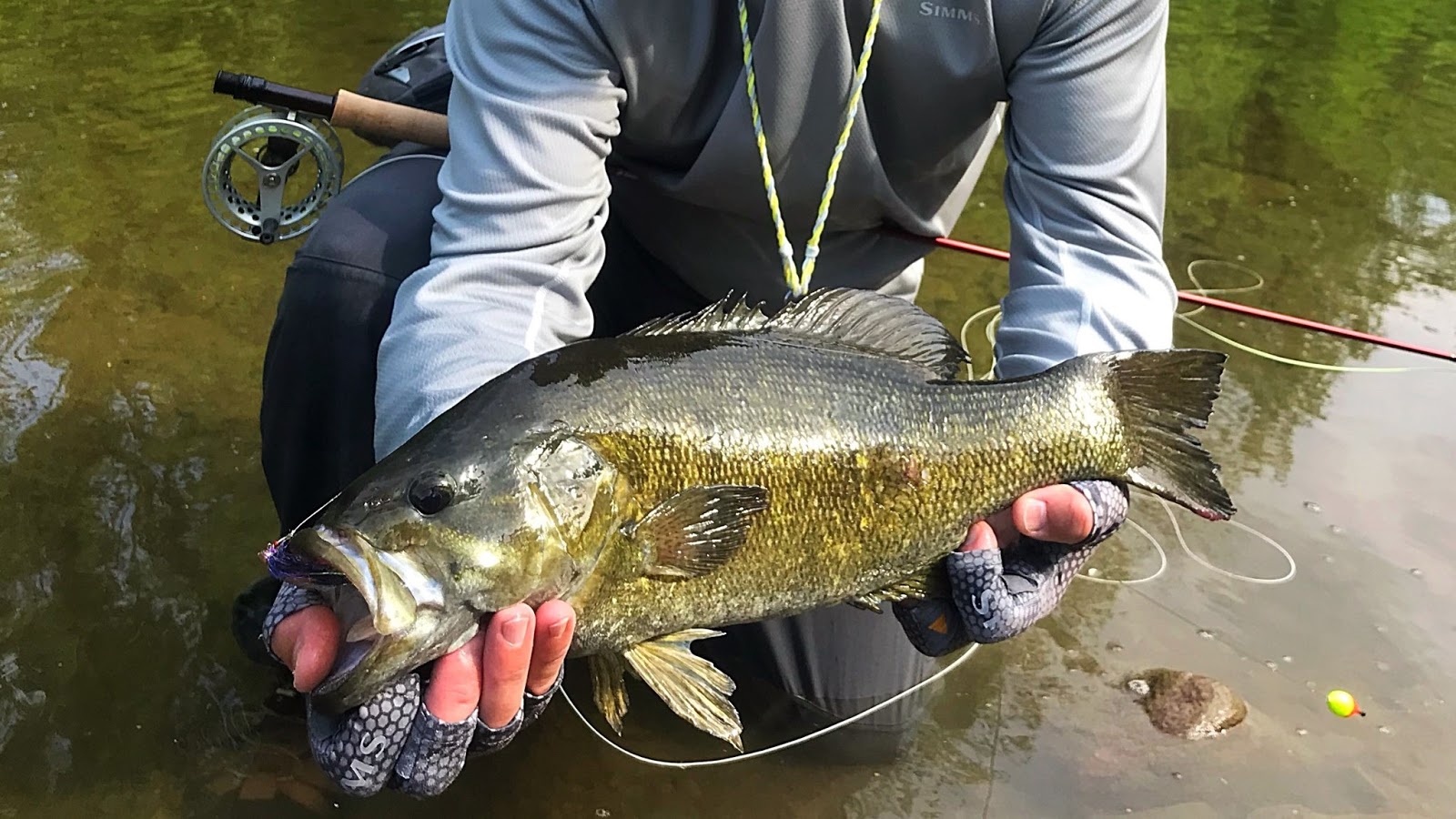
I readily admit in my younger years I had a hard time fishing bass before May and June was even better. Over several years of pushing earlier and earlier into the spring season I can safely say March is not too early. I'm not just speaking to those in southern regions, I've personally have caught and released trophy class smallmouths in March on the Columbia River as well as many other locations. 

The idea for this article comes from the fact that here we are in middle March and I'm already feeling behind on preparing my gear for some warmwater fly angling. Winter trout fishing has been so good that I'm running into species overlap. I'm not ready to give up winter trout'n but pre spring bass'n is ready to take off. Better get my rear in gear!

Key points to this Pre-Spring Bass Fishing

Early Bird
We've all heard the old idiom of "early bird catches the worm." Throw that bird crap out the window. Early season bass requires you to fish in the warmth of the day. It's fine to start early or finish late but In my experience this time of year mid day is where it's at. 

Slow Down! No need to armpit strip those streamers right now. Let the fly sit in their face for as long as possible. With that said focus your flies on ones that sink slowly or better yet suspend. 

Recognize the Strike
Cold water bass strikes are usually much more tame this time of year. Keep full attention on fly and fly line. Watch for the slightest of ticks. Try to keep your line taunt without moving your fly. That doesn't mean drag your fly slowly. Instead, jerk your fly multiple times then allow it to suspend for as long as you can stand it. The erratic jerking movements will attract the fish and pause suspension will give him time to commit. 

Location, Location, Location
This one could be a whole article or a book. Fish south facing shorelines and areas that get a lot of sun. Look for obvious structures such as boulders, culverts, and tree stumps. Rocky reefs and current breaks can produce some early bass. Bottom line is fish where you would usually find fish with an emphasis on areas that will likely warm earlier in the year. 

Be Stealthy
Spring time before major rain and runoff, rivers and lakes are usually pretty clear. You should take extra precaution with a stealthy approach. Stay away from wearing bright colors, watch your shadow, cast long when possible and avoid moving fast and making noise. 

Boat or Foot
Boats can be super helpful but I found that if you can access good water on foot you may have an advantage in early spring. Boats make noise and easily get blown off target. On foot you are quiet and land will keep you on spot. Access is key and you may only have access with a boat but do keep in mind trolling motors, kickers and anchors all make a lot of noise, noise that most fish have not heard all winter long. If using a boat you might consider setting up drifts using the wind instead of motors and anchors. 

And my last tip is...
Get acquainted with fishing a Float and Fly Rig. There is no better time of year than to soak a fly under a indicator for early season bass. What's funny is I won't spend one minute fishing an indicator for trout but when it comes to bass and the dozens, maybe in the hundreds of trophy size smallmouth that F&F has shown me over the past 15 years is more than proof that early season smallmouth want their presentation to be suspended with time to ponder and commit. 


If you are one that refuses to fish an indicator I totally understand and respect your position but do please take away the F&F idea that the longer a fly will suspend in the face of a early season bass the more likely curiosity will prevail and attack is imminent. 
Greg Darling


https://www.gorgeflyshop.com/store/pc/Sale-Closeouts-c38.htm

"The Gorge"

Gorge Fly Shop Team - 541.386.6977


"Fly Fish the World with Us"

Jun 7, 2020

On the Hunt - Walleye on the Fly

One never knows what One might encounter!

So I've been keeping pretty low in all this COVID-19 mess. To avoid crowds I've taken to much more angling on foot than boats or inflatable craft. It's actually been a fun challenge to find accessible water and to find a tug.

The other day I watched my float disappear to the depths and set a solid hook into what I would have guessed to be a good smallie. When I finally got a look and saw the wally I couldn't have been more excited though I knew the chance of landing the toothy beast was still quite slim.
If you've followed any of my On The Hunt Series of articles than you know that I am a fan of float-n-fly fishing. While personally I find indicator nymphing for trout to be quite boring but something about this float and fly technique for warmwater predators just excites me to the very core. Maybe because it does not select a particular species instead it crosses over all species. Maybe it's because when nothing else wants to work I can count on this technique to produce something. 
This is not the first walleye I've hooked on float and fly but it is the first one I've landed. I for sure have hook at least a couple others and they have either thrown the hook or bit me off. I've also encountered a couple bite offs that I never saw the fish and suspect these were walleye as well.

My System

I have found my Thomas and Thomas Exocett SS 200gr rod to be the most ideal one rod to carry while on foot. It responds with authority to every command I give it. Lift, strip, hookset and cast are all commanded with this rod. It easily crosses over from topwater bugs, streamers and float-n-fly providing a truly universal shore stalker tool.

A Galvan Torque Reel size #6 in blue is a great look and fit. A #7 would also fit well and give you a little more backing capacity

Line is a Scientific Anglers Amplitude Smooth Titan Long WF7F. I feel like this line was made for this rod. It will move anything in short cast and in capable hands go for any distance you want even to the end of the line.

I custom make my own float and fly leaders from Maxima for the butt section to Scientific Anglers Absolute Fluorocarbon Tippet. This tippet proved its worth against those sharp walleye teeth, or maybe a got lucky! Regardless the tippet did its job.

I tie my own flies but the new Solitude Drop Dead Minnow will get you started in this technique.

The addition of this walleye boost my total Float & Fly species count now to fifteen. Who's up for some fish tacos!
I'll see you on the water...But you won't see me!


Greg Darling 


"Passion For Fishing Is A Lifelong Pursuit Of Discovery"

May 8, 2020

On The Hunt - Float and Fly

Confidence: the feeling or belief that one can rely on someone or something; firm trust.

It's easy to be lured in by techniques such as big streamers or big topwater and yet so often success can be minimal at best. It's not that these aren't proven techniques but often times they are not implemented at optimal seasons or in optimal spots. Combine wrong technique for the season and/or unproductive water and you have a setup for failure.

A way to overcome this failure is to build on a technique that one can quickly gain confidence in.

In my warmwater predator hunting adventures I've come to rely on a technique that not only do I gain confidence quickly but many days just can't get enough of the fun with this technique.

On days when nothing else wants to work I can depend on Float and Fly. More often than not it will show me where the fish are and provide me with important clues to their current feeding mood.

I mention "feeding mood" to emphasize the fact that predator fish are not always willing to chase down a streamer or break surface for a topwater but that doesn't mean they won't eat. They might just need a presentation that doesn't necessarily force a reaction but instead it works by teasing and temptation.

Think of it like this: Pick your favorite candy bar. Let's say it's a snickers. If I hold a snickers in front of you long enough I bet you will take and eat it. How long of period that is will be greatly be determined by your desire to give into temptation. This could vary day to day or even hour to hour.

Origins

Float and Fly has it's origins as a gear technique. Crappie anglers rely on this system to get their early season catch. These old school guys will tell you that they often run into bass, particularly smallmouth bass while attempting to catch some silver slabs.

Recently some fly guys, including myself, started to look at this idea as a fly rod technique. After all if you look at indicator fishing for trout, outside of the fly there is not a whole lot of difference. Or is there!?

Personally I've worked with this technique now for about twelve years. There are some distinct differences compared to trout nymphing. Starting with...

12 years perfecting this fly. Blurry on purpose!

The Fly

Starting with the fly, while many flies hung from an indicator will catch fish, a float and fly system, fly is designed to represent baitfish and should be delivered in a horizontal presentation. Notice the Solitude Drop Dead Minnow is tied on a jig head. This gives the fly its horizontal presentation.
Solitude Drop Dead Minnow

Leader

A good leader for float and fly is the RIO Bass Leader. It has a strong butt section for great turnover of fly and float while the 9 foot length is perfect for majority of this fishing.

Indicator

Hard to beat the easy usability of an Air-Lock indicator. If you need to adjust depth just loosen the screw, adjust and re-tighten. Thing-a-ma-bobbers work just fine too.

Fly Line

While no special line is needed I do prefer longer headed lines for mending ease. Lines like Scientific Anglers Amplitude Infinity or RIO's InTouch Trout Steelhead Indicator line work very well.

Fly Rod

Without getting into a books worth of rod choices let's just say a 6-7 weight in at least a 9' length. Adjust as necessary. Your fishery might be just fine with a 5 wt. One of my favorite rods for this technique is a Sage X 597-4. It's 9'6" with full wells grip and fight butt.

Technique

Start with your fly about 5-6 foot below your float. Adjust as necessary. Seek out your ideal smallmouth holding water. Now I realize that last statement could prompt an entire article about what smallmouth holding water looks like but that will have to be for another time. In general search rocky shoreline areas.
Cast in tight to these areas. Move often, even if only a few feet. When a smallmouth bass takes it he will steadily pull it under and most cases even out of sight. No reason to get in a hurry to hook set just so long as indicator is well under you should come to a solid set most of the time.

A cool feature of this technique is the fly is almost always hook up in upper jaw. It's makes for a super clean catch and release and comes with a solid landing ratio.


Clues and Insights

This isn't sit on a bucket while drinking PBR type of fishing. Keep moving! Most take downs are within 10 seconds of cast. If I really have confidence in a spot I might soak it for maybe a minute, max.

I tell anglers to fish it like a popper. Cast, let settle, give it a twitch or two, maybe a pull, move!
On those days when a bass won't break surface for a topwater or move for a streamer, they'll eat float and fly. So have confidence and keep searching. They will show themselves.

River or Stillwater

Bass in general are stillwater creatures. Even if you are fishing a river such as John Day, most bass will set up on drop offs, current breaks and eddies. Much of this fishing is done in those stillwater spots directly adjacent to currents. You might call them frog water. Don't hesitate to work float and fly down a current seam just as if you are drifting a nymph for a trout. But also don't overlook the "frog water" behind the current seam.

Where

Local to Gorge Fly Shop is an incredible smallmouth fishery in the Columbia River. While access is limited especially without a boat there is in fact many places that feature quick dropping, rocky shorelines. The next couple months will be prime for smallies in close to shore.

What are you waiting for!

I'll see you on the water...But you won't see me!


Greg Darling 


"Passion For Fishing Is A Lifelong Pursuit Of Discovery"

Mar 1, 2020

Solitude Drop Dead Minnow - The Float & Fly "Go To" fly

If you've read any of Greg's On The Hunt Series articles you know that Float and Fly is one of the most recent, hottest tactics for bass. It's simple and works when streamer and topwater presentations are failing you.
Up until now there has never been a good production fly option. One had to create their own or use an out of the package crappie jig. Or you can beg Greg for one of his custom ties but good luck with that!

Introducing the Drop Dead Minnow from Solitude.


Here it is all ready to go. Now just add an indicator, I suggest an Airlock, and start catching while others are fishing.

Shop Bass Flies

https://www.gorgeflyshop.com/store/pc/Sale-Closeouts-c38.htm

"The Gorge"

Gorge Fly Shop Team - 541.386.6977


"Fly Fish the World with Us"

Sep 4, 2018

On the Hunt - Targeting Big Smallmouth

Slurped in a hellgramite fly pattern drifted under an indicator deep in a tailout seam on a little canoe stream in Midwestern, USA
Anyone can catch smallmouth bass. Shoot, you might even catch some big ones if you hit the spawn season just right. But when it comes to targeting big fish year around most anglers, (sorry guys but especially most fly anglers), have no clue where to find them. One can always play the game of chance but if you want to consistently find big smallmouth here are some guidelines you need to follow. 

Fish where there are big fish

Not every smallmouth fishery has big fish. They need proper food sources, good growing seasons, not too much angling pressure and ample room to grow. I have fished many small rivers and reservoirs that have a hard time producing big fish. It's not always that big fish are not there. It's just the big fish are so outnumbered by the small eager fish that the odds of contacting a big fish are slim to none. Also, I believe big fish can become well educated through catch and release and many have grown resistant to artificial offerings, fly or otherwise. But despite all that just match the right size gear to your fish and they are all fun. Meanwhile there are things you can do to up your odds for catching the larger specimens in your water. 
100 yds offshore on a rock in 20' foot of water...Smallies live there

Get off the bank

Big smallmouth hate the bright sun and they like security. They didn't get big by exposing themselves to predators. In the heat of summer and bright light of day an angler needs to think safety and shade while still set up on points of interest for ambushing food. Often, late evening, night time and early morning approach is your best odds but if you know where to look in middle of the day you can still find success. 

Stream and small river environments can be pretty easy to pick apart. Determined how deep you can see and double that to figure a starting point for safe habitat. In summer flows I look at outside bends with deep slots and/or undercuts. While wood structure should never be overlooked smallmouth will always prefer rock structure first. The combination of rock and wood should be a sure thing. 

Tailouts! These areas should be probed intently. The top header photo fish was taken from a tailout. The stream he came from is not known to produce big fish. One can fish this stream a lifetime and never see a 20" smallie but that doesn't mean they're not there. It took several drifts and adjustments with a float and fly setup to get him to eat and he ate in the middle of a sunshine day. 

Moon lit summer nights can get smallies looking up
Lakes and reservoirs can be much more difficult in the shear fact that fish have the deep option to retreat to. Focus on areas of sharp drop offs and rocky points. Deep shoreline with shade can be productive. Low light and night time can excel your odds when fish will become relaxed and start to go on the hunt for food. 

Big streamers equal big fish right? Sometimes!

I find the go big or go home approach works best when fish are up and active such as times like early season, spawn season and some low light conditions including cloudy and rainy days. But more often then not my big summer catches are on topwater or suspension tactics. Big streamers should always be an option but I warn you, be quick to set it down and reach for another tactic. 

This crawfish was spit up by a 14 inch smallie. It sits next to a 5" Swinging D. Big is not always the answer but it certainly should not be overlooked

Suckers for topwater

Topwater is probably your best game for big summer bass. The great feature of topwater is even if they fail to eat sooner or later bass will give away their location and current attitude. While we wish for solid strikes be aware of your fly being met with refusals, swirled on, or an aborted strike attempts. You can get a good read on a bass' current mood by how they react to a topwater. Even if their current mood is not desirable for you chances are you will witness this mood change at some point through the day. Use the information of any topwater reaction to measure their mood and if necessary try a different approach.

Deer hair Sliders can elicit good strikes with the realistic dive, swim action on strip retrieve and bubble trail they produce

The suspension approach

When streamers don't get attention and topwater gets refused I reach for a float and fly. It might sound odd that I will apply a float to my bass game but I find it extremely affective. While I couldn't tell you the last time I indicator trout fished because it's been so long ago, I can tell you I've fished an indicator for bass less than a week ago from this writing. I personally no longer go bassin' without a rod rigged with float and fly. 

But why? Just because bass won't chase a streamer or break surface for a topwater doesn't mean they won't eat. Bass themselves can often get into a suspended, or lazy state and easily resist tried and true techniques. 

I use this for an example: Think about your favorite desert. For me that is ice cream. You just finished a big dinner on a night out. The server ask if you want desert? "Hmm, no thank you". A mix up happens or maybe your server is working for a better tip and the next thing you know there is a dish of ice cream in front of you. Are you going to eat it? I bet you a fly rod you'd at least take a couple bites. 
Sage Method 690-4, WaterWorks Lamson Force SL #2, Scientific Angler Amplitude Anadro WF6F
Smallies are no different. They may not always be in the mood to eat but a carefully place attractive food item will rarely be passed upon. This is where the suspension technique really shines. Place an offering in plain view that either drifts naturally through the holding seam or sits stationary in the mr. smallies shaded holding pocket and chances are he'll eat it. On many occasions, Float a fly under an indicator can make your day go from tough to incredible real quick. Also, don't be confuse that it's just a small fish technique. I've landed some of my biggest smallies with float and fly. 

Wrap it up!

Of course fishing is greatly a game of chance and many just get lucky, but to consistently catch big smallmouth bass a scientific approach is needed to succeed. I've fished for smallies most of my life in waters from east to west and north to south. I darn near always find fish but rarely find the fish I call trophies. Although, I am finding those 20" plus fish more often than ever and I can tell you I had to learn new tricks and change the way I looked at these predators in order to more consistently achieve trophy hunter success. Solely playing a game of chance I just no longer find acceptable.


Greg Darling 


"My Passion For Fishing Is A Lifelong Pursuit Of Discovery"


Visit our Relaunched Steelhead Only Site

Shop Gorge Fly Shop & SteelheadBum.com

  © 'and' Steelhead.com Mike Prine 2009-2014

Back to TOP