Showing posts with label winter steelhead prep. Show all posts

Dec 17, 2025

Winter Steelhead Prep List - Are You Ready?

A Quick Gear Check Before Winter Steelhead Season

In some years, the transition from summer to winter steelhead can be almost seamless. This season, a series of Atmospheric Rivers across the PNW has hit the pause button—but it looks like we’re only a week or so away from rivers dropping back into shape.

That makes this the perfect window to go through your gear and make sure everything is dialed for the months ahead. A little preparation now pays off when conditions finally line up.

Here’s a simple checklist to jog your memory.


Clothing

You fish longer when you’re warm. Take a hard look at the basics: blown-out heels in your favorite socks, gloves full of holes, or rain jackets that have seen better days. Check the status of jacket number one and the backup. It may not cool off next week, but winter is coming—get your layers and rain-gear sorted now.

  • Socks and gloves: no holes, good grip

  • Rain jacket: primary plus backup

  • Wading layers: clean, dry, warm

  • Bag extras: hat, neck gaiter, spare layer


Tippet

This is one area where being proactive really matters. If your heavier spools of Maxima have been through countless wet/dry cycles and plenty of sun exposure, it’s time to start fresh. Tippet is an easy thing to overlook, but it’s a critical link to the fish—and one you don’t want to gamble on.

  • Replace old, sun-baked, or cycled tippet

  • Check for nicks and stiffness

  • Restock your core sizes


Hooks

Like tippet, this isn’t a category to skimp on. Carry plenty of new hooks and check them after every snag. If it won’t stick in your thumbnail, swap it out. When swinging for winter steelhead, opportunities are limited even on good days. Fishing sharp, fresh hooks simply leads to more solid hook-ups and landed fish.

  • Carry fresh hooks you actually use

  • Check after snags

  • If it will not stick to your thumbnail, swap it


Backing

You may not see your backing often, but when you do, it matters—a lot. If you’re running Dacron and it’s been on the reel for years, consider replacing it. Dacron holds water and eventually degrades after repeated wet/dry cycles. Even with newer backing, it’s smart to peel some off and check for binding or damage from your last big battle.

Another solid upgrade is switching to gel-spun backing. It absorbs less water, offers far better abrasion resistance, and while it costs a bit more, it’s absolutely worth it.

  • Old Dacron: replace if aged

  • Pull some off and check for fray or binds

  • Check backing knots and connections

  • Consider gel-spun for durability


Sink Tips

Step one: find them all. Some of those heavy winter sink tips may not have seen daylight in a while. Inspect each one for cracks, damaged loops, or wear. And if you’re missing a few you “loaned out” last season, now’s the time to replace them.

  • Confirm lengths and grains

  • Check loops and coating for damage

  • Replace missing tips

  • Pack one spare of your primary, go-to tip


Running Line

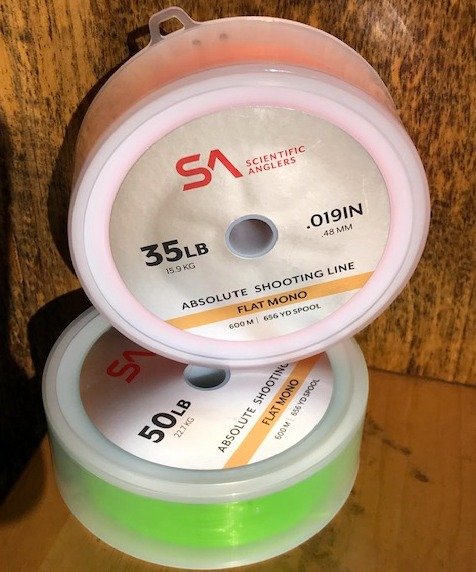
Yet another critical link in the system. If you’re fishing a coated running line, check for cracks, worn loops, and loss of slickness. Mono shooting lines should be inspected for kinks or nicks—the kind of small issues that turn into big frustrations on the water.

  • Inspect coated running lines for cracks, worn loops, and reduced slickness.

  • Check mono shooting lines for kinks, nicks, or other damage.

  • Replace or repair any issues now to avoid frustration on the water.


If you’re unsure about the condition of any of your gear, stop by the shop or give us a call. We’re always happy to help you take a quick look and get things dialed before the rivers come back into shape.

Before you call it ready, give the small stuff a quick once-over. Replace any leader sections that are nicked or curly, and check swivels, rings, clips, and loop-to-loop connections for wear. Top off your winter fly box with sharp, rust-free hooks, and make sure your boxes still latch tight.


Quick “Do This Tonight” Mini List

  1. Replace tippet and hooks
  2. Inspect running line and sink tips
  3. Check drag and backing connections
  4. Restock one winter fly box 
  5. Charge phone - set alarm(s) 

For safety and comfort, inspect boots and studs, gravel guards, and wading staff essentials. Finally, test your reel drag for smooth start-up, tighten anything loose, and rinse and dry your gear so it is ready when the rivers drop.


https://www.gorgeflyshop.com/store/pc/Sale-Closeouts-c38.htm

"The Gorge"

Gorge Fly Shop Team - 541.386.6977


"Fly Fish the World with Us"

Nov 25, 2025

To Call or not to Call. That is the Question!

When a five-minute phone call saves you hours of research and the wrong gear.

3-4 minute read...

Shopping has changed.  And that's not always a good thing

The way we all make purchases has changed a lot in the last handful of years.  No two ways about it.  Online shopping was on a steady increase for years starting in the early 2000's.  And then Covid happened.  Many people began buying everything from groceries to their recreational equipment exclusively online.  Truth be told, a lot of those same folks never turned back.  The convenience is too hard to pass up.  With regard to fly fishing equipment, this works extremely well when you know exactly what you need.  That said, when you don't know all the specifics, this can lead to lots of unnecessary purchases or getting gear that ends up being the wrong stuff for what you're doing.

The hidden cost of all this convenience is that it’s easier than ever to buy the wrong thing:

  • A reel that doesn’t balance your rod

  • A line that doesn’t match your fishing style

  • Waders that don’t fit how and where you wade

Individually, these might seem like small mistakes, but together they add up to real money, a waste of time and a lot of frustration.

A few quick questions with the right person up front can often prevent a whole pile of “almost right” gear from piling up in the garage.
 

The fly fishing world online is full of information....and plenty of misinformation

This is where it gets tricky for a lot of anglers.  There is an incredible amount of information on the web related to every sliver of fly fishing.  As of late, this has been augmented by the huge uptick in various A.I.-driven content.  The huge problem with this is that, with total information overload, it can be rather difficult to determine what information is accurate, what is one person's opinion, and in the case of A.I., what content is some combination of the two.   Not to say that there isn't plenty of great intel on the web.  There certainly is, but if you are new to fly fishing in general or trying a new technique or destination, it can be tough to determine fact from fiction.  

None of this means you should ignore the internet. Trip reports, basic how-to articles, and honest gear reviews can all be incredibly helpful. The key is using online information as a starting point, not the final word. Treat it as a way to get familiar with terms and options, then use that baseline to have a more focused, productive conversation with someone who has real on-water experience.

Trust live humans (and dogs) that actually fish!

When buying fly fishing tackle, there is absolutely no substitute for the insight of anglers that have a ton of on-water experience.  You can save yourself a lot of time, and often money, by picking up the phone and talking to the right person as opposed to sifting through countless websites, social media posts and A.I. blurbs.  When trying a new technique or destination, the internet can't replace the knowledge gained from real experience.

Nowhere does this ring more true than in the world of Spey fishing.  The majority of anglers that dive into Spey have some single-hand fly fishing experience, but getting into Spey can be like learning a foreign language.  At its core, Spey fishing is actually a very simple method compared to other techniques, but the lingo is unique and the similarities to single-hand fly fishing are few.  Throw in the added complications of different line systems, leaders and sink tips and it can be enough to make your head spin.  Needless to say, a new Spey angler trying to figure it all out on the web alone can get so twisted up they don't know where to begin.  

This is where a good fly shop shines. A knowledgeable crew can ask the right questions about your home water, casting style, travel plans, budget, and experience level, then narrow things down quickly. Instead of scrolling through hundreds of rods, lines, or flies, you get a short list of options that actually make sense for you. Over time, that relationship saves you money, cuts down on guesswork, and gets you on the river with gear that feels like it belongs in your hands.

Good help is hard to find. 

In Summary

There's a ton of great information on the web related to fly fishing gear, but don't rely on the internet as your singular source of intel. If you find yourself staring at a screen full of options and not sure what’s right, call the shop. We’re happy to talk Spey setups, trout rigs, or hand selected fly kits and get you pointed in the right direction.

Developing relationships with trusted fly fishing retailers is the fastest way to get the appropriate equipment for your chosen pursuit.  In the long run, that's the quickest and best way to be set up for success.  Keep in mind the fact that, in spite of it's tremendous advances, the internet and A.I. will never actually fish. At least we hope not!    

"In a world of algorithms and A.I.,
real fishing advice still comes from
real people."

https://www.gorgeflyshop.com/store/pc/Sale-Closeouts-c38.htm

"The Gorge"

541-386-6977


"Fly Fish the World with Us"


Visit our Relaunched Steelhead Only Site

Shop Gorge Fly Shop & SteelheadBum.com

  © 'and' Steelhead.com Mike Prine 2009-2014

Back to TOP